


Large-scale deep multi-layer analysis of Alzheimer's disease brain reveals strong proteomic disease-related changes not observed at the RNA level
- PMID: 35115731
- PMCID: PMC8825285
- DOI: 10.1038/s41593-021-00999-y
Large-scale deep multi-layer analysis of Alzheimer's disease brain reveals strong proteomic disease-related changes not observed at the RNA level
Abstract
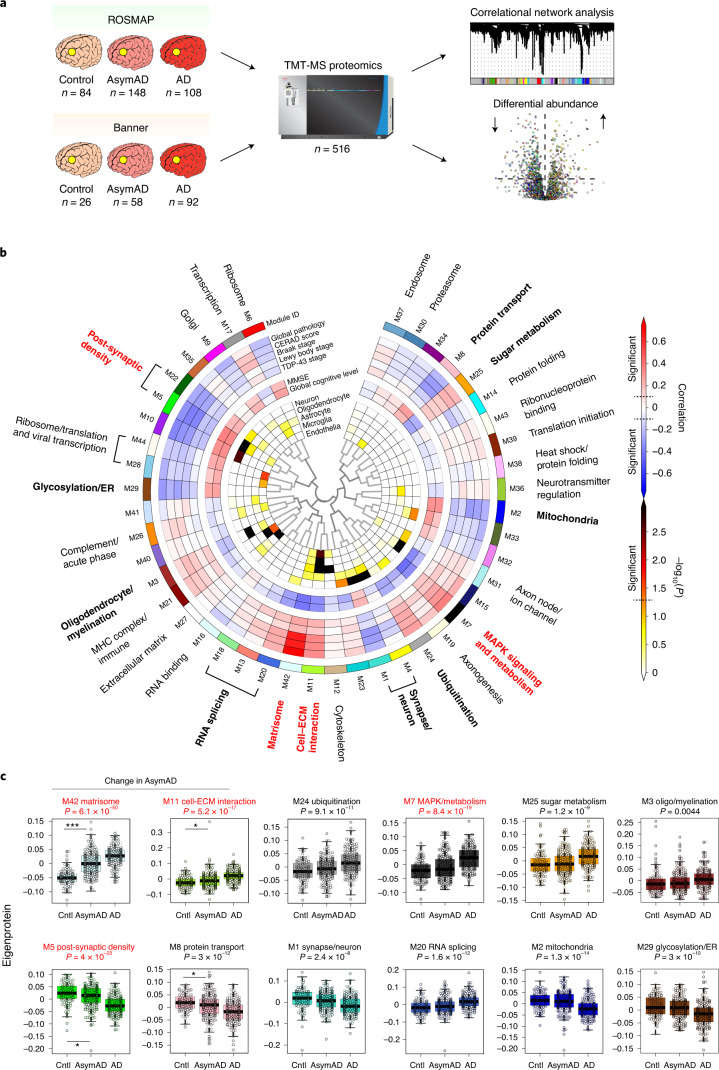
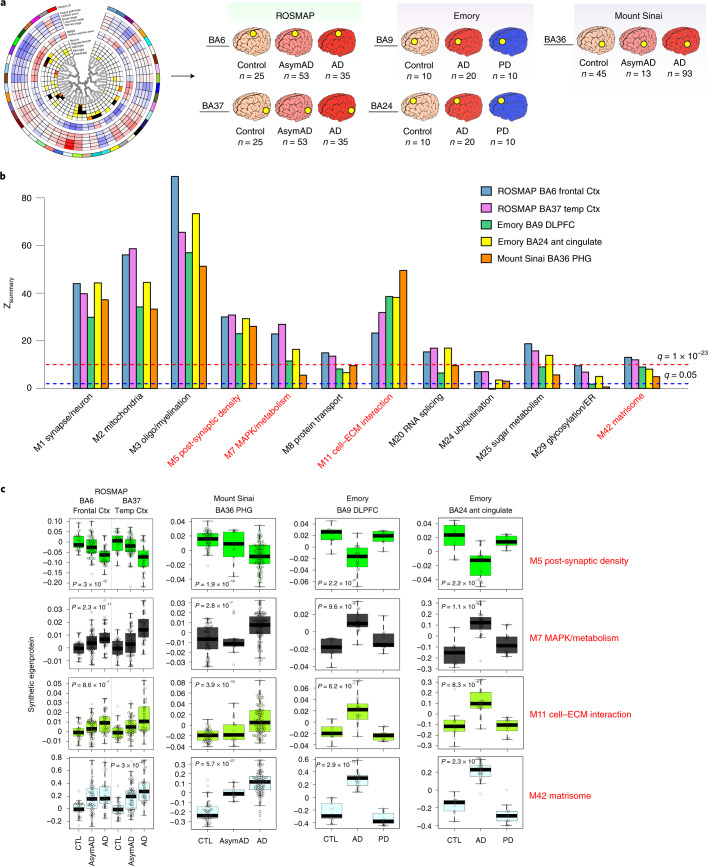
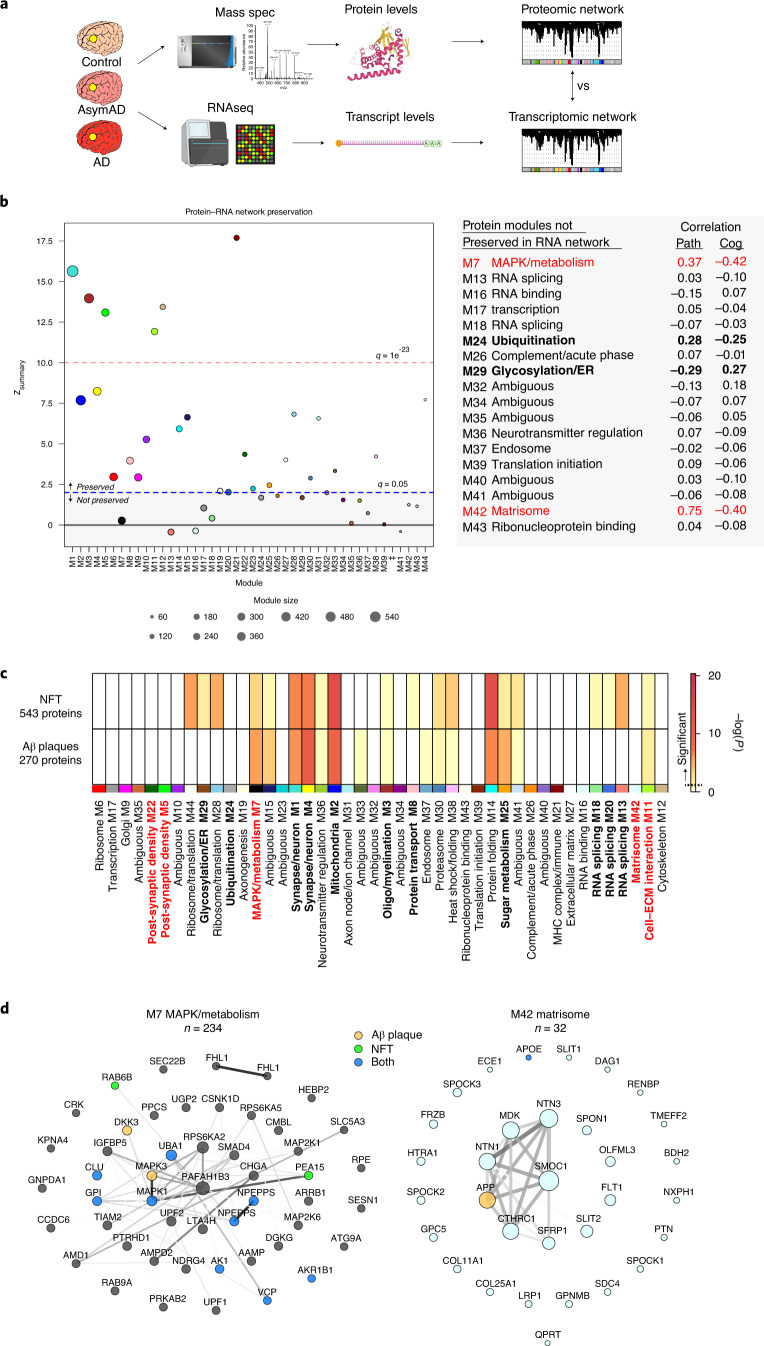
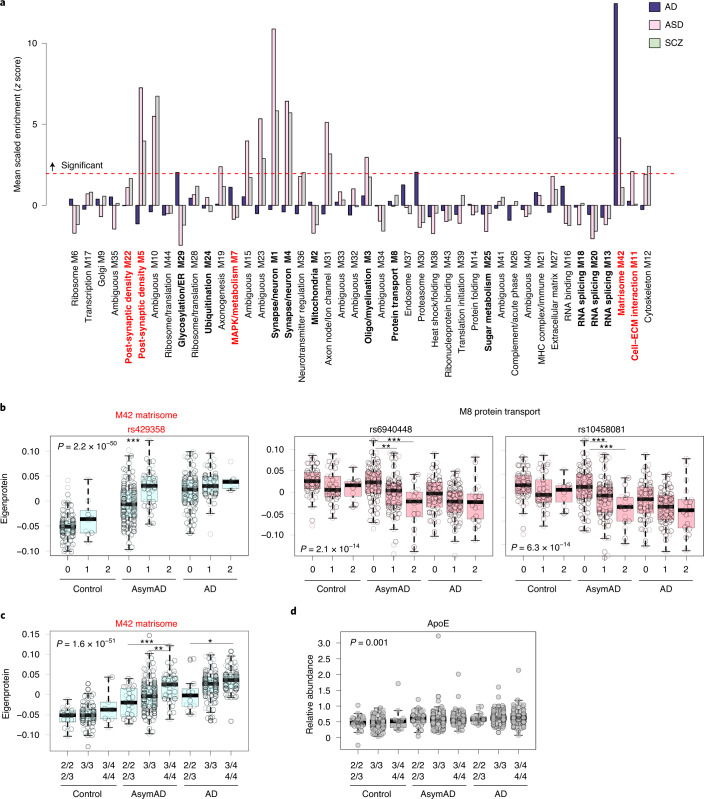
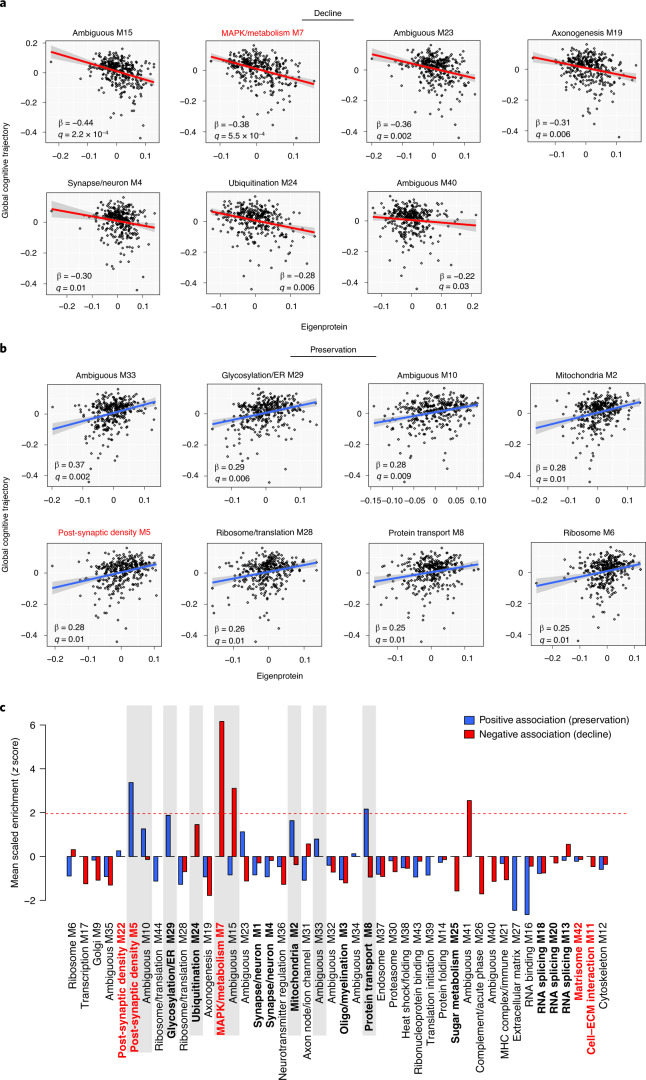
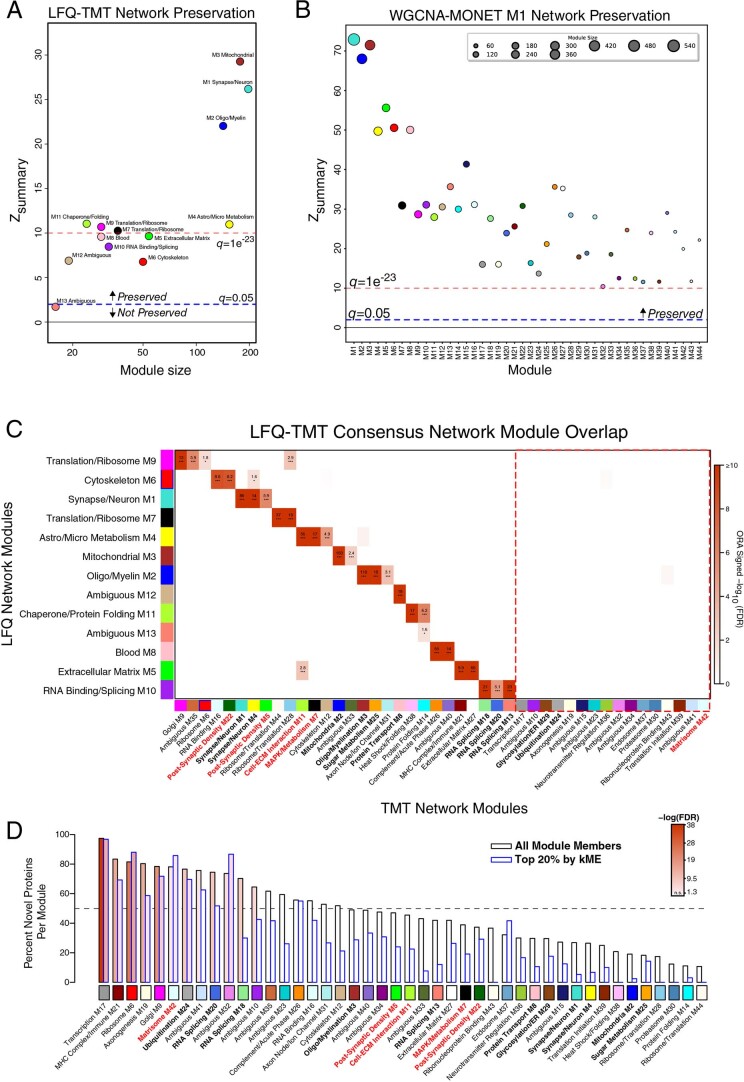
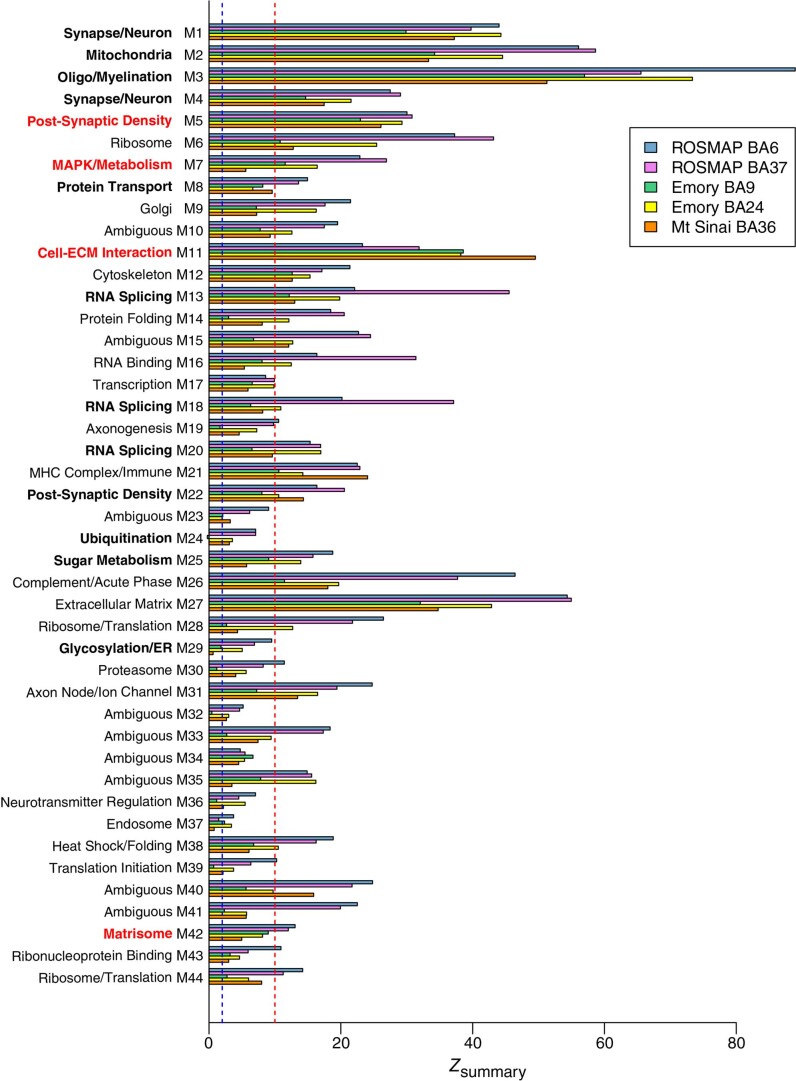
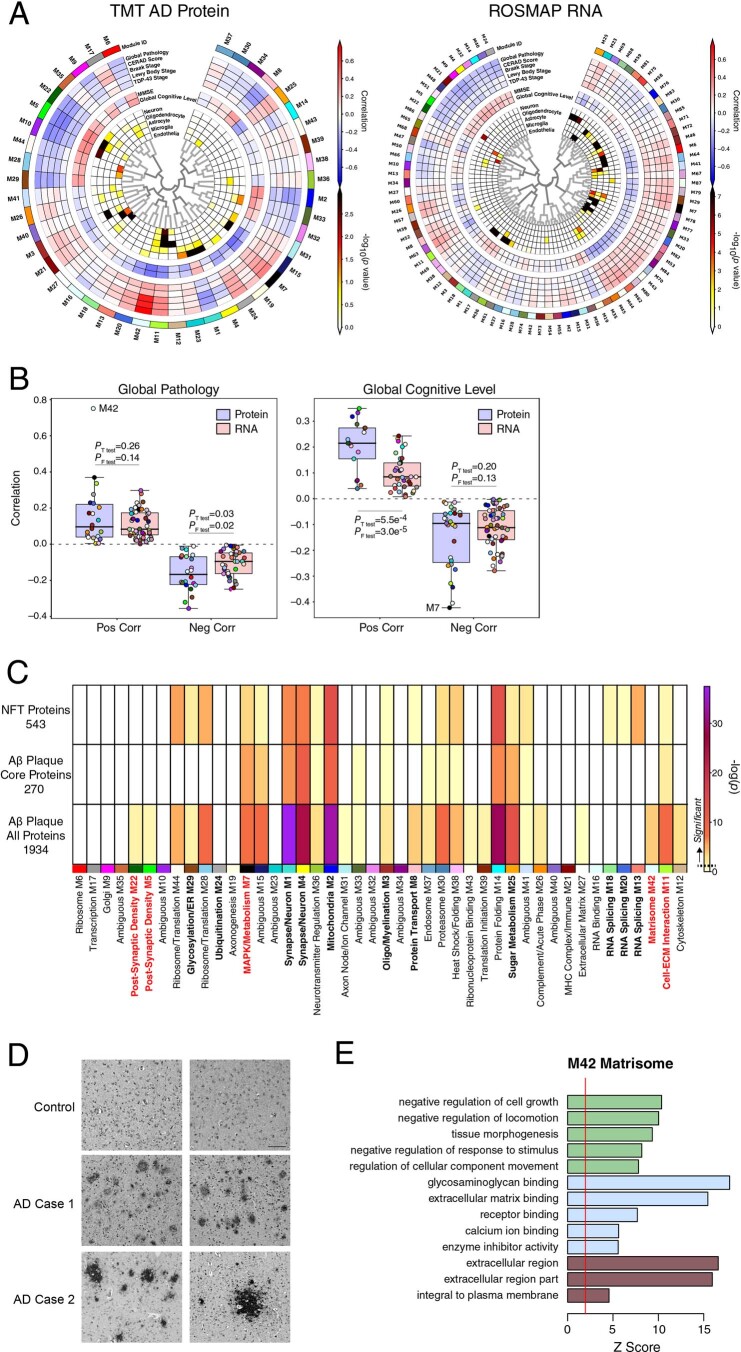
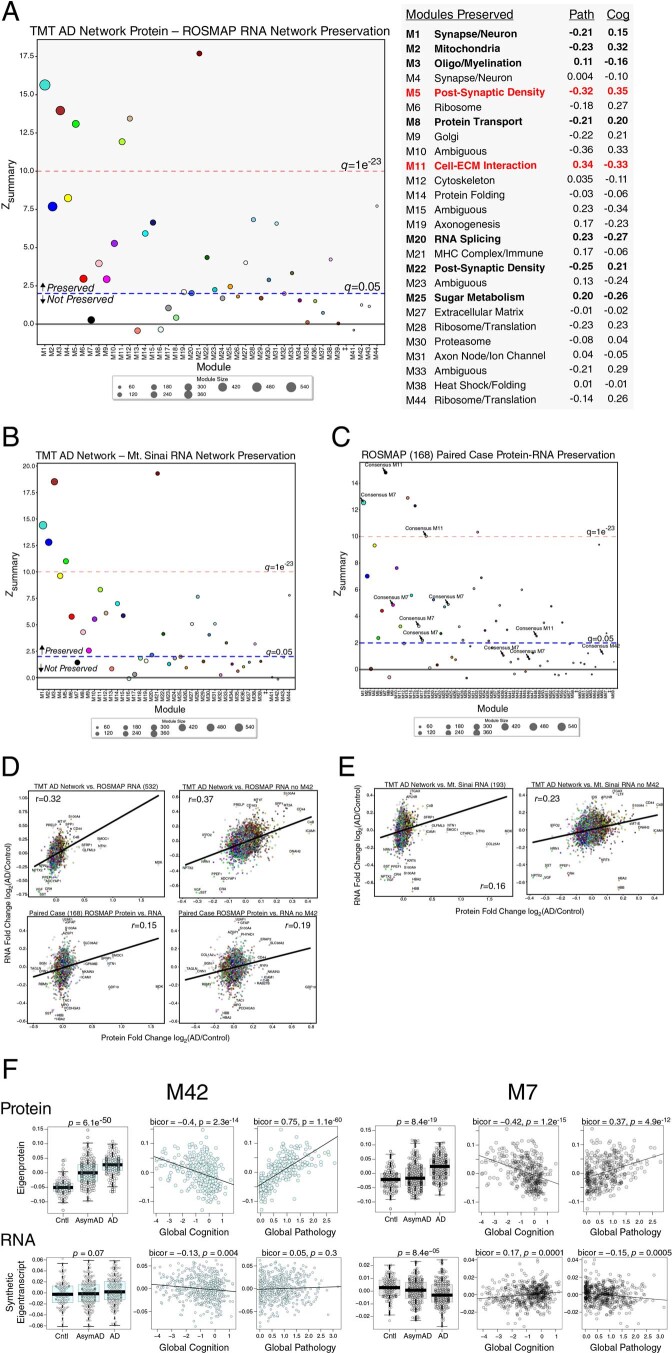
The biological processes that are disrupted in the Alzheimer's disease (AD) brain remain incompletely understood. In this study, we analyzed the proteomes of more than 1,000 brain tissues to reveal new AD-related protein co-expression modules that were highly preserved across cohorts and brain regions. Nearly half of the protein co-expression modules, including modules significantly altered in AD, were not observed in RNA networks from the same cohorts and brain regions, highlighting the proteopathic nature of AD. Two such AD-associated modules unique to the proteomic network included a module related to MAPK signaling and metabolism and a module related to the matrisome. The matrisome module was influenced by the APOE ε4 allele but was not related to the rate of cognitive decline after adjustment for neuropathology. By contrast, the MAPK/metabolism module was strongly associated with the rate of cognitive decline. Disease-associated modules unique to the proteome are sources of promising therapeutic targets and biomarkers for AD.
© 2022. The Author(s).
Conflict of interest statement
The authors declare no competing financial interests.
Figures
Comment in
-
Aberrant protein networks in Alzheimer disease.Nat Rev Neurol. 2022 May;18(5):255-256. doi: 10.1038/s41582-022-00648-3. Nat Rev Neurol. 2022. PMID: 35301457 No abstract available.
References
Publication types
MeSH terms
Substances
Grants and funding
- P30 AG072975/AG/NIA NIH HHS/United States
- IK4 BX005219/BX/BLRD VA/United States
- P30 AG066511/AG/NIA NIH HHS/United States
- U01 AG061356/AG/NIA NIH HHS/United States
- R01 AG053960/AG/NIA NIH HHS/United States
- RF1 AG059319/AG/NIA NIH HHS/United States
- U01 AG061357/AG/NIA NIH HHS/United States
- P30 AG010161/AG/NIA NIH HHS/United States
- P50 AG025688/AG/NIA NIH HHS/United States
- K08 AG068604/AG/NIA NIH HHS/United States
- U24 NS072026/NS/NINDS NIH HHS/United States
- P30 AG019610/AG/NIA NIH HHS/United States
- P30 AG066514/AG/NIA NIH HHS/United States
- RF1 AG057470/AG/NIA NIH HHS/United States
- R01 AG015819/AG/NIA NIH HHS/United States
- R01 AG061798/AG/NIA NIH HHS/United States
- U54 AG065187/AG/NIA NIH HHS/United States
- U54 AG054345/AG/NIA NIH HHS/United States
- RF1 AG057471/AG/NIA NIH HHS/United States
- R01 AG061800/AG/NIA NIH HHS/United States
- RF1 AG062181/AG/NIA NIH HHS/United States
- RF1 AG057440/AG/NIA NIH HHS/United States
- R01 AG056533/AG/NIA NIH HHS/United States
- U01 AG046170/AG/NIA NIH HHS/United States
- R01 AG017917/AG/NIA NIH HHS/United States
- P30 AG072980/AG/NIA NIH HHS/United States
- R56 AG062633/AG/NIA NIH HHS/United States
- R01 AG057911/AG/NIA NIH HHS/United States
LinkOut - more resources
Full Text Sources
Other Literature Sources
Medical
Miscellaneous
