. 2022 Jan 26;9(1):211563.
doi: 10.1098/rsos.211563. eCollection 2022 Jan.

An overview of chemo- and site-selectivity aspects in the chemical conjugation of proteins

Affiliations

An overview of chemo- and site-selectivity aspects in the chemical conjugation of proteins

Charlotte Sornay et al. R Soc Open Sci. .

Abstract

The bioconjugation of proteins-that is, the creation of a covalent link between a protein and any other molecule-has been studied for decades, partly because of the numerous applications of protein conjugates, but also due to the technical challenge it represents. Indeed, proteins possess inner physico-chemical properties-they are sensitive and polynucleophilic macromolecules-that make them complex substrates in conjugation reactions. This complexity arises from the mild conditions imposed by their sensitivity but also from selectivity issues, viz the precise control of the conjugation site on the protein. After decades of research, strategies and reagents have been developed to address two aspects of this selectivity: chemoselectivity-harnessing the reacting chemical functionality-and site-selectivity-controlling the reacting amino acid residue-most notably thanks to the participation of synthetic chemistry in this effort. This review offers an overview of these chemical bioconjugation strategies, insisting on those employing native proteins as substrates, and shows that the field is active and exciting, especially for synthetic chemists seeking new challenges.

Keywords: bioconjugation; chemoselectivity; proteins; site-selectivity; synthetic chemistry.


Conflict of interest statement

We have no competing interests.

Figures
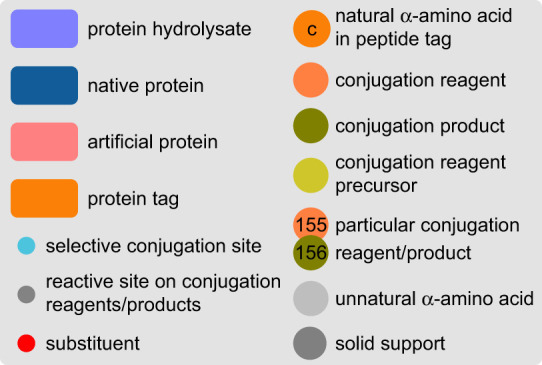
Figure 1.
Figure 1.
Legend of all graphical elements used in the manuscript.
Figure 2.
Figure 2.
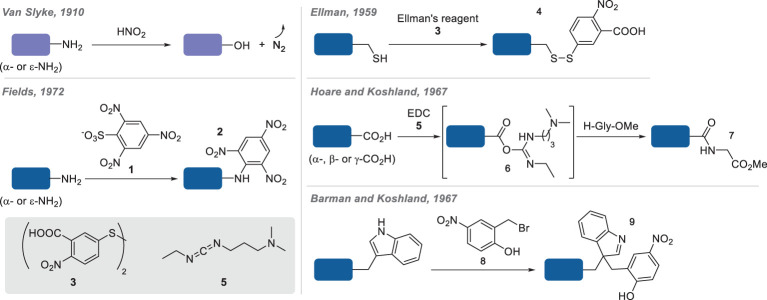
Early developments of chemoselective reagents for the conjugation of proteins.
Figure 3.
Figure 3.
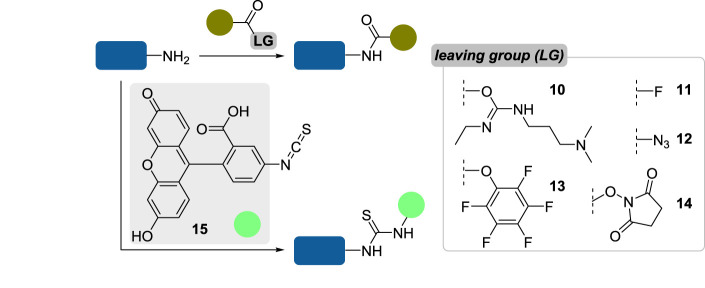
Classical bioconjugation methods for the chemoselective labelling of lysine residues.
Figure 4.
Figure 4.
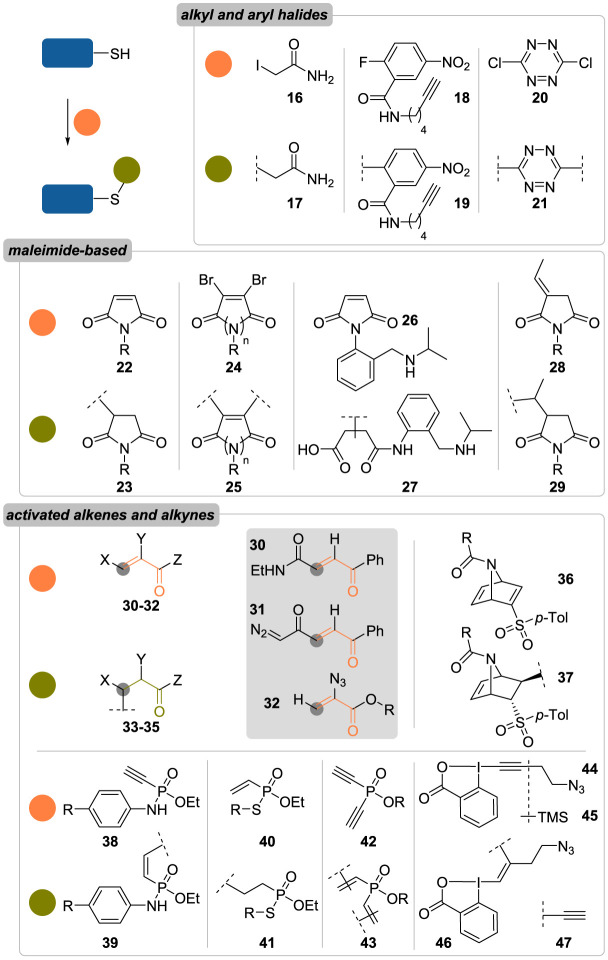
Overview of classical methods for the chemoselective conjugation of cysteine residues (R = alkyl chain; p-Tol = para-toluyl).
Figure 5.
Figure 5.
Selected examples of site-selective conjugation strategies using artificial proteins with engineered cysteine residues (R, alkyl or aryl).
Figure 6.
Figure 6.
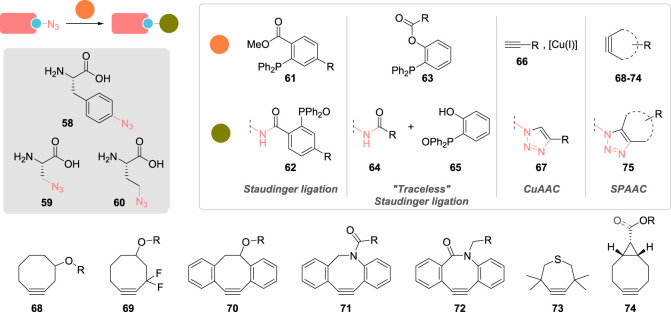
Incorporation of azido amino acids via genetic manipulation in proteins (R, alkyl). The introduced azido group can then be modified by Staudinger ligations, copper-catalysed alkyne-azide cycloaddition (CuAAC) and strain-promoted alkyne-azide cycloaddition (SPAAC).
Figure 7.
Figure 7.
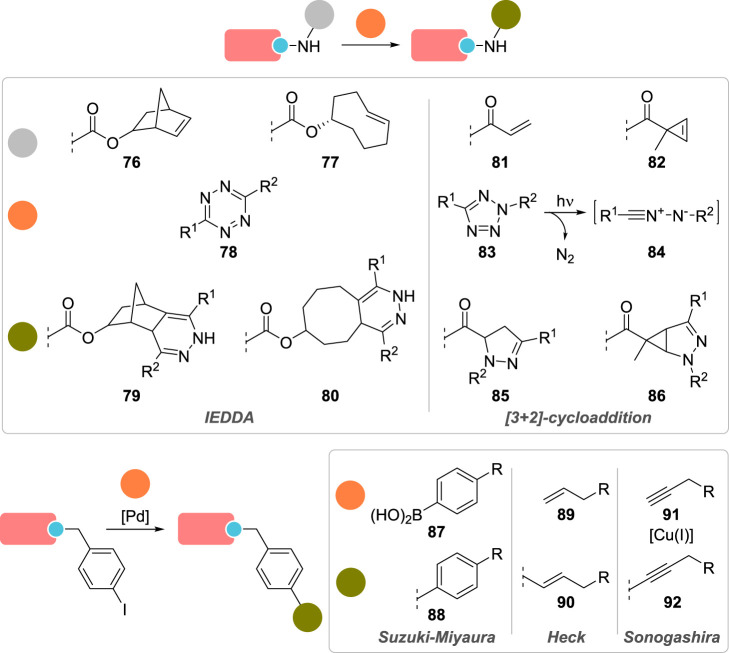
Site-selective modification of UAA on artificial proteins using bioorthogonal reactions. UAA 76, 77, 81 and 82 are lysine derivatives; UAA with p-iodobenzyl side-chain are either cysteine or phenylalanine derivatives 121 and 116, incorporated either chemically or by genetic code expansion, respectively.
Figure 8.
Figure 8.
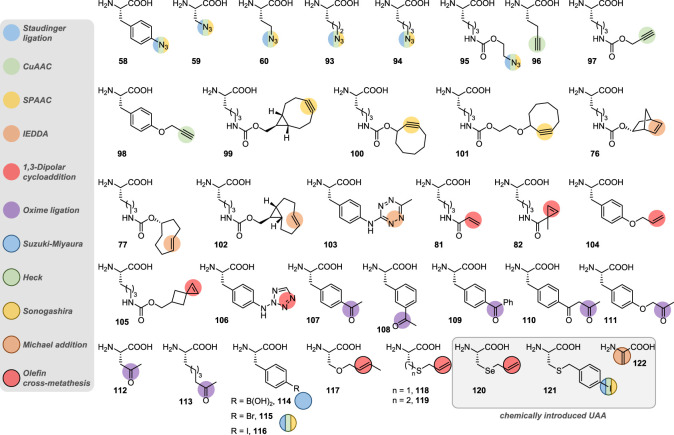
Examples of unnatural amino acids that have been incorporated into artificial proteins alongside the bioorthogonal technique employed to functionalize them.
Figure 9.
Figure 9.
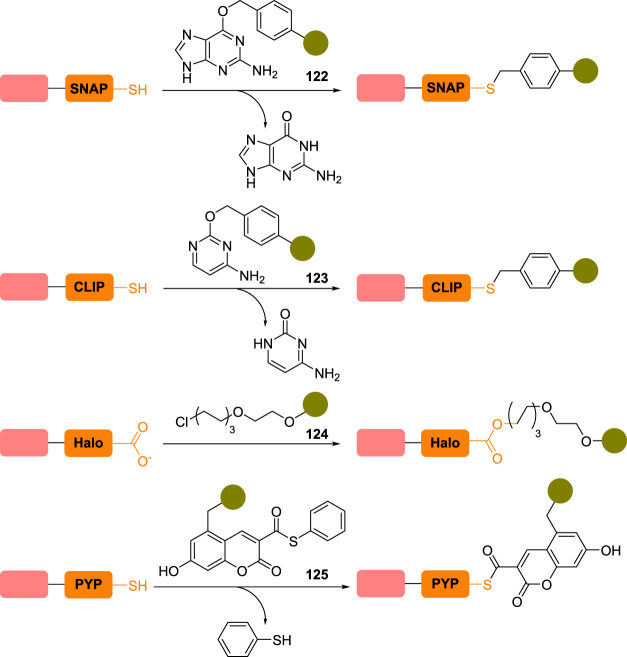
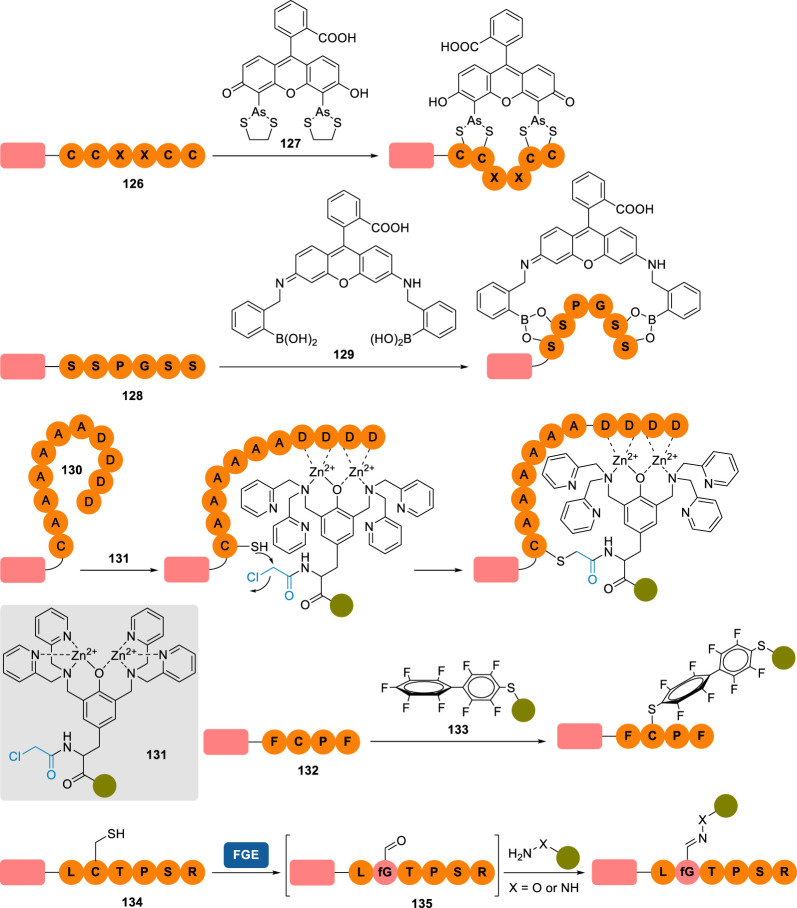
Use of protein tags for the site-selective conjugation of chimeric proteins.
Figure 10.
Figure 10.
Installation of small peptide tags on the C-terminus of a protein of interest and their selective labelling with bespoke probes.
Figure 11.
Figure 11.
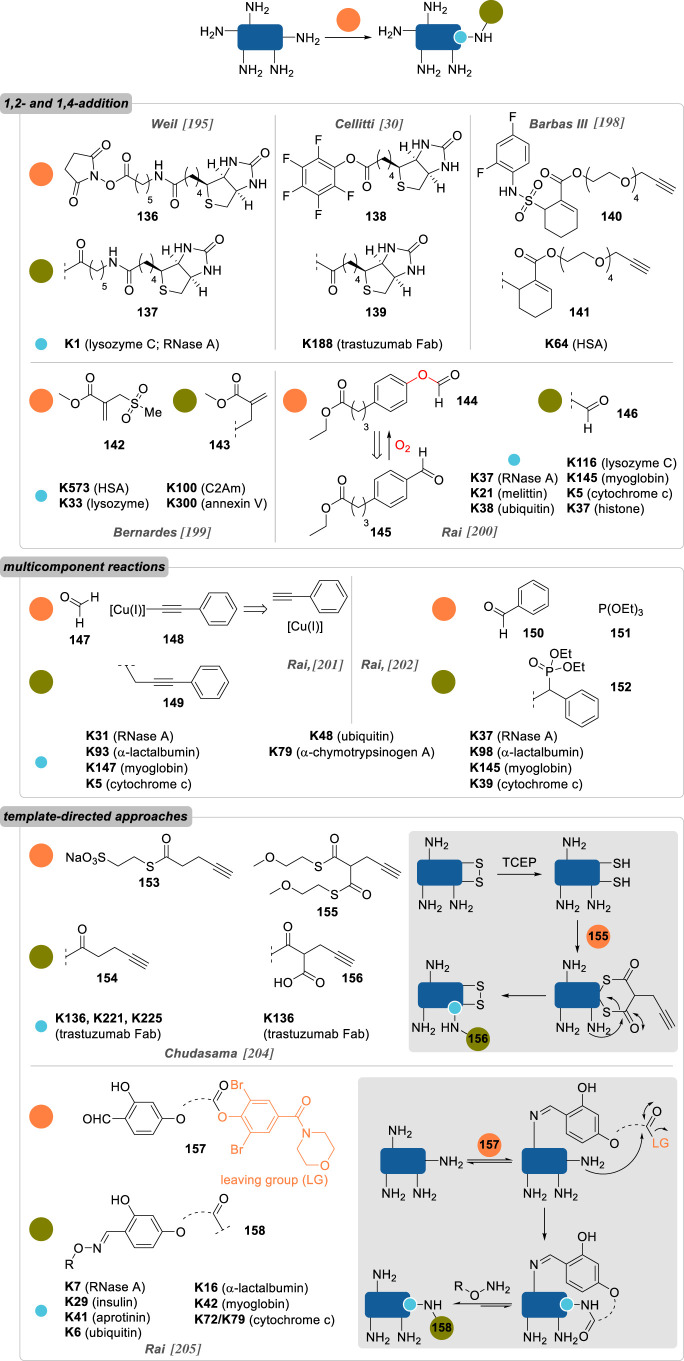
Overview of site-selective chemical conjugation of native proteins on lysine residues (R, alkyl chain with payloads of interest; TCEP, tris(2-carboxyethyl)phosphine).
Figure 12.
Figure 12.
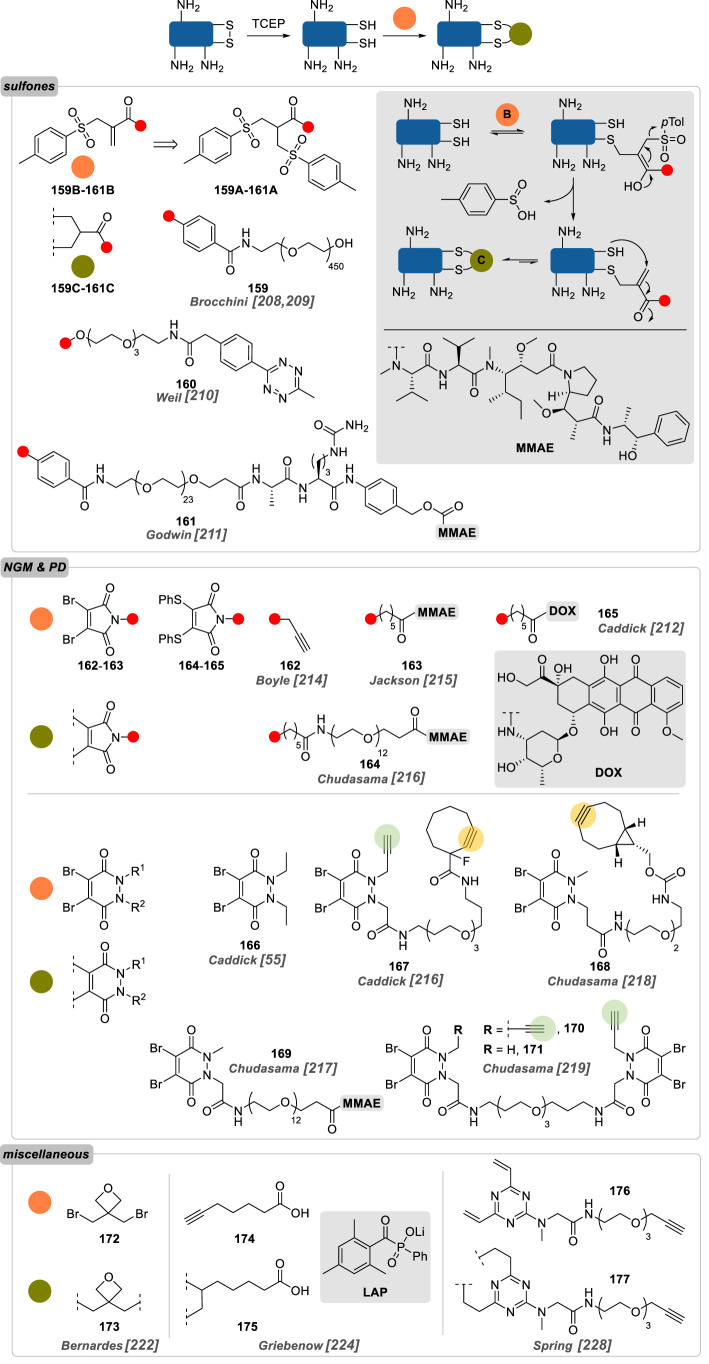
Overview of site-selective chemical conjugation of native proteins on cystine (TCEP, tris(2-carboxyethyl) phosphine; coloured circles on compounds 167, 168, 170 and 171 indicate functionalization sites as detailed in figure 7).
Figure 13.
Figure 13.
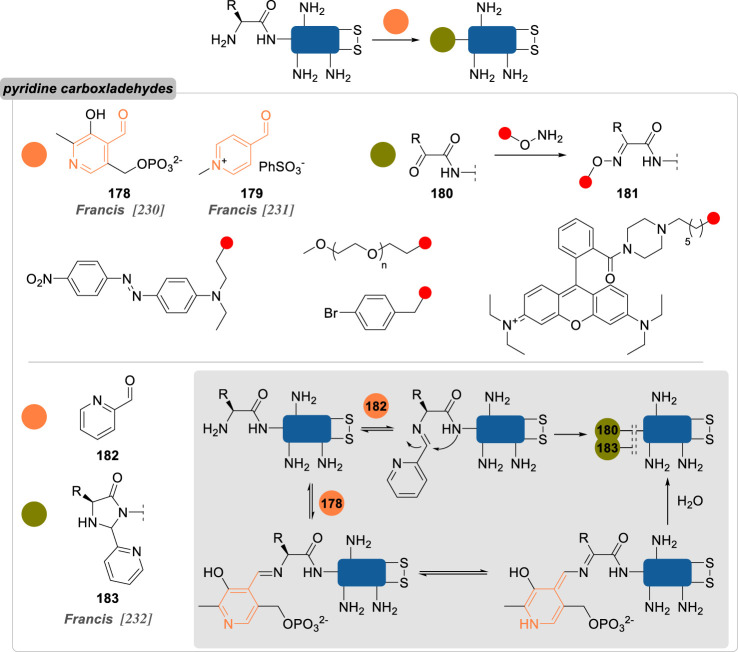
N-terminus selective reagents based on pyridine carboxaldehyde scaffolds (R, side-chain of proteinogenic α-amino acids).
Figure 14.
Figure 14.
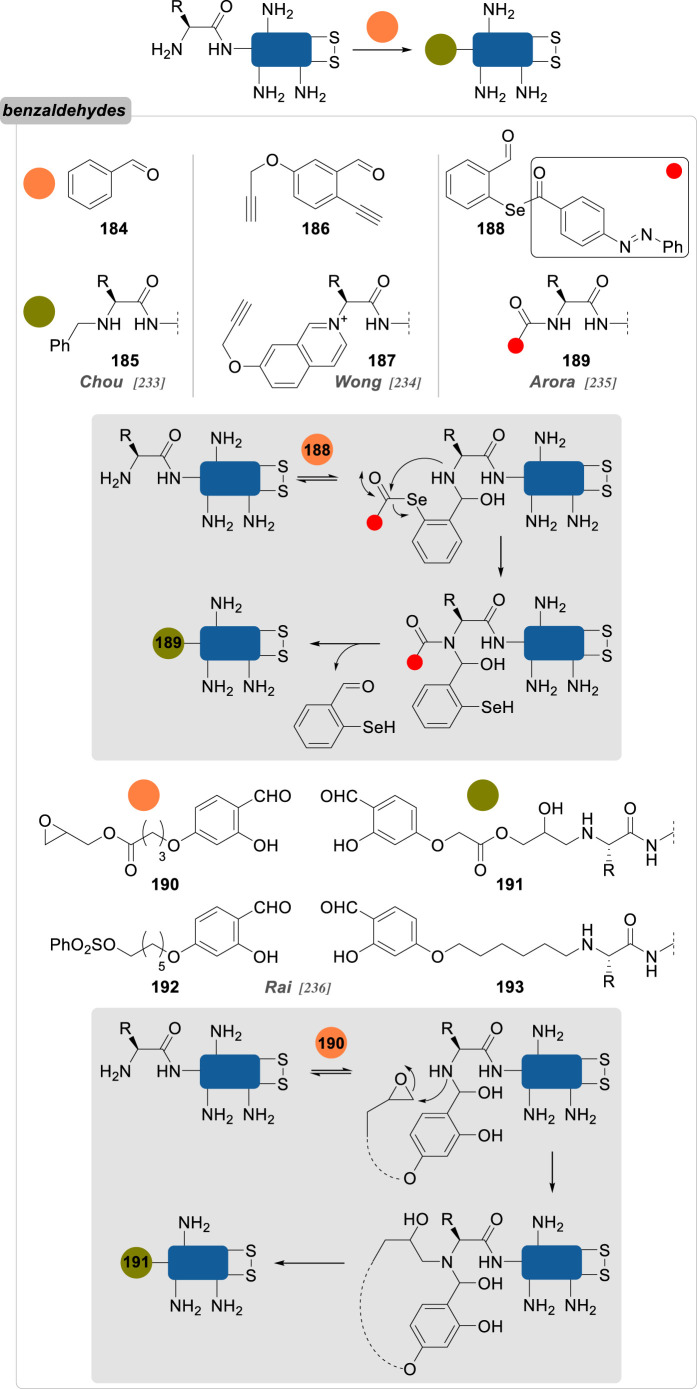
N-terminus selective reagents based on benzaldehyde derivatives (R, side-chain of proteinogenic α-amino acids).
Figure 15.
Figure 15.
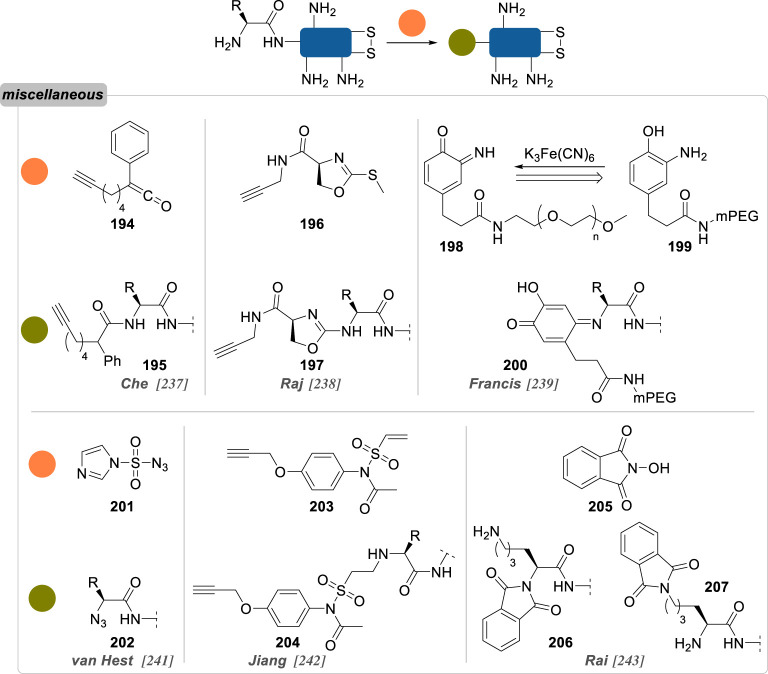
N-terminus selective reagents based on miscellaneous derivatives (R, side-chain of proteinogenic α-amino acids).
Figure 16.
Figure 16.
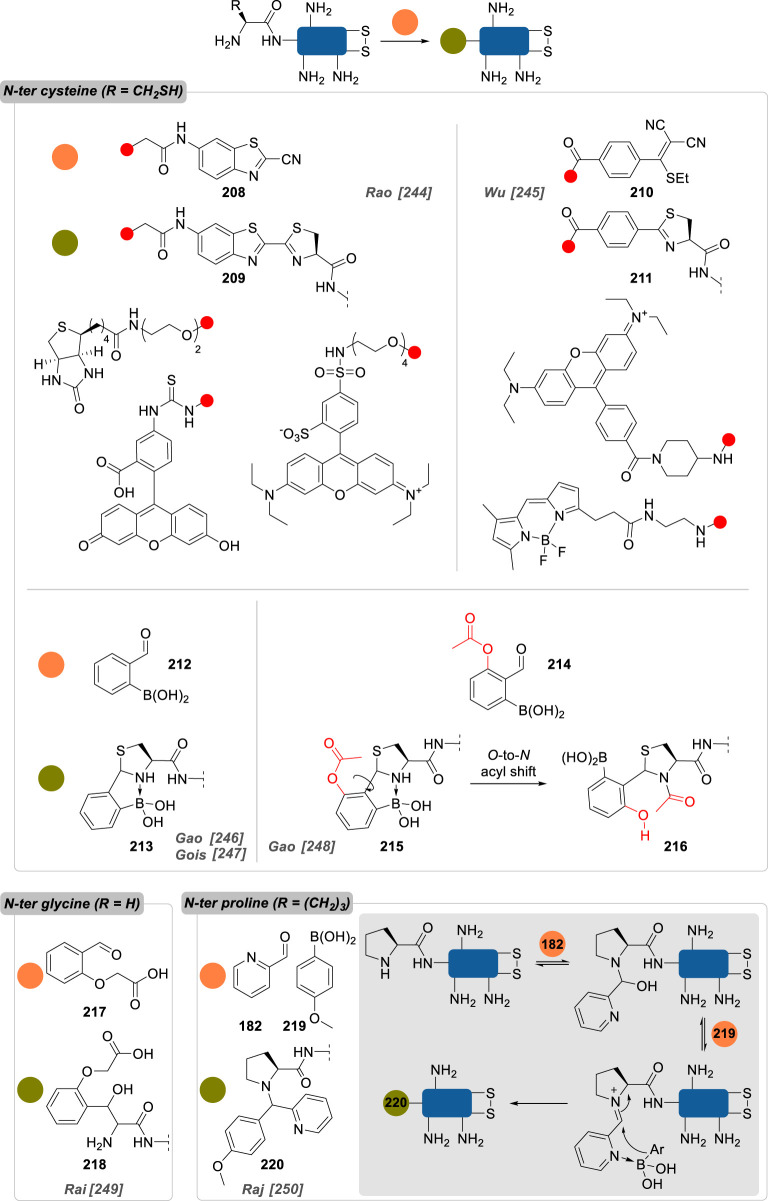
N-terminal cysteine, glycine and proline selective strategies based on the formation of 4,5-dihydrothiazole/thioazolidine, 1,2-aminoalcohol and N-alkylated conjugates, respectively.
Figure 17.
Figure 17.
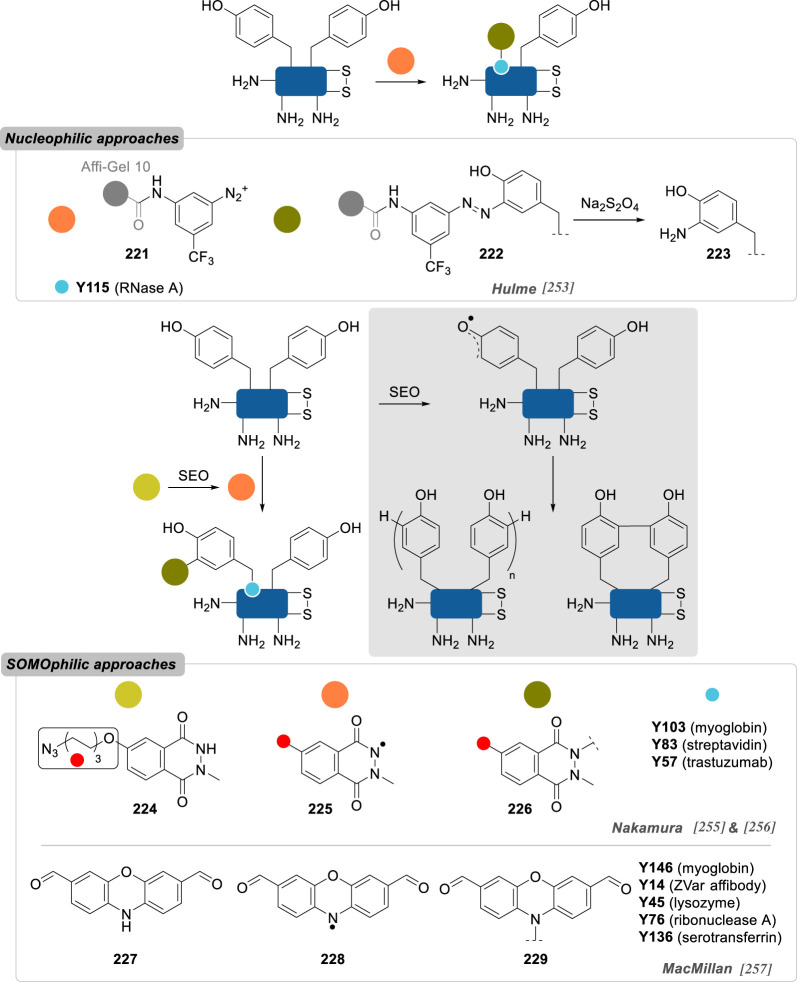
Overview of site-selective chemical conjugation of native proteins on tyrosine (SEO, single-electron oxidation).
Figure 18.
Figure 18.
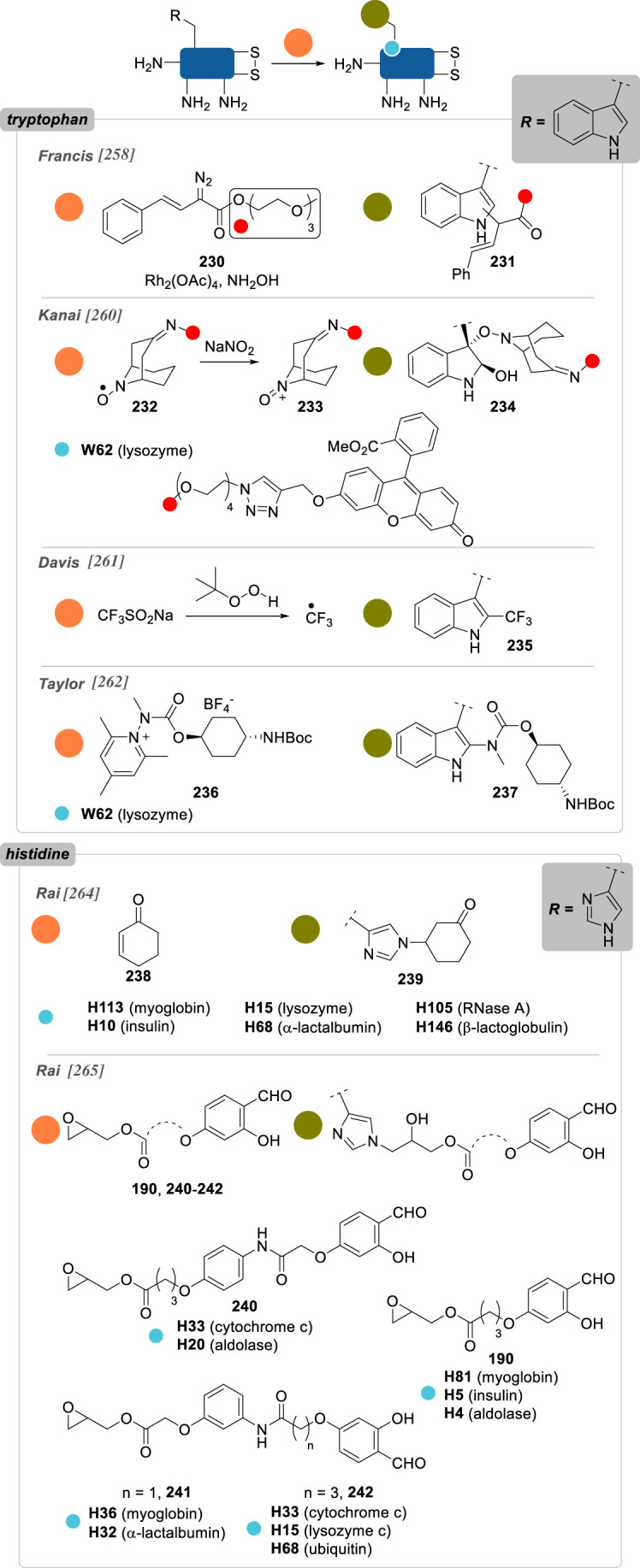
Overview of site-selective chemical conjugation of native proteins on tryptophan and histidine.
Figure 19.
Figure 19.
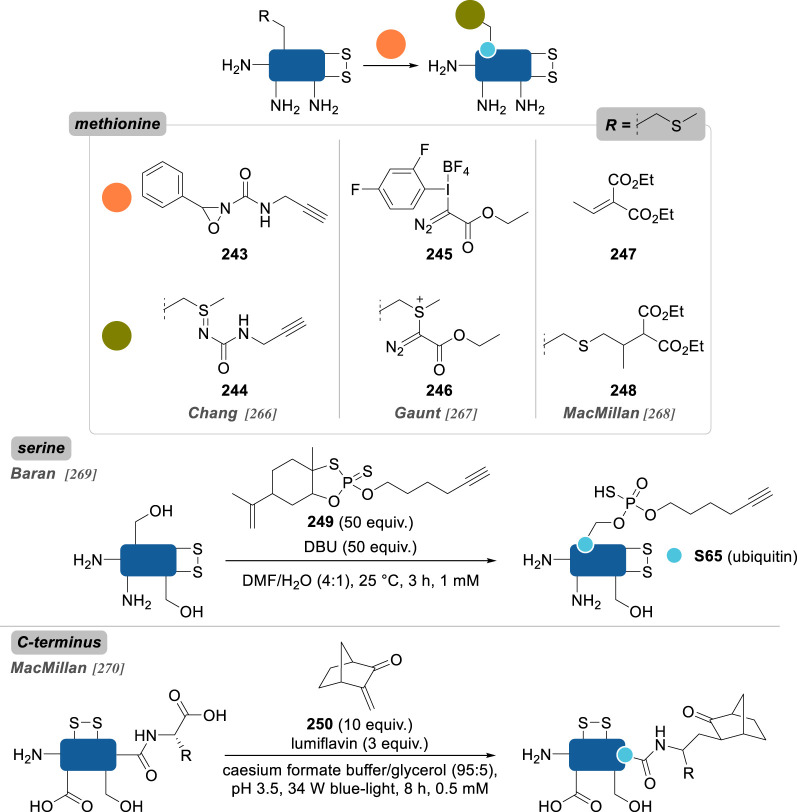
Site-selective strategies for the chemical conjugation of methionine, serine and N-terminal residues of native proteins (R, side-chain of proteinogenic α-amino acids).

References

    1. Bird RE, Lemmel SA, Yu X, Zhou QA. 2021. Bioorthogonal chemistry and its applications. Bioconjugate Chem. 32, 2457-2479 (10.1021/acs.bioconjchem.1c00461) - DOI - PubMed
    1. Brittain WDG, Coxon CR. 2021. Perfluoroaryl and perfluoroheteroaryl reagents as emerging new tools for peptide synthesis, modification and bioconjugation. Chem. Eur. J. 27, 1-15. (10.1002/chem.202103305) - DOI - PMC - PubMed
    1. Haque M, Forte N, Baker JR. 2021. Site-selective lysine conjugation methods and applications towards antibody–drug conjugates. Chem. Commun. 57, 10 689-10 702. (10.1039/D1CC03976H) - DOI - PMC - PubMed
    1. Allouche EMD, Grinhagena E, Waser J. 2021. Hypervalent iodine-mediated late-stage peptide and protein functionalization. Angew. Chem. Int. Ed. 60, 2-17. (10.1002/anie.202112287) - DOI - PMC - PubMed
    1. Kang MS, Kong TWS, Khoo JYX, Loh T-P. 2021. Recent developments in chemical conjugation strategies targeting native amino acids in proteins and their applications in antibody–drug conjugates. Chem. Sci. 12, 13 613-13 647. (10.1039/D1SC02973H) - DOI - PMC - PubMed