Association between diabetes, obesity, aging, and cancer: review of recent literature
- PMID: 35117936
- PMCID: PMC8797908
- DOI: 10.21037/tcr.2020.03.14
Association between diabetes, obesity, aging, and cancer: review of recent literature
Abstract
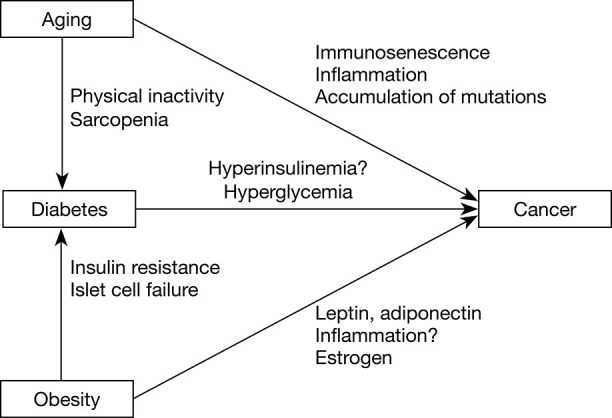
Rates of obesity and diabetes have risen significantly in recent years and are projected to increase even further in the coming decades. Obesity and diabetes are associated with increased risk of certain tumours, with the strongest relationships demonstrated for colorectal, post-menopausal breast, and endometrial cancer. Another important risk factor for cancer development is aging. Aging is characterized by chronic inflammation and immunosenescence, and accelerated by obesity, which may further stimulate the development of cancer. In this review, we summarize recent literature on the complex interactions between obesity, diabetes, aging, and cancer risk and mortality. We will also provide an overview of both epidemiological as well as pathophysiologic data and their clinical implications. In the context of an aging population and anticipated rise in rates of obesity and diabetes, a better understanding of how these factors interact and impact on cancer risk and prognosis will be important in helping to guide therapeutic interventions.
Keywords: Cancer; aging; diabetes mellitus; obesity.
2020 Translational Cancer Research. All rights reserved.
Conflict of interest statement
Conflicts of Interest: All authors have completed the ICMJE uniform disclosure form (available at http://dx.doi.org/10.21037/tcr.2020.03.39). The series “Energy Balance, Aging, Obesity, and Cancer” was commissioned by the editorial office without any funding or sponsorship. The authors have no other conflicts of interest to declare.
Figures
References
-
- International Comparisons: A Focus on Diabetes. CIHI 2015.
-
- National Diabetes Statistics Report, 2017. CDC website.
Publication types
LinkOut - more resources
Full Text Sources