


The enigma of the 1889 Russian flu pandemic: A coronavirus?
- PMID: 35124103
- PMCID: PMC8813723
- DOI: 10.1016/j.lpm.2022.104111
The enigma of the 1889 Russian flu pandemic: A coronavirus?
Abstract
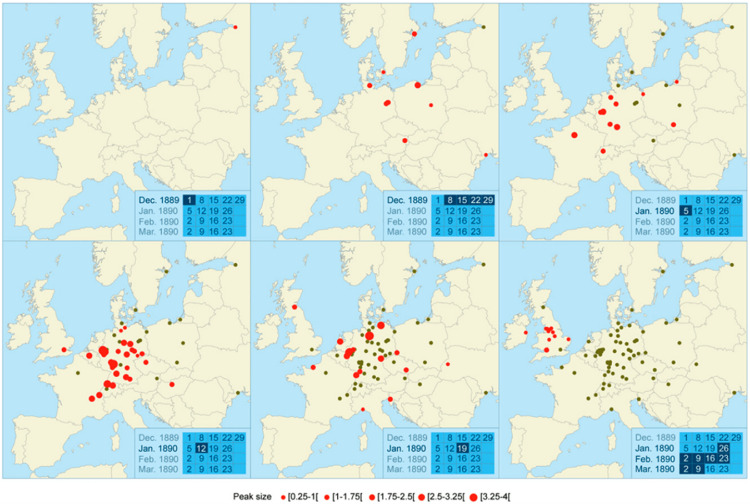
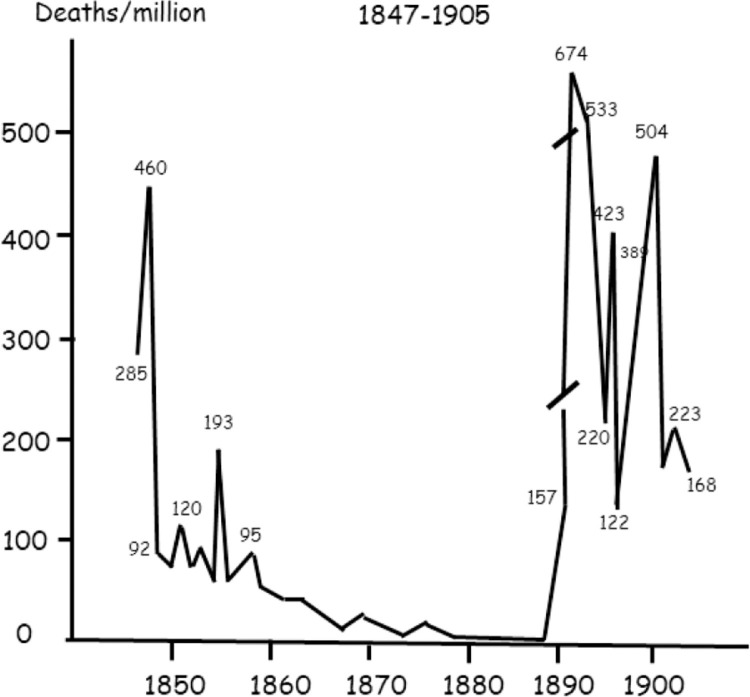
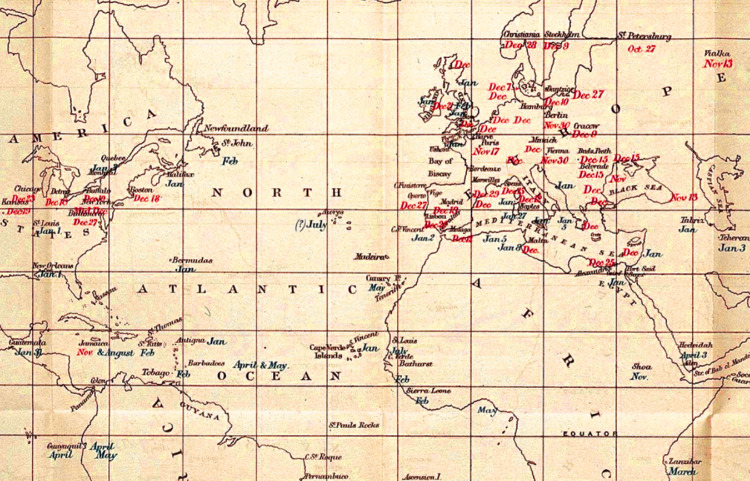
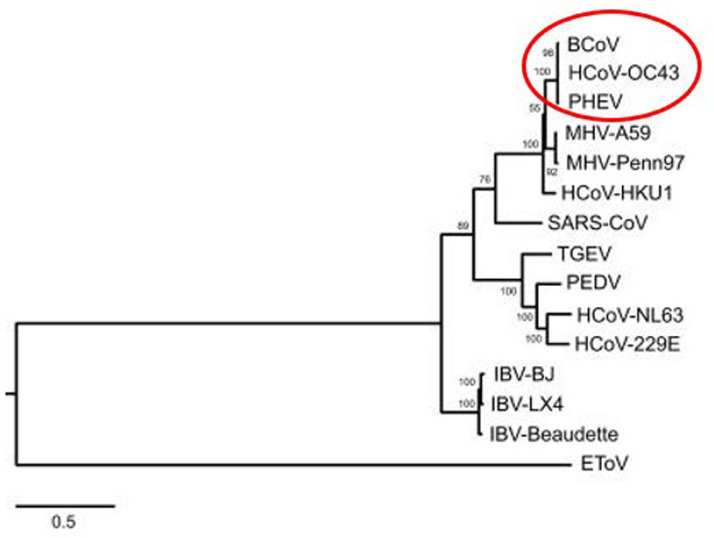
The "Russian flu", which raged from 1889 to 1894, is considered as the first pandemic of the industrial era for which statistics have been collected. This planetary event started in Turkestan and hit the Russian Empire, before reaching all European countries, the United States of America, and the whole world. Contemporaries were surprised by its high contagiousness as evidenced by attack rates averaging 60% in urban populations, its rapid spread in successive waves circling the globe in a few months by rail and sea, and the tendency of the disease to relapse. Despite its low case-fatality rate (0.10%-0.28%), it is estimated to have caused one million deaths worldwide. On serological grounds, it is generally accepted that the causative agent of Russian influenza was Myxovirus influenzae, the virus identified for all influenza pandemics since the "Spanish flu" of 1918. In light of the Covid-19 pandemic, which has underscored the extraordinary epidemic potential of coronaviruses, this assumption has recently been questioned. Coronaviruses come from wild reservoirs (bats, rodents, birds, …). They induce respiratory symptoms mimicking influenza, possibly leading to respiratory distress with pneumonia. In addition to the Covid-19 pandemic, recent deadly and limited epidemics, such as SARS in 2002 and MERS in 2012, have occurred. Russian influenza presented as an influenza-like syndrome with clinical peculiarities (multivisceral and neurological involvement, skin rash, early iterative relapses), evoking some particularities of Covid-19. Four other coronaviruses circulating in the human population for decades (HCoV-229E, HCoV-NL63, HCoV-OC43, HCoV-HKU1) have been found to be responsible for 15 to 30% of seasonal colds. All of these viruses are of animal origin. Recently, phylogenetic studies have revealed the genetic proximity between a bovine coronavirus BCoV and the human virus HCoV-OC43, indicating that the latter emerged around 1890, at the time of the Russian flu, when an epizootic was raging among cattle throughout Europe. Could the current human virus be the attenuated remnant that appeared after the Russian flu in 1894? Was there a coronavirus pandemic before Covid-19 ?
Keywords: Coronavirus; Covid-19; HCoV-OC43; Influenza; Myxovirus influenzae; Pandemic; Pneumonia; Russian influenza; SARS-CoV2.
Copyright © 2022 Elsevier Masson SAS. All rights reserved.
Figures
References
-
- Parsons H. HMSO; Londres: 1893. Report on the influenza epidemic of 1889-90, Londres: HMSO, Eyre & Spottiswoode, 1891, & further report and papers on epidemic influenza 1889-92.
-
- Abbott S.W. State Board of Health; Boston: 1890. Twenty-first annual report of the state board of health of massachusetts.
-
- Teissier J. Baillière JB; Paris: 1891. L'influenza de 1889–1890 en Russie. Rapport de mission adressé à M. le Ministre de l'Instruction Publique.
-
- Bertillon J. 1892. Annuaire statistique de la ville de Paris pour l'année 1890. Paris.
-
- Friedrich P.L. Die Influenza Epidemie 1889-1890. Deutschen Reiche Arbeiten aus dem Kaiserlichen Gesundheitsamte. 1894;9:139–378.
MeSH terms
LinkOut - more resources
Full Text Sources
Medical
Miscellaneous
