


Functional neuronal networks reveal emotional processing differences in children with ADHD
- PMID: 35126772
- PMCID: PMC8807801
- DOI: 10.1007/s11571-021-09699-6
Functional neuronal networks reveal emotional processing differences in children with ADHD
Abstract
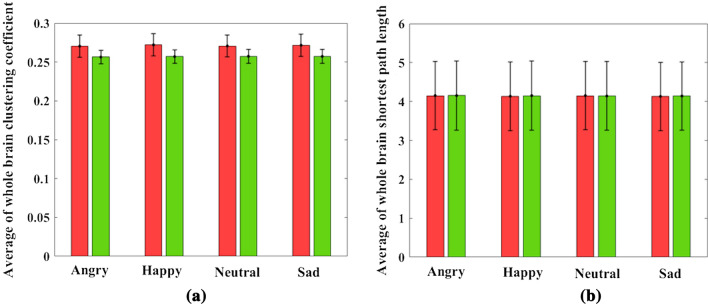
Attention Deficit Hyperactivity Disorder (ADHD) is a common neurodevelopmental disorder that, in addition to inattention, excessive activity, or impulsivity, makes it difficult for children to process facial emotions and thus to interact with their peers. Here we analyze neuronal networks of children with this disorder by means of the phase-locking value (PLV) method. In particular, we determine the level of phase synchronization between 62 EEG channels of 22 healthy boys and 22 boys with ADHD, recorder whilst observing facial emotions of anger, happiness, neutrality, and sadness. We construct neuronal networks based on the gamma sub-band, which according to previous studies, shows the highest response to emotional stimuli. We find that the functional connectivity of the frontal and occipital lobes in the ADHD group is significantly (P-value < 0.01) higher than in the healthy group. More functional connectivity in these lobes shows more phase synchronization between the neurons of these brain regions, representing some problems in the brain emotional processing center in the ADHD group. The shortest path lengths in these lobes are also significantly (P-value < 0.01) higher in the ADHD group than in the healthy group. This result indicates less efficiency of information transmission and segregation in occipital and frontal lobes of ADHD neuronal networks, responsible for visual and emotional processing in the brain, respectively. We hope that our approach will help obtain further insights into ADHD with methods of network science.
Keywords: ADHD; EEG; Facial emotions; Functional connectivity; Phase locking value.
© The Author(s), under exclusive licence to Springer Nature B.V. 2021.
Conflict of interest statement
Conflict of interestThe authors declare that they have no conflict of interest.
Figures
References
-
- Ahmadlou M, Adeli H. Wavelet-synchronization methodology: A new approach for eeg-based diagnosis of adhd. ClinEEG Neurosci. 2010;41:1–10. - PubMed
-
- Barttfeld P, Petroni A, Báez S, Urquina H, Sigman M, Cetkovich M, Torralva T, Torrente F, Lischinsky A, Castellanos X, et al. Functional connectivity and temporal variability of brain connections in adults with attention deficit/hyperactivity disorder and bipolar disorder. Neuropsychobiol. 2014;69:65–75. doi: 10.1159/000356964. - DOI - PubMed
LinkOut - more resources
Full Text Sources
