


The interaction and pathogenesis between cognitive impairment and common cardiovascular diseases in the elderly
- PMID: 35126964
- PMCID: PMC8814974
- DOI: 10.1177/20406223211063020
The interaction and pathogenesis between cognitive impairment and common cardiovascular diseases in the elderly
Abstract
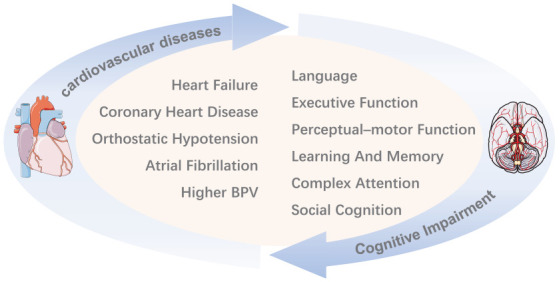
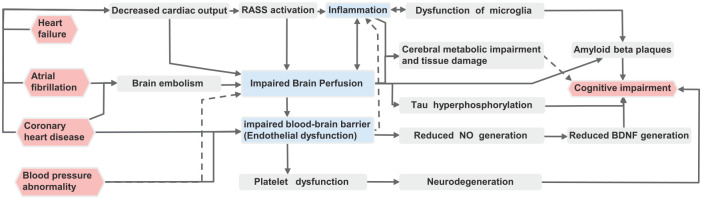
Both cognitive impairment and cardiovascular diseases have a high incidence in the elderly population, increasing the burden of care and reducing the quality of life. Studies have suggested that cognitive impairment interacts with cardiovascular diseases such as coronary heart disease, abnormal blood pressure, heart failure, and arrhythmia. On one hand, cognitive impairment in the elderly influences the progression and self-management of cardiovascular diseases and increases the risk of cardiovascular-related adverse events. On the other hand, coronary heart disease, heart failure, higher blood pressure variability, orthostatic hypotension, and atrial fibrillation may aggravate cognitive impairment. The role of blood pressure levels on cognition remains controversial. Several shared biological pathways have been proposed as the underlying mechanism for the association. Cardiovascular diseases may lead to cognitive decline even dementia through cerebral perfusion damage, brain structural changes, inflammation, β-amyloid deposition, and neuroendocrine disorders. It is of great significance to study the interaction and put forward effective interventions in an overall perspective to reduce care burden and improve the quality of life of the elderly patients.
Keywords: aging; cardiovascular diseases; cognitive impairment; pathogenesis.
© The Author(s), 2022.
Conflict of interest statement
Conflict of interest statement: The authors declared no potential conflicts of interest with respect to the research, authorship, and/or publication of this article.
Figures
References
-
- Sachdev PS, Blacker D, Blazer DG, et al. Classifying neurocognitive disorders: the DSM-5 approach. Nat Rev Neurol 2014; 10: 634–642. - PubMed
-
- Kiss T, Balasubramanian P, Valcarcel-Ares MN, et al. Nicotinamide mononucleotide (NMN) treatment attenuates oxidative stress and rescues angiogenic capacity in aged cerebromicrovascular endothelial cells: a potential mechanism for the prevention of vascular cognitive impairment. Geroscience 2019; 41: 619–630. - PMC - PubMed
-
- Kiiti Borges M, Oiring de Castro Cezar N, Silva Santos Siqueira A, et al. The relationship between physical frailty and mild cognitive impairment in the elderly: a systematic review. J Frailty Aging 2019; 8: 192–197. - PubMed
Publication types
LinkOut - more resources
Full Text Sources
