


Biodiversity influences the effects of oil disturbance on coastal ecosystems
- PMID: 35127038
- PMCID: PMC8796919
- DOI: 10.1002/ece3.8532
Biodiversity influences the effects of oil disturbance on coastal ecosystems
Abstract
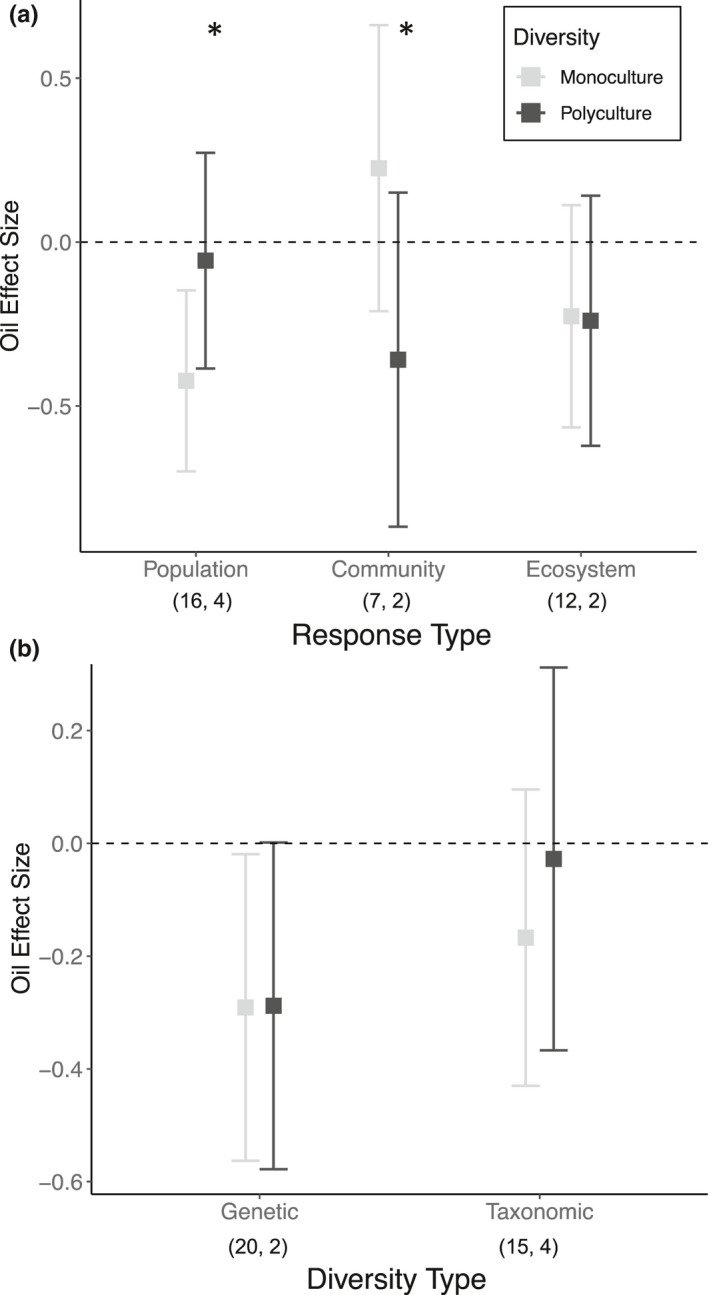
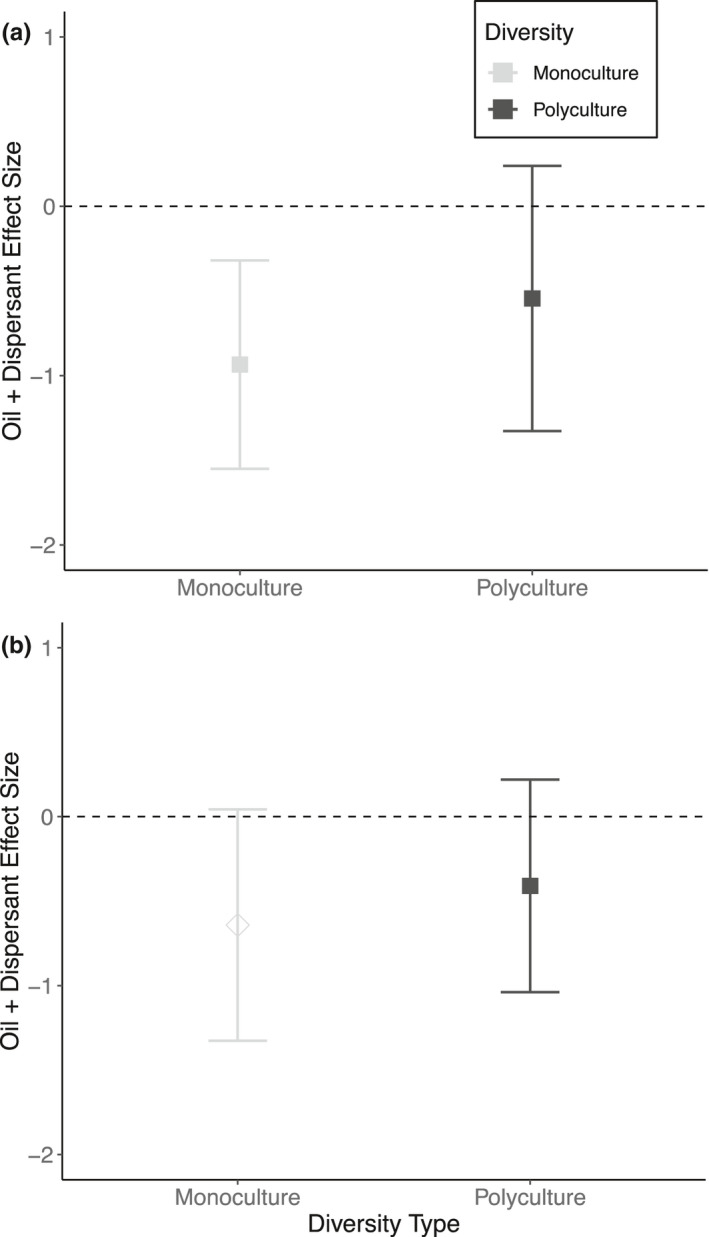
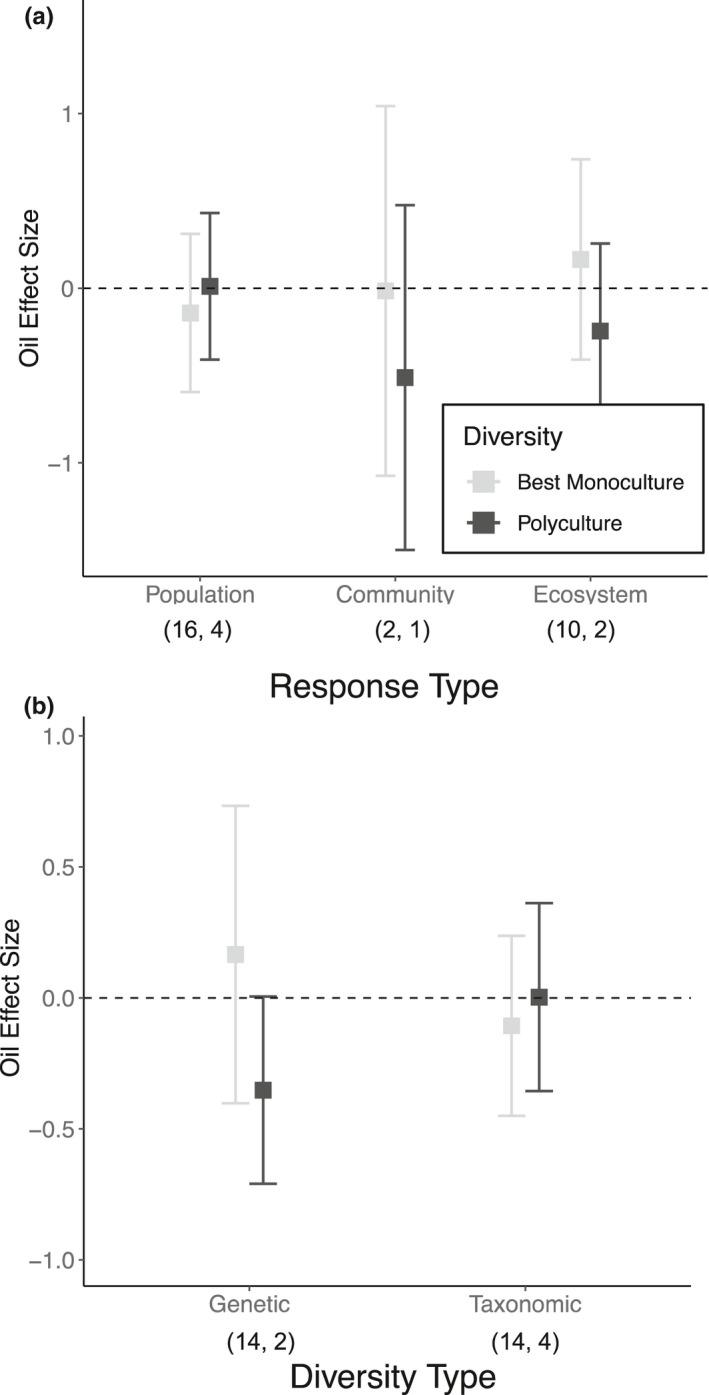
Biodiversity can enhance the response of ecosystems to disturbance. However, whether diversity can reduce the ecological effect of human-induced novel and extreme disturbances is unclear. In April 2010, the Deepwater Horizon (DwH) platform exploded, allowing an uncontrolled release of crude oil into the northern Gulf of Mexico. Initial surveys following the spill found that ecological impacts on coastal ecosystems varied greatly across habitat-type and trophic group; however, to date, few studies have tested the influence of local biodiversity on these responses. We used a meta-analytic approach to synthesize the results of 5 mesocosm studies that included 10 independent oil experiments and 5 independent oil + dispersant experiments. We tested whether biodiversity increased the resistance and/or resilience of coastal ecosystems to oil disturbance and whether a biodiversity effect depended on the type of diversity present (taxonomic or genetic) and/or the response type measured (population, community, or ecosystem level). We found that diversity can influence the effects of oiling, but the direction and magnitude of this diversity effect varied. Diversity reduced the negative impact of oiling for within-trophic-level responses and tended to be stronger for taxonomic than genetic diversity. Further, diversity effects were largely driven by the presence of highly resistant or quick to recover taxa and genotypes, consistent with the insurance hypothesis. However, we found no effect of diversity on the response to the combination of oil and dispersant exposure. We conclude that areas of low biodiversity may be particularly vulnerable to future oil disturbances and provide insight into the benefit of incorporating multiple measures of diversity in restoration projects and management decisions.
Keywords: Deepwater Horizon; diversity‐stability; genetic diversity; oiling; species diversity.
© 2022 The Authors. Ecology and Evolution published by John Wiley & Sons Ltd.
Conflict of interest statement
The authors declare no conflict of interest.
Figures
References
-
- Allison, G. (2004). The influence of species diversity and stress intensity on community resistance and resilience. Ecological Monographs, 74, 117–134. 10.1890/02-0681 - DOI
-
- Andersen, M. E. (2014). Early review of potential impacts of the Deepwater Horizon oil spill on the Gulf of Mexico wetland and their associated fisheries. In Alford J. B., Peterson M. S., & Green C. C (Eds.), Impacts of oil spill disasters on marine habitats and fisheries in North America (pp. 97–108). CRC Press.
-
- Bailey, J. K. , Schweitzer, J. A. , Úbeda, F. , Koricheva, J. , LeRoy, C. J. , Madritch, M. D. , Rehill, B. J. , Bangert, R. K. , Fischer, D. G. , Allan, G. J. , & Whitham, T. G. (2009). From genes to ecosystems: A synthesis of the effects of plant genetic factors across levels of organization. Philosophical Transactions of the Royal Society B: Biological Sciences, 364(1523), 1607–1616. 10.1098/rstb.2008.0336 - DOI - PMC - PubMed
-
- Baker, M. C. , Steinhoff, M. A. , & Fricano, G. F. (2017). Integrated effects of the Deepwater Horizon oil spill on nearshore ecosystems. Marine Ecology Progress Series, 576, 219–234. 10.3354/meps11920 - DOI
Associated data
LinkOut - more resources
Full Text Sources
Miscellaneous
