


Sleep disturbances during the COVID-19 pandemic: A systematic review, meta-analysis, and meta-regression
- PMID: 35131664
- PMCID: PMC8782754
- DOI: 10.1016/j.smrv.2022.101591
Sleep disturbances during the COVID-19 pandemic: A systematic review, meta-analysis, and meta-regression
Abstract
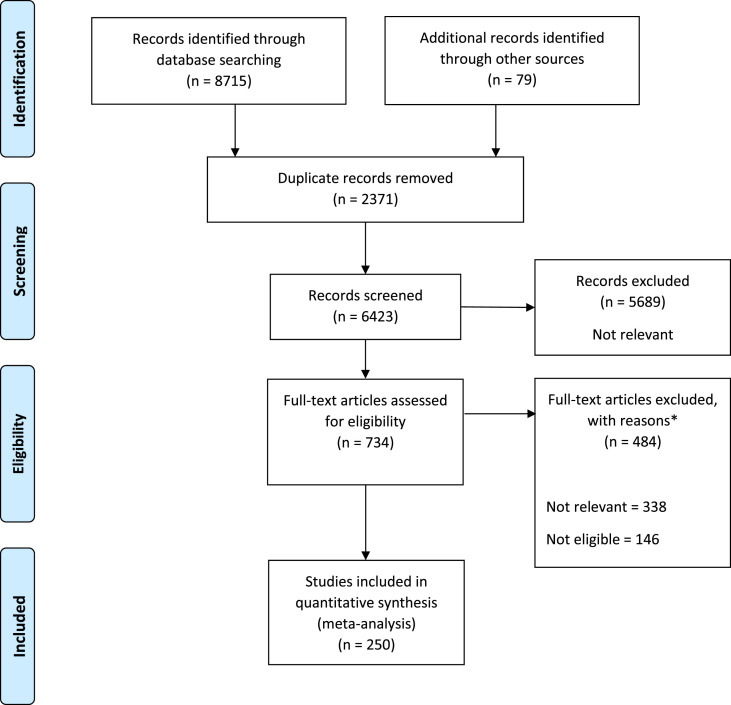
This systematic review and meta-analysis evaluated the extent of sleep disturbances during the COVID-19 pandemic. Eleven databases and six preprint repositories were searched for the period from November 1, 2019, to July 15, 2021. The DerSimonian and Laird method was used to develop random-effect meta-analyses. Two hundred and fifty studies comprising 493,475 participants from 49 countries were included. During COVID-19, the estimated global prevalence of sleep disturbances was 40.49% [37.56; 43.48%]. Bayesian meta-analysis revealed an odds of 0.68 [0.59; 0.77] which translates to a rate of approximately 41%. This provides reassurance that the estimated rate using classical meta-analysis is robust. Six major populations were identified; the estimated prevalence of sleep problem was 52.39% [41.69; 62.88%] among patients infected with COVID-19, 45.96% [36.90; 55.30%] among children and adolescents, 42.47% [37.95; 47.12%] among healthcare workers, 41.50% [32.98; 50.56%] among special populations with healthcare needs, 41.16% [28.76; 54.79%] among university students, and 36.73% [32.32; 41.38%] among the general population. Sleep disturbances were higher during lockdown compared to no lockdown, 42.49% versus 37.97%. Four in every ten individuals reported a sleep problem during the COVID-19 pandemic. Patients infected with the disease, children, and adolescents appeared to be the most affected groups.
Keywords: Circadian rhythm; Insomnia; Pandemic; Sleep disorder; Sleep disturbance; Sleep hygiene.
Copyright © 2022 Elsevier Ltd. All rights reserved.
Conflict of interest statement
Conflicts of interest The authors do not have any conflicts of interest to disclose.
Figures
References
-
- Ramar K., Malhotra R.K., Carden K.A., Martin J.L., Abbasi-Feinberg F., Aurora R.N., et al. Sleep is essential to health: an American Academy of Sleep Medicine position statement. J Clin Sleep Med. 2021 Oct 1;17(10):2115–2119. doi: 10.5664/jcsm.9476. PMID: 34170250; PMCID: PMC8494094. - DOI - PMC - PubMed
-
- Serrano-Ripoll M.J., Zamanillo-Campos R., Castro A., Fiol-de Roque M.A., Ricci-Cabello I. Insomnia and sleep quality in healthcare workers fighting against COVID-19: a systematic review of the literature and meta-analysis. Actas Esp Psiquiatr. 2021;49:155–179. - PubMed
Publication types
MeSH terms
LinkOut - more resources
Full Text Sources
Medical
