


Alleviating cervical radiculopathy by manipulative correction of reversed cervical lordosis: 4 years follow-up
- PMID: 35136807
- PMCID: PMC8797131
- DOI: 10.4103/jfmpc.jfmpc_648_21
Alleviating cervical radiculopathy by manipulative correction of reversed cervical lordosis: 4 years follow-up
Abstract
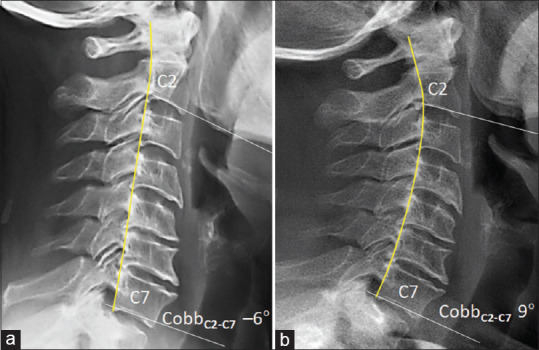
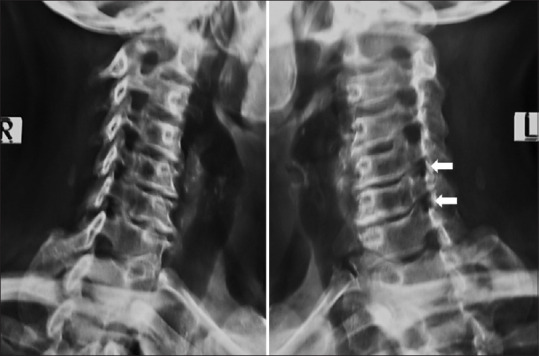
Cervical radiculopathy is a neurologic condition caused by nerve root compression in the cervical spine, resulting in pain, numbness, sensory or motor dysfunction in the upper extremities. We present the case of a 57-year-old woman working as an insurance agent who suffered from chronic neck pain and numbness in the left arm for six months. Cervical radiographs revealed a reverse in natural lordotic curve. The patient was diagnosed with left C6 radiculopathy due to cervical spondylosis. Since cervical traction, rehabilitative exercise, acupuncture, and pain medicines previously failed to provide a long-lasting relief of symptoms, the patient sought chiropractic care. She was treated with spinal manipulation in combination with intermittent motorized cervical traction for three months. As a result of care, the patient experienced complete relief of symptoms, full cervical mobility, and high WHO Quality of Life score. A restoration of cervical lordosis was demonstrated on the 4-year follow-up radiograph.
Keywords: Cervical lordosis; cervical radiculopathy; chiropractic manipulation.
Copyright: © 2021 Journal of Family Medicine and Primary Care.
Conflict of interest statement
There are no conflicts of interest.
Figures
References
-
- Bono CM, Ghiselli G, Gilbert TJ, Kreiner DS, Reitman C, Summers JT, et al. An evidence-based clinical guideline for the diagnosis and treatment of cervical radiculopathy from degenerative disorders. Spine J. 2011;11:64–72. - PubMed
-
- Chu ECP, Lim T, Mak KC. Cervical radiculopathy alleviating by manipulative correction of cervical hypolordosis. J Med Cases. 2018;9:139–41.
Publication types
LinkOut - more resources
Full Text Sources
Research Materials