


Antigenicity and adhesiveness of a Plasmodium vivax VIR-E protein from Brazilian isolates
- PMID: 35137905
- PMCID: PMC8824159
- DOI: 10.1590/0074-02760210227
Antigenicity and adhesiveness of a Plasmodium vivax VIR-E protein from Brazilian isolates
Abstract
Background: Plasmodium vivax, the major cause of malaria in Latin America, has a large subtelomeric multigene family called vir. In the P. vivax genome, about 20% of its sequences are vir genes. Vir antigens are grouped in subfamilies according to their sequence similarities and have been shown to have distinct roles and subcellular locations. However, little is known about vir subfamilies, especially when comes to their functions.
Objective: To evaluate the diversity, antigenicity, and adhesiveness of Plasmodium vivax VIR-E.
Methods: Vir-E genes were amplified from six P. vivax isolates from Manaus, North of Brazil. The presence of naturally acquired antibodies to recombinant PvBrVIR-E and PvAMA-1 was evaluated by ELISA. Binding capacity of recombinant PvBrVIR-E was assessed by adhesion assay to CHO-ICAM1 cells.
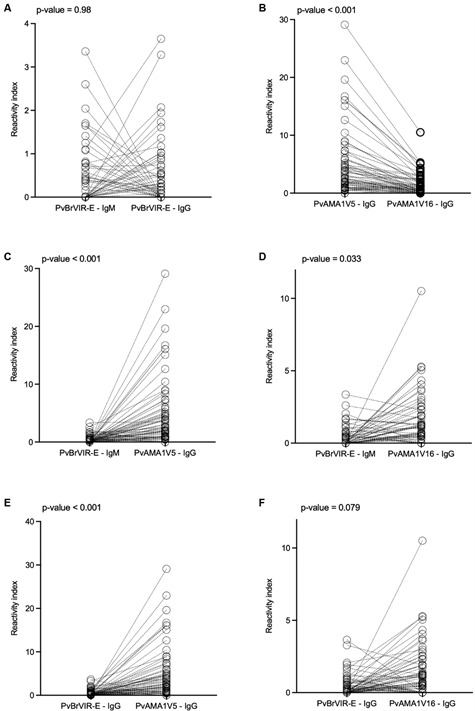
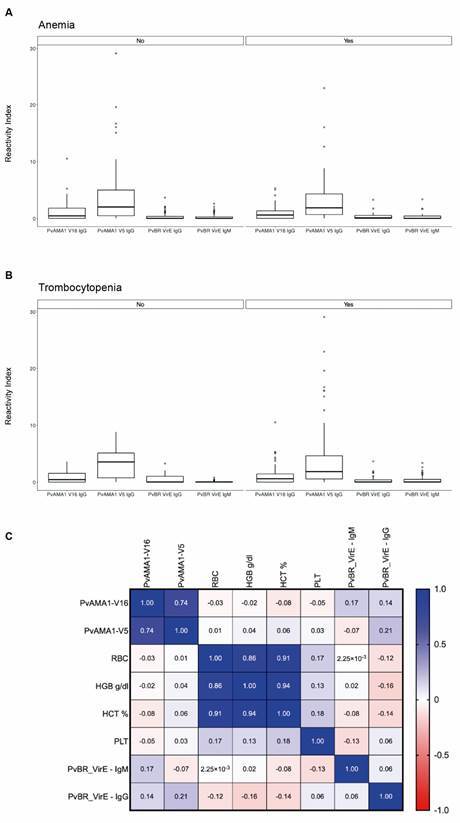
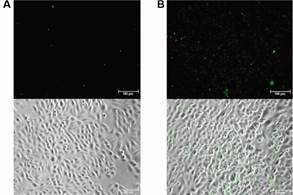
Findings: Despite vir-E sequence diversity, among those identified sequences, a representative one was chosen to be expressed as recombinant protein. The presence of IgM or IgG antibodies to PvBrVIR-E was detected in 23.75% of the study population while the presence of IgG antibodies to PvAMA-1 antigen was 66.25% in the same population. PvBrVIR-E was adhesive to CHO-ICAM1.
Main conclusions: PvBrVIR-E was antigenic and adhesive to CHO-ICAM1.
Figures
References
-
- WHO World Malaria Report. 2020. https://www.who.int/publications/i/item/9789240015791
-
- Lacerda MV, Mourão MP, Alexandre MA, Siqueira AM, Magalhães BM, Martinez-Espinosa FE. Understanding the clinical spectrum of complicated Plasmodium vivax malaria a systematic review on the contributions of the Brazilian literature. Malar J. 2012;11:12–12. doi: 10.1186/1475-2875-11-12. - DOI - PMC - PubMed
MeSH terms
Substances
LinkOut - more resources
Full Text Sources
Miscellaneous
