


The CD38 glycohydrolase and the NAD sink: implications for pathological conditions
- PMID: 35138178
- PMCID: PMC8917930
- DOI: 10.1152/ajpcell.00451.2021
The CD38 glycohydrolase and the NAD sink: implications for pathological conditions
Abstract
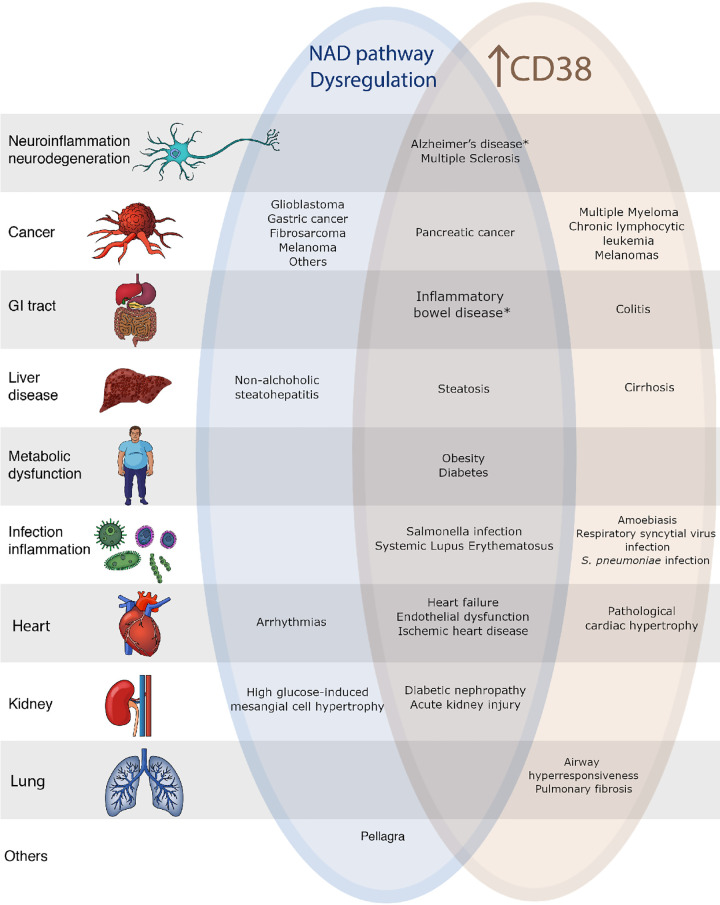
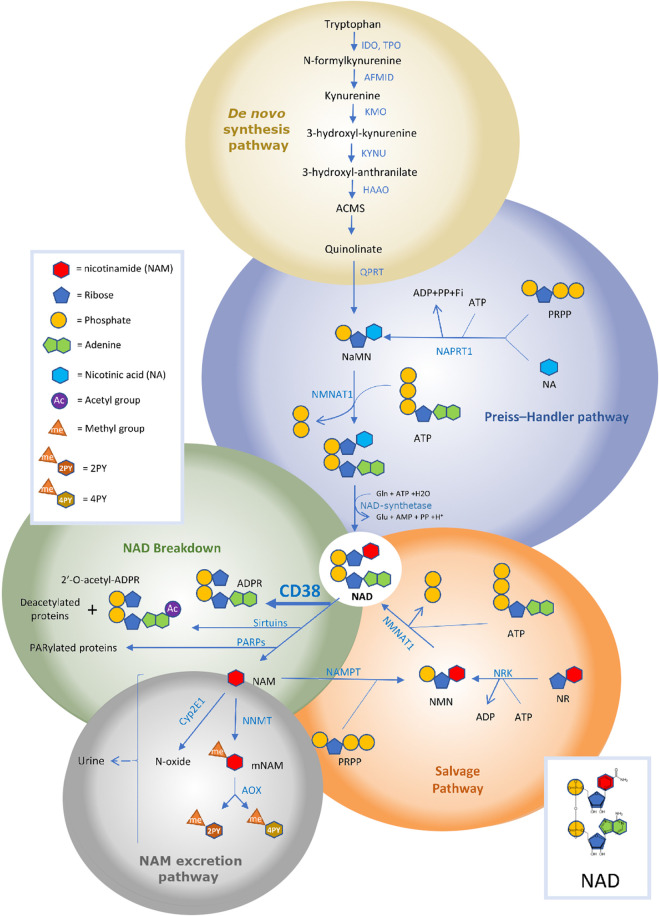
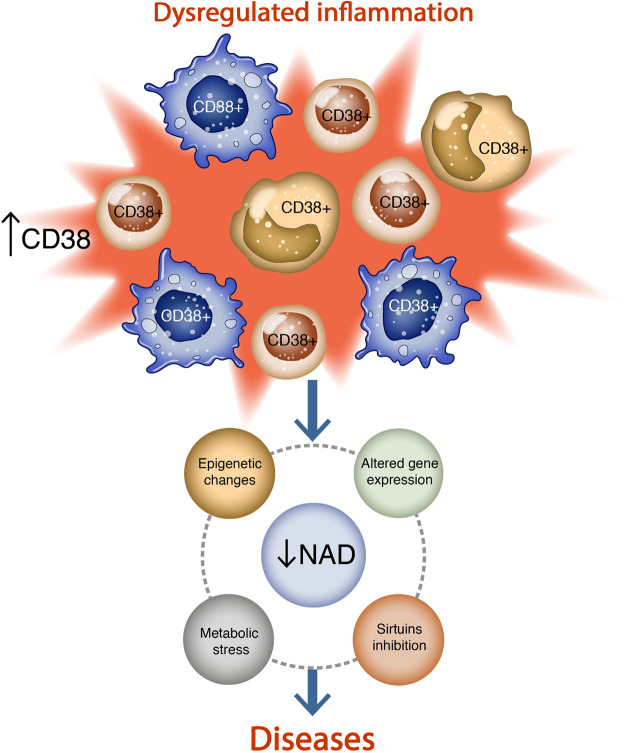
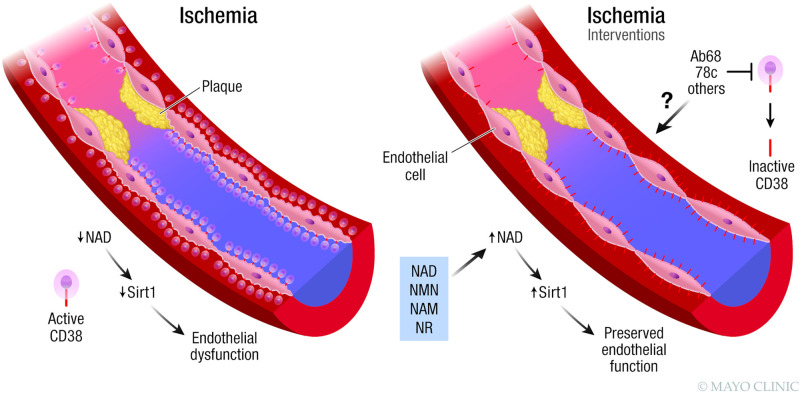
Nicotinamide adenine dinucleotide (NAD) acts as a cofactor in several oxidation-reduction (redox) reactions and is a substrate for a number of nonredox enzymes. NAD is fundamental to a variety of cellular processes including energy metabolism, cell signaling, and epigenetics. NAD homeostasis appears to be of paramount importance to health span and longevity, and its dysregulation is associated with multiple diseases. NAD metabolism is dynamic and maintained by synthesis and degradation. The enzyme CD38, one of the main NAD-consuming enzymes, is a key component of NAD homeostasis. The majority of CD38 is localized in the plasma membrane with its catalytic domain facing the extracellular environment, likely for the purpose of controlling systemic levels of NAD. Several cell types express CD38, but its expression predominates on endothelial cells and immune cells capable of infiltrating organs and tissues. Here we review potential roles of CD38 in health and disease and postulate ways in which CD38 dysregulation causes changes in NAD homeostasis and contributes to the pathophysiology of multiple conditions. Indeed, in animal models the development of infectious diseases, autoimmune disorders, fibrosis, metabolic diseases, and age-associated diseases including cancer, heart disease, and neurodegeneration are associated with altered CD38 enzymatic activity. Many of these conditions are modified in CD38-deficient mice or by blocking CD38 NADase activity. In diseases in which CD38 appears to play a role, CD38-dependent NAD decline is often a common denominator of pathophysiology. Thus, understanding dysregulation of NAD homeostasis by CD38 may open new avenues for the treatment of human diseases.
Keywords: CD38; NAD metabolism; diseases.
Conflict of interest statement
E.N.C holds a patent on CD38 inhibitors licensed by Elysium Health. E.N.C. consults for Calico, Mitobridge, and Cytokinetics. None of the other authors has any conflicts of interest, financial or otherwise, to disclose.
Figures
References
-
- Racker E. From Pasteur to Mitchell: a hundred years of bioenergetics. Fed Proc 39: 210–215, 1980. - PubMed
Publication types
MeSH terms
Substances
Grants and funding
LinkOut - more resources
Full Text Sources
Research Materials
