Association of Spironolactone Use With Risk of Cancer: A Systematic Review and Meta-analysis
- PMID: 35138351
- PMCID: PMC8829743
- DOI: 10.1001/jamadermatol.2021.5866
Association of Spironolactone Use With Risk of Cancer: A Systematic Review and Meta-analysis
Erratum in
-
Clarification of Conflict of Interest Disclosures.JAMA Dermatol. 2023 Feb 1;159(2):227. doi: 10.1001/jamadermatol.2022.5551. JAMA Dermatol. 2023. PMID: 36477782 Free PMC article. No abstract available.
Abstract
Importance: While originally approved for the management of heart failure, hypertension, and edema, spironolactone is commonly used off label in the management of acne, hidradenitis, androgenetic alopecia, and hirsutism. However, spironolactone carries an official warning from the US Food and Drug Administration regarding potential for tumorigenicity.
Objective: To determine the pooled occurrence of cancers, in particular breast and prostate cancers, among those who were ever treated with spironolactone.
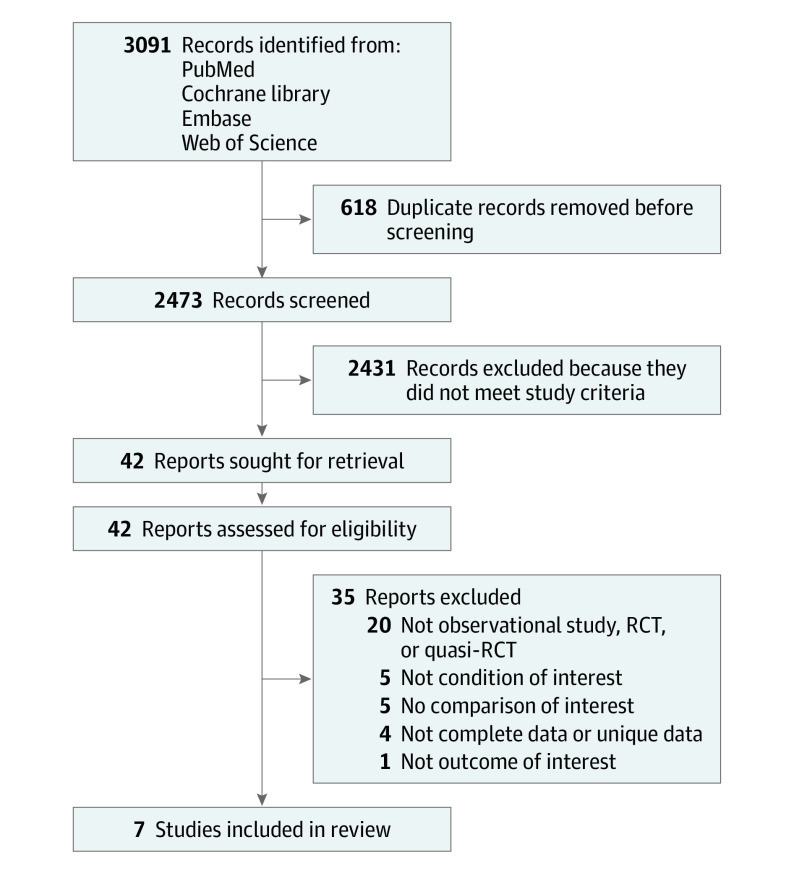
Data sources: PubMed, Cochrane Library, Embase, and Web of Science were searched from inception through June 11, 2021. The search was restricted to studies in the English language.
Study selection: Included studies reported the occurrence of cancers in men and women 18 years and older who were exposed to spironolactone.
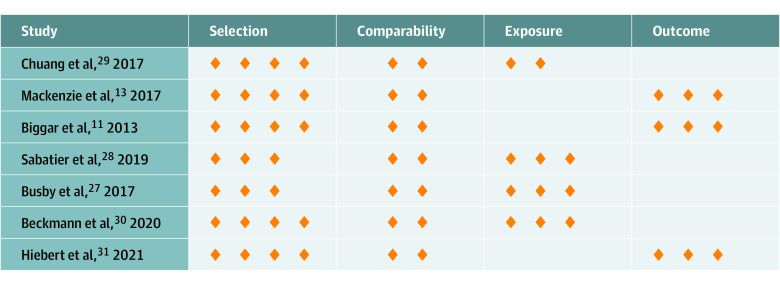
Data extraction and synthesis: Two independent reviewers (K.B. and H.H.) selected studies, extracted data, and appraised the risk of bias using the Newcastle-Ottawa Scale. Studies were synthesized using random effects meta-analysis.
Main outcomes and measures: Cancer occurrence, with a focus on breast and prostate cancers.
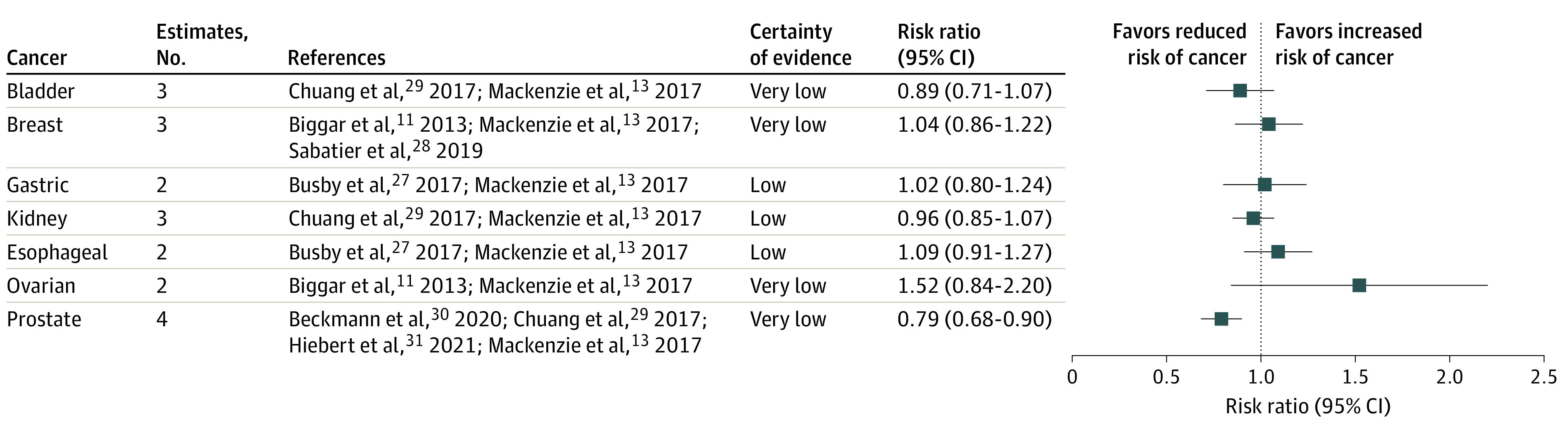
Results: Seven studies met eligibility criteria, with sample sizes ranging from 18 035 to 2.3 million and a total population of 4 528 332 individuals (mean age, 62.6-72.0 years; in the studies without stratification by sex, women accounted for 17.2%-54.4%). All studies were considered to be of low risk of bias. No statistically significant association was observed between spironolactone use and risk of breast cancer (risk ratio [RR], 1.04; 95% CI, 0.86-1.22; certainty of evidence very low). There was an association between spironolactone use and decreased risk of prostate cancer (RR, 0.79; 95% CI, 0.68-0.90; certainty of evidence very low). There was no statistically significant association between spironolactone use and risk of ovarian cancer (RR, 1.52; 95% CI, 0.84-2.20; certainty of evidence very low), bladder cancer (RR, 0.89; 95% CI, 0.71-1.07; certainty of evidence very low), kidney cancer (RR, 0.96; 95% CI, 0.85-1.07; certainty of evidence low), gastric cancer (RR, 1.02; 95% CI, 0.80-1.24; certainty of evidence low), or esophageal cancer (RR, 1.09; 95% CI, 0.91-1.27; certainty of evidence low).
Conclusions and relevance: In this systematic review and meta-analysis, spironolactone use was not associated with a substantial increased risk of cancer and was associated with a decreased risk of prostate cancer. However, the certainty of the evidence was low and future studies are needed, including among diverse populations such as younger individuals and those with acne or hirsutism.
Conflict of interest statement
Figures
References
-
- Barbieri JS, Spaccarelli N, Margolis DJ, James WD. Approaches to limit systemic antibiotic use in acne: systemic alternatives, emerging topical therapies, dietary modification, and laser and light-based treatments. J Am Acad Dermatol. 2019;80(2):538-549. doi:10.1016/j.jaad.2018.09.055 - DOI - PMC - PubMed
Publication types
MeSH terms
Substances
LinkOut - more resources
Full Text Sources
Medical
Miscellaneous