


Histopathological patterns and biological characteristics of ameloblastoma: A retrospective cross-sectional study
- PMID: 35140571
- PMCID: PMC8801468
- DOI: 10.1016/j.jtumed.2021.09.007
Histopathological patterns and biological characteristics of ameloblastoma: A retrospective cross-sectional study
Abstract
Objectives: This study aims to determine the histopathological patterns and biological characteristics of ameloblastoma.
Methods: This was a cross-sectional retrospective laboratory-based study using 82 formalin-fixed paraffin-embedded tissue blocks from patients diagnosed histologically with ameloblastoma. Information regarding age, sex, anatomical location of the lesion, histopathologic type, and biological behaviour or characteristics of the types of ameloblastoma was obtained from laboratory request forms. Categorical and continuous variables were summarized in percentage and mean ± standard deviation, respectively. The cohort was conducted on Ugandan patients diagnosed between 2016 and 2019.
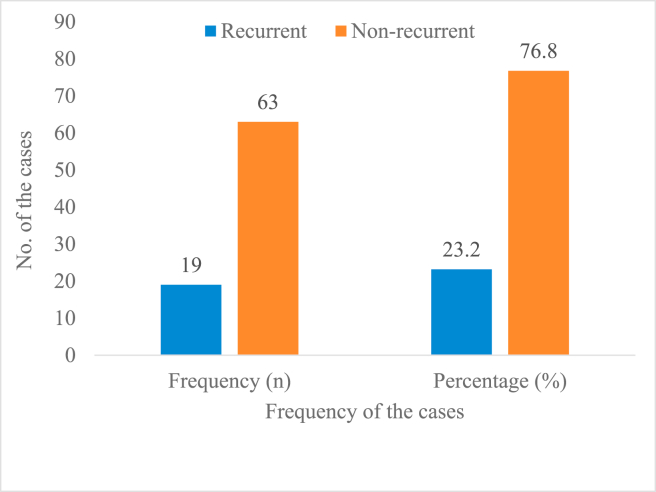
Results: Most patients (66.3%) were clinically presenting a painless jaw swelling, and a follicular pattern was common (39%) followed by the plexiform pattern (12.2%). All the ameloblastoma cases (100%) were benign, with the majority (76.8%) cases being non-recurrent while the remaining (23.2%) were recurrent, and the plexiform pattern was the commonest recurrent histopathological pattern.
Conclusion: This study reports a relatively significant rate of recurrence in almost a quarter of the study population. The plexiform histopathologic type was the dominant type in recurrence cases. Therefore, this finding provides insightful information to clinicians to ensure close follow-up for patients diagnosed with such a variant to prevent possible relapse of the disease.
أهداف البحث: تهدف هذه الدراسة إلى تحديد الأنماط النسيجية المرضية والخصائص البيولوجية للورم الأرومي المينائي.
طرق البحث: كانت هذه دراسة معملية مستعرضة تضمنت 82 كتلة نسيجية مثبتة بالبارافين مثبتة في الفورمالين من المرضى الذين تم تشخيص إصابتهم نسيجيا بالورم الأرومي المينائي. تم الحصول على المعلومات المتعلقة بالعمر والجنس والموقع التشريحي للآفة والنوع النسيجي المرضي والسلوك البيولوجي أو خصائص أنواع معلومات الورم الأرومي المينائي من استمارات طلب المختبر. تم تلخيص المتغيرات الفئوية والمستمرة باستخدام النسبة المئوية والمتوسط مع الانحراف المعياري على التوالي. تم إجراء الدراسة على مرضى أوغنديين تم تشخيصهم بين عامي 2016 و 2019 في قسم علم الأمراض.
النتائج: غالبية المرضى (66.3٪) تعرضوا سريريا لتورم في الفك غير مؤلم وكان النمط الجريبي الأكثر شيوعا بنسبة 39٪ يليه نمط الضفيرة الذي وجد في 12.2٪. جميع حالات الورم الأرومي المينائي (100٪) في هذه الدراسة كانت حميدة وغالبيتها (76.8٪) كانت حالات غير متكررة بينما 23.2٪ المتبقية كانت متكررة وكان نمط الضفيرة هو النمط النسيجي المرضي الأكثر شيوعا.
الخلاصة: تشير هذه الدراسة إلى معدل تكرار كبير نسبيا لما يقرب من ربع مجتمع الدراسة. أيضا، فإن حالات التكرار سيطر عليها النوع النسيجي الضفيري. لذلك، توفر هذه النتائج معلومات ثرية للأطباء أنه يجب عليهم دائما ضمان المتابعة الدقيقة للمرضى الذين تم تشخيصهم بمثل هذا المتغير لضمان الانتكاس المبكر المحتمل للمرض.
Keywords: Ameloblastoma; Biological behaviour; Histopathological patterns.
© 2021 The Authors.
Figures




References
-
- Ochsenius G., Ortega A., Godoy L., Peñafiel C., Escobar E. Odontogenic tumors in Chile: a study of 362 cases. J Oral Pathol Med. 2002;31(7):415–420. - PubMed
-
- Ladeinde A.L., Ajayi O.F., Ogunlewe M.O., Adeyemo W.L., Arotiba G.T., Bamgbose B.O., et al. Odontogenic tumors: a review of 319 cases in a Nigerian teaching hospital. Oral Surgery. Oral Med Oral Pathol Oral Radiol Endodontol. 2005;99(2):191–195. - PubMed
LinkOut - more resources
Full Text Sources
