


How have media campaigns been used to promote and discourage healthy and unhealthy beverages in the United States? A systematic scoping review to inform future research to reduce sugary beverage health risks
- PMID: 35142020
- PMCID: PMC9286342
- DOI: 10.1111/obr.13425
How have media campaigns been used to promote and discourage healthy and unhealthy beverages in the United States? A systematic scoping review to inform future research to reduce sugary beverage health risks
Abstract
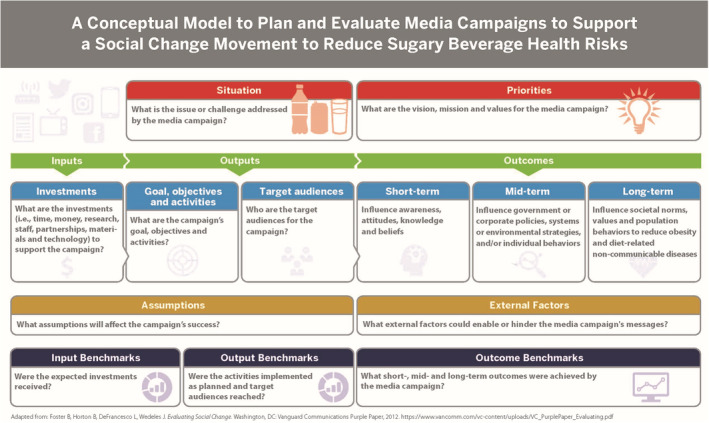
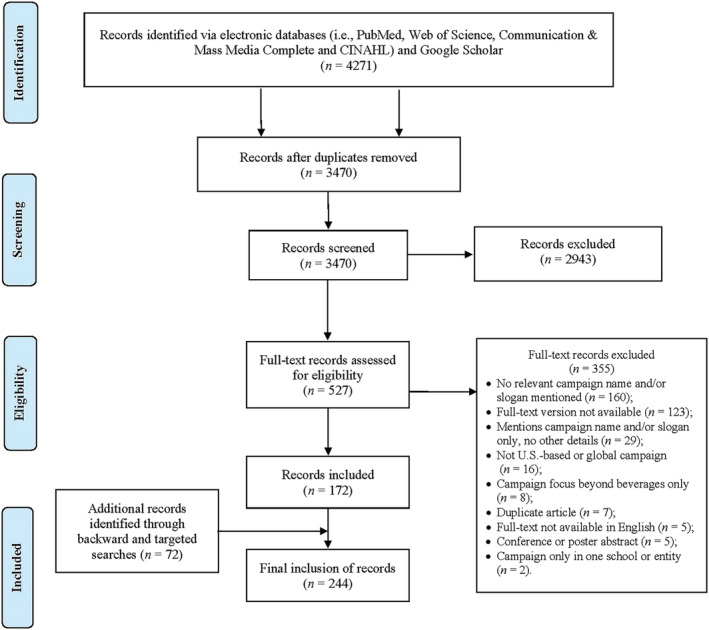
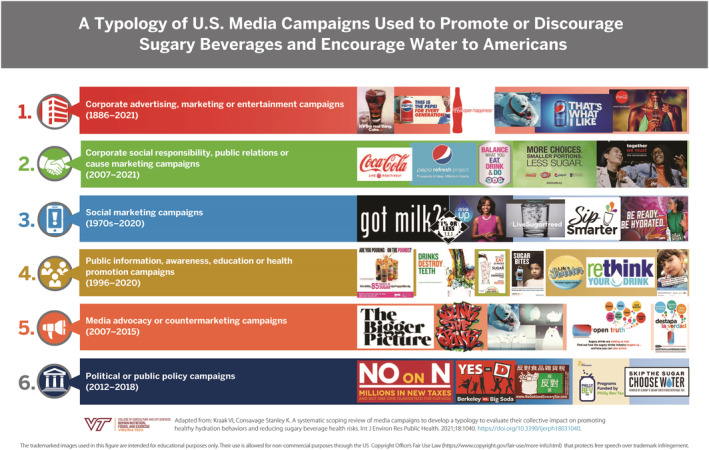
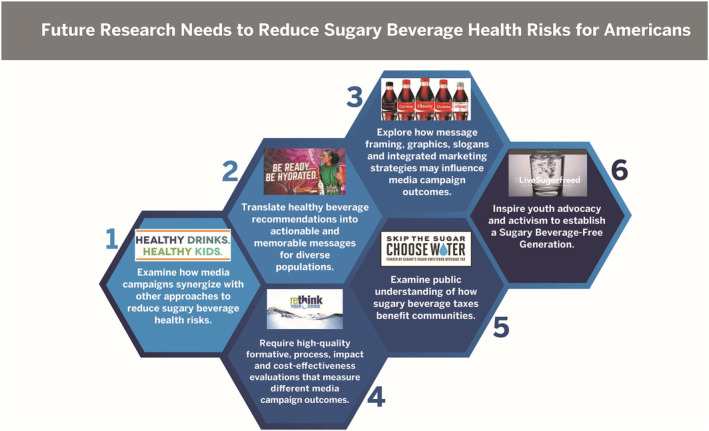
Sugary beverage consumption is associated with many health risks. This study used a proof-of-concept media campaign typology to examine U.S. beverage campaigns that promoted healthy beverages and encouraged or discouraged sugary beverages. We used a three-step systematic scoping review to identify, organize, analyze, and synthesize evidence. Step 1 used Preferred Reporting Items for Systematic Review and Meta-Analysis Extension for Scoping Reviews (PRISMA-ScR) guidelines to search four electronic databases and gray literature through 2021. Step 2 categorized relevant media campaigns using a media campaign typology. Step 3 examined campaign evaluation outcomes. We identified 280 campaigns organized into six campaign typology categories. The media landscape was dominated by corporate marketing campaigns for branded sugary beverages (65.8%; n = 184) followed by public awareness (9.6%; n = 27), public policy (8.2%; n = 23), social marketing (7.1%; n = 20), corporate social responsibility (5.7%; n = 16), and countermarketing (3.6%; n = 10) campaigns. Evaluations for 20 unique campaigns implemented over 30 years (1992-2021) across 14 states showed reduced sugary beverage or juice and increased water or low-fat milk sales and intake. Positive short-term cognitive and mid-term retail and behavioral changes were reported. There was limited evidence for long-term policy, social norm, and population health outcomes. Future research is needed to use media campaigns in strategic communications to reduce sugary beverage health risks for Americans.
Keywords: U.S. media campaigns; advertising and marketing; healthy beverage behaviors; sugary beverages; typology.
© 2022 The Authors. Obesity Reviews published by John Wiley & Sons Ltd on behalf of World Obesity Federation.
Conflict of interest statement
The authors declare no conflicts of interest related to this paper.
V. I. K., K. C. S., P. B. H., and M. Z. did not receive any funding from the commercial or private‐sector entities for research or consulting and have no conflicts of interest related to the content of this manuscript. This research did not involve human subjects; therefore, it was exempt from institutional review board requirements.
Figures
References
-
- Ricciuto L, Fulgoni VL, Gaine PC, Scott MO, DiFrancesco L. Sources of added sugars intake among the U.S. population: analysis by selected sociodemographic factors using the National Health and Nutrition Examination Survey 2011–18. Front Nutr. 2021;8(316):1‐13. doi: 10.3389/fnut.2021.687643 - DOI - PMC - PubMed
Publication types
MeSH terms
Substances
LinkOut - more resources
Full Text Sources
Medical
