


Alcohol-Associated Tissue Injury: Current Views on Pathophysiological Mechanisms
- PMID: 35143331
- PMCID: PMC11268381
- DOI: 10.1146/annurev-physiol-060821-014008
Alcohol-Associated Tissue Injury: Current Views on Pathophysiological Mechanisms
Abstract
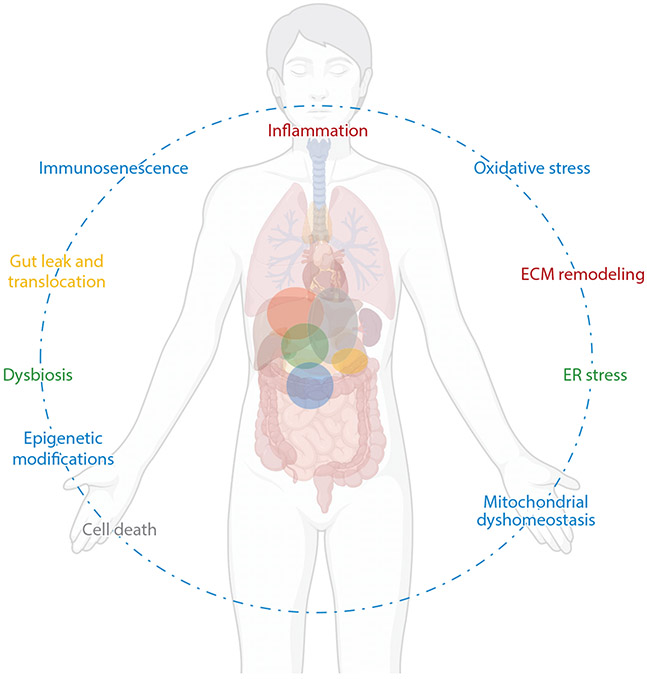
At-risk alcohol use is a major contributor to the global health care burden and leads to preventable deaths and diseases including alcohol addiction, alcoholic liver disease, cardiovascular disease, diabetes, traumatic injuries, gastrointestinal diseases, cancers, and fetal alcohol syndrome. Excessive and frequent alcohol consumption has increasingly been linked to alcohol-associated tissue injury and pathophysiology, which have significant adverse effects on multiple organ systems. Extensive research in animal and in vitro models has elucidated the salient mechanisms involved in alcohol-induced tissue and organ injury. In some cases, these pathophysiological mechanisms are shared across organ systems. The major alcohol- and alcohol metabolite-mediated mechanisms include oxidative stress, inflammation and immunometabolic dysregulation, gut leak and dysbiosis, cell death, extracellular matrix remodeling, endoplasmic reticulum stress, mitochondrial dysfunction, and epigenomic modifications. These mechanisms are complex and interrelated, and determining the interplay among them will make it possible to identify how they synergistically or additively interact to cause alcohol-mediated multiorgan injury. In this article, we review the current understanding of pathophysiological mechanisms involved in alcohol-induced tissue injury.
Keywords: alcohol; epigenomics; metabolites; oxidative stress; pathophysiological mechanisms; tissue injury.
Figures
References
-
- World Health Organ. 2018. Alcohol. Fact Sheet, World Health Organ., Geneva. https://www.who.int/news-room/fact-sheets/detail/alcohol
-
- Poznyak P, Rekve D. 2018. Global Status Report on Alcohol and Health 2018. Geneva: World Health Organ. https://www.who.int/publications/i/item/9789241565639
-
- NIH (Natl. Inst. Health). 2021. What is a standard drink? Fact Sheet, NIH, Bethesda, MD. http://www.niaaa.nih.gov/alcohol-health/overview-alcohol-consumption/wha...
-
- Di Castelnuovo A, Costanzo S, Bagnardi V, Donati MB, Iacoviello L, de Gaetano G. 2006. Alcohol dosing and total mortality in men and women: an updated meta-analysis of 34 prospective studies. JAMA Int. Med 166:2437–45 - PubMed
Publication types
MeSH terms
Substances
Grants and funding
LinkOut - more resources
Full Text Sources
