


A roadmap to increase diversity in genomic studies
- PMID: 35145307
- PMCID: PMC7614889
- DOI: 10.1038/s41591-021-01672-4
A roadmap to increase diversity in genomic studies
Abstract
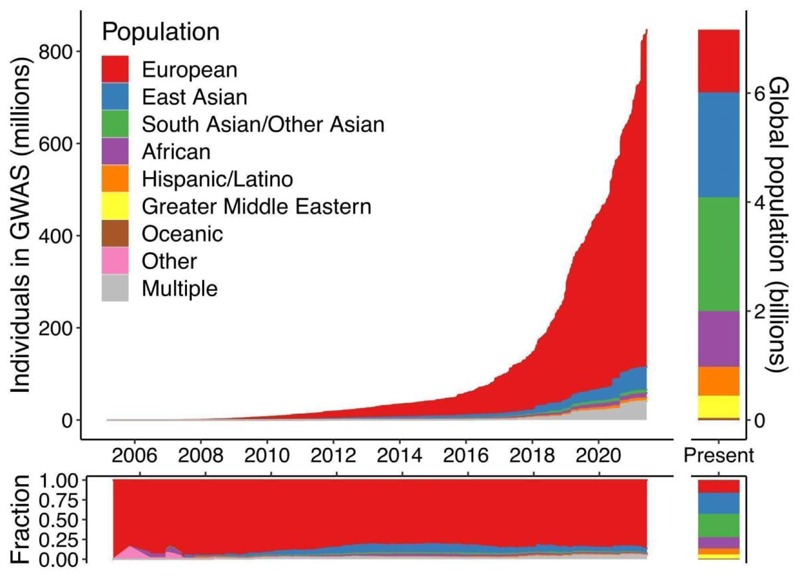
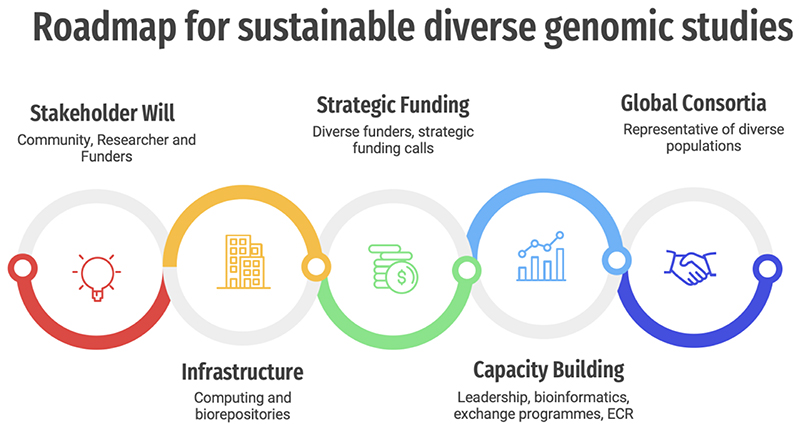
Two decades ago, the sequence of the first human genome was published. Since then, advances in genome technologies have resulted in whole-genome sequencing and microarray-based genotyping of millions of human genomes. However, genetic and genomic studies are predominantly based on populations of European ancestry. As a result, the potential benefits of genomic research-including better understanding of disease etiology, early detection and diagnosis, rational drug design and improved clinical care-may elude the many underrepresented populations. Here, we describe factors that have contributed to the imbalance in representation of different populations and, leveraging our experiences in setting up genomic studies in diverse global populations, we propose a roadmap to enhancing inclusion and ensuring equal health benefits of genomics advances. Our Perspective highlights the importance of sincere, concerted global efforts toward genomic equity to ensure the benefits of genomic medicine are accessible to all.
© 2022. Springer Nature America, Inc.
Figures
References
-
- Patin E, et al. Dispersals and genetic adaptation of Bantu-speaking populations in Africa and North America. Science. 2017;356:543–546. - PubMed
-
- Auton A, Salcedo T. Assessing Rare Variation in Complex Traits: Design and Analysis of Genetic Studies. Springer; New York: 2015. The 1000 genomes project; pp. 71–85. - DOI
-
- Majara L, et al. Low generalizability of polygenic scores in African populations due to genetic and environmental diversity. 2021:2021.01.12.426453. doi: 10.1101/2021.01.12.426453. https://www.biorxiv.org/content/10.1101/2021.01.12.426453v1 . - DOI
Publication types
MeSH terms
Grants and funding
LinkOut - more resources
Full Text Sources
Research Materials
