


Prevalence and risk factors of the symptoms of depression, anxiety, and stress during the COVID-19 pandemic in Bangladesh: a systematic review and meta-analysis
- PMID: 35145709
- PMCID: PMC8794743
- DOI: 10.1017/gmh.2021.49
Prevalence and risk factors of the symptoms of depression, anxiety, and stress during the COVID-19 pandemic in Bangladesh: a systematic review and meta-analysis
Abstract
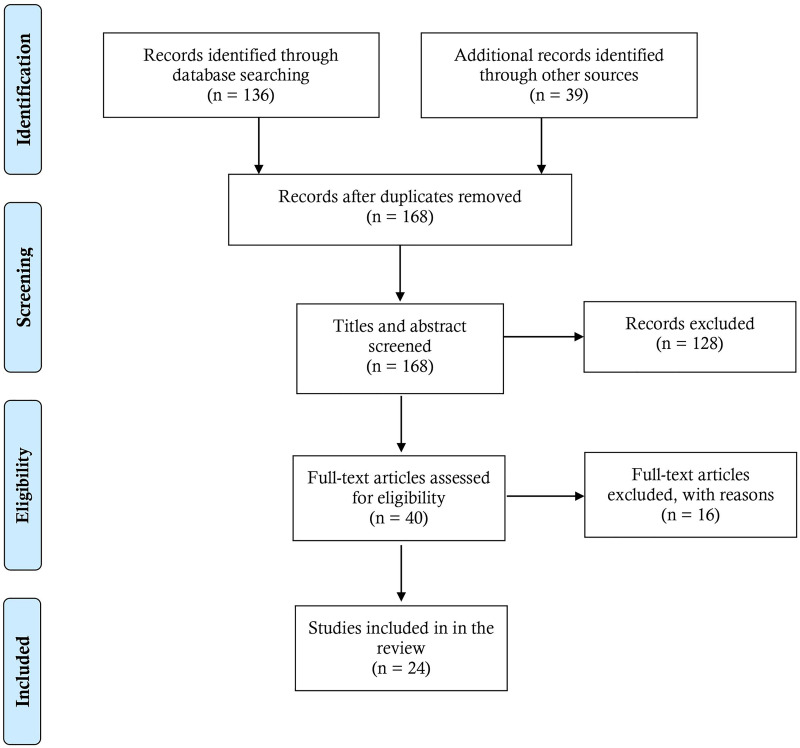
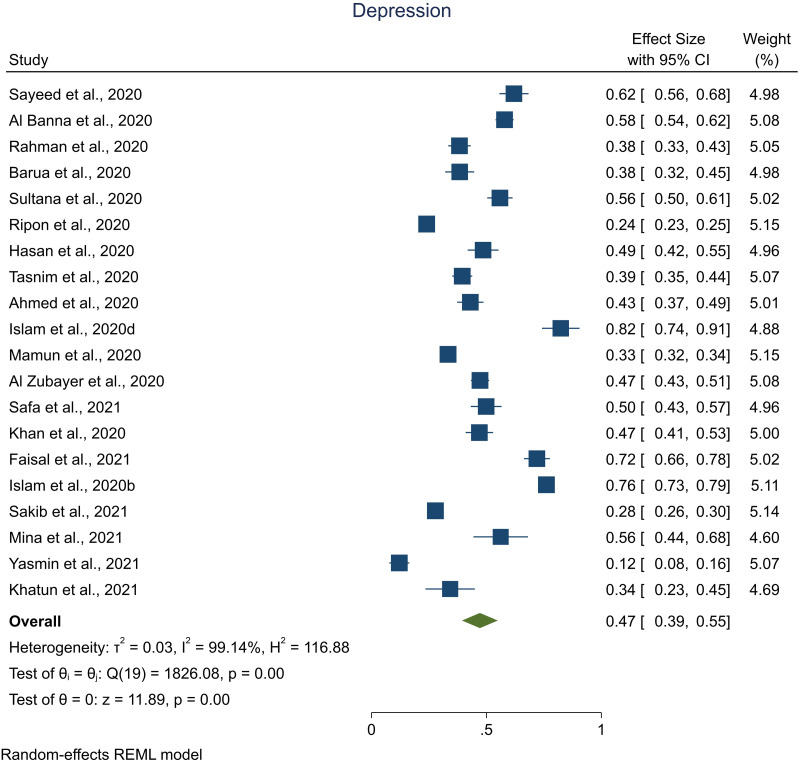
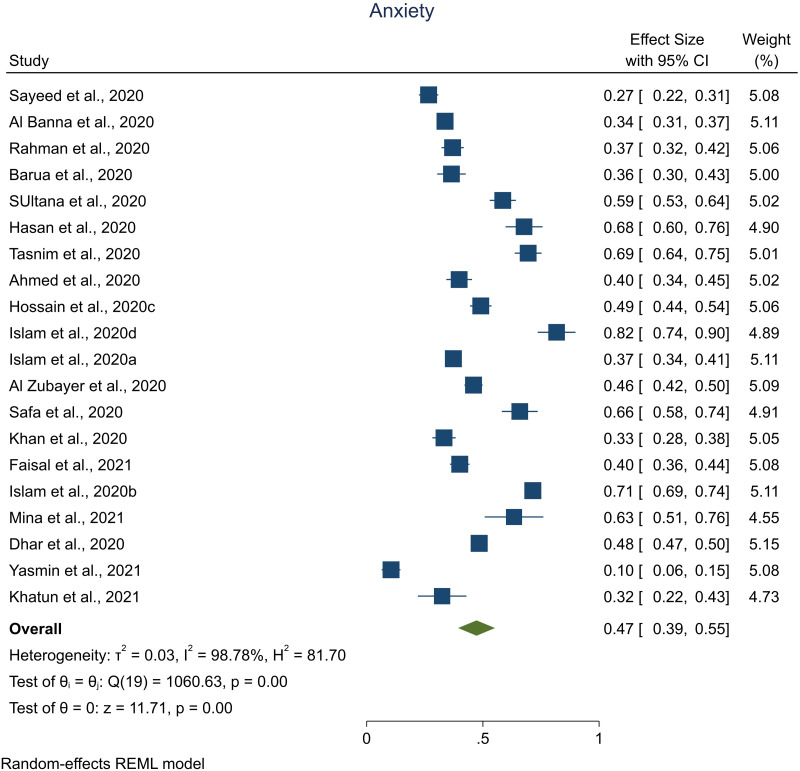
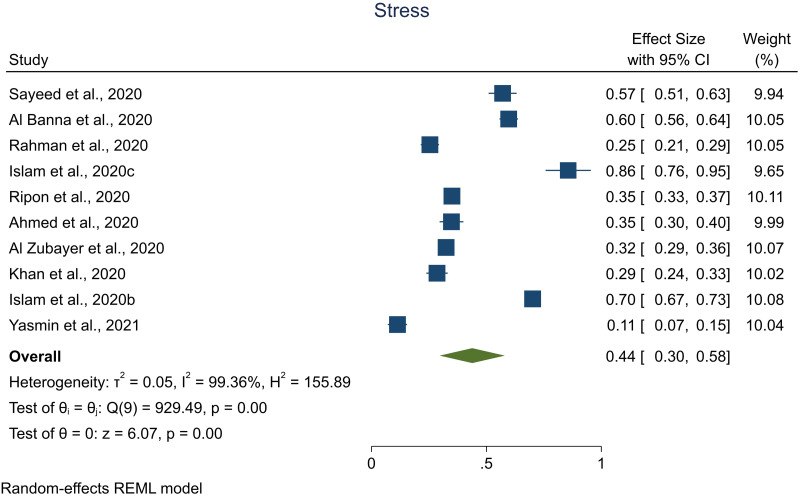
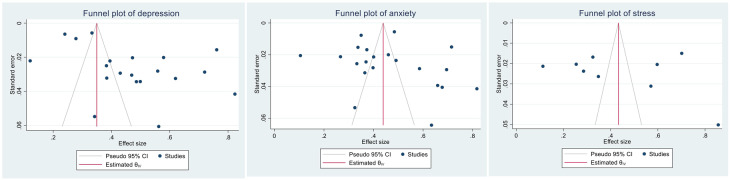
The COVID-19 pandemic affects people's psychological well-being as well as their risk of physical complications. Under the circumstance, it is essential to synthesize the existing evidence on psychological consequences with a view to fostering policymaking. Thus, a systematic attempt was compiled to review the Bangladeshi literature related to common mental health problems (i.e. depression, anxiety, and stress) during the COVID-19 pandemic. Adhering to the PRISMA guidelines, a systematic literature search was performed using Medline or PubMed, Scopus, PsycINFO, Web of Science, CINAHL, Google Scholar, PsyArxiv, MedRxiv, and ResearchGate, between 20 December 2020 and 5 March 2021, followed by predetermined eligibility criteria. The inclusion criteria for this review were observational studies involving at least one mental health problem (i.e. stress, depression, and anxiety) published in peer-reviewed journals or preprint servers in the English language after the inception of the pandemic in Bangladesh. The pooled prevalence of depression, anxiety, and stress was 47% (95% CI 39-55%, I 2 = 99.14%), 47% (95% CI 39-54%, I 2 = 99.78%), and 44% (95% CI 30-58%, I 2 = 99.36%), respectively. Subgroup analysis revealed that students were experiencing a higher rate of depression, anxiety, and stress than general people and healthcare professionals. The associated risk factors of mental health problems were gender, age, residence area, family size, monthly family income, educational status, marital status, physical exercise, smoking, alcohol use, fear of COVID-19, presence of chronic illness, unemployment status, and exposure to COVID-19-related news and social media. This systematic review provides baseline data on the symptoms of depression, anxiety, and stress across various Bangladeshi cohorts, which are anticipated to be helpful to the respective authorities for implementing cohort-specific mental health strategies.
Keywords: Anxiety; COVID-19 and psychological impact; PTSD; depression; mental health in Bangladesh; prevalence and risk factors; stress; systematic review.
© The Author(s) 2021.
Conflict of interest statement
None.
Figures
References
-
- Al-Zaman M (2020) Healthcare crisis in Bangladesh during the COVID-19 pandemic. American Journal of Tropical Medicine and Hygiene 103, 1357–1359. https://doi:10.4269/ajtmh.20-0826 - PMC - PubMed
-
- Al Banna MH, Sayeed A, Kundu S, Christopher E, Hasan MT, Begum MR, Dola STI, Hassan MM, Chowdhury S and Khan MSI (2020) The impact of the COVID-19 pandemic on the mental health of the adult population in Bangladesh: a nationwide cross-sectional study. International Journal of Environmental Research and Public Health 2, 1–12. doi: 10.1080/09603123.2020.1802409 - DOI - PubMed
Publication types
LinkOut - more resources
Full Text Sources