


Is Acupuncture Safe and Effective Treatment for Migraine? A Systematic Review of Randomized Controlled Trials
- PMID: 35145793
- PMCID: PMC8807499
- DOI: 10.7759/cureus.20888
Is Acupuncture Safe and Effective Treatment for Migraine? A Systematic Review of Randomized Controlled Trials
Abstract
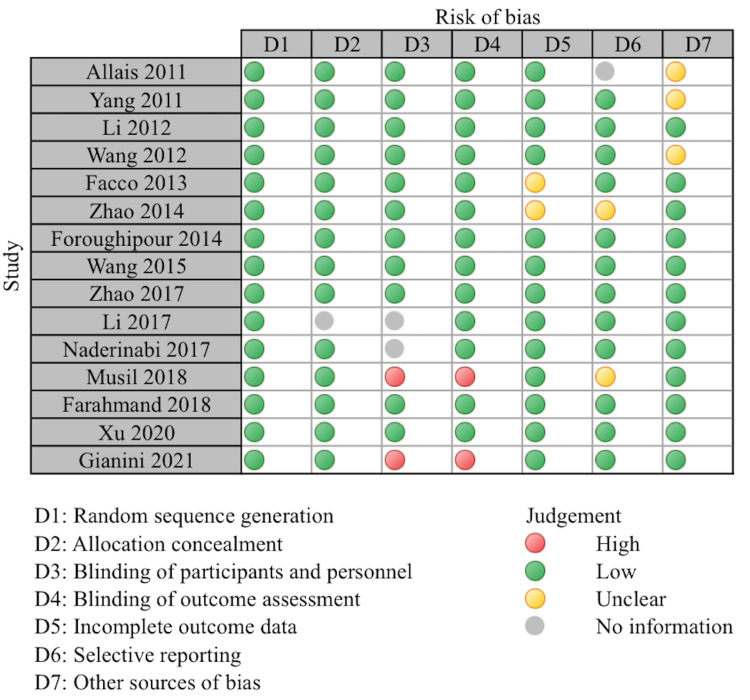
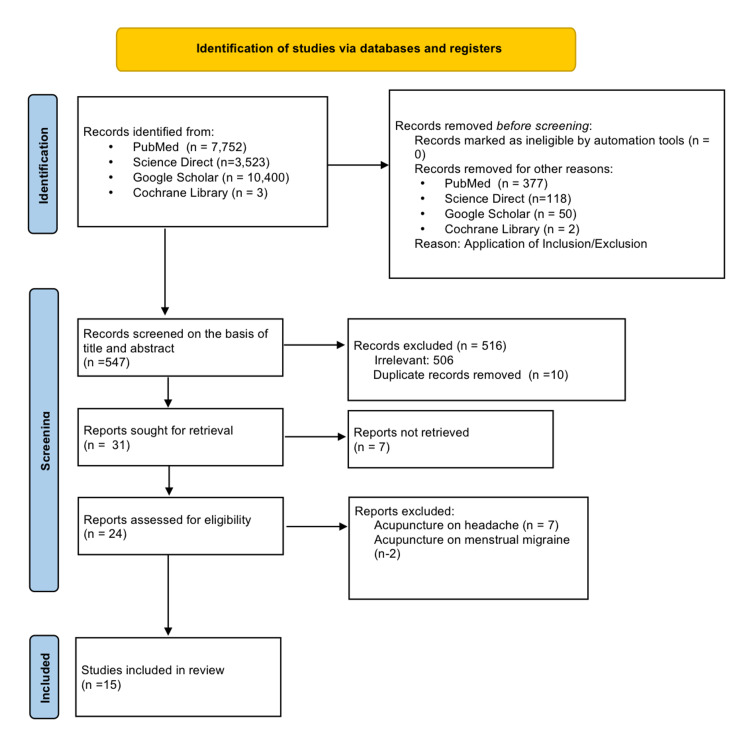
Migraine is a debilitating condition that places a substantial economic burden on society and seriously affects patients' quality of life. Currently, there is no known "cure" for migraines, and pharmacologic treatments or prophylaxis carry many unwanted effects. Acupuncture has been accepted as an alternative treatment. However, its effectiveness is still debated. This is a systematic review of randomized controlled trials (RCT) that investigate acupuncture safety and efficacy in migraine versus various control groups. We searched PubMed, Google Scholar, Science Direct, and Cochrane library using keywords: migraines, migraine with aura, migraine without aura, headache, acupuncture, and needling therapy. Two independent reviewers participated in data extraction and assessment. Fifteen randomized controlled trials involving 2,056 participants that met the inclusion criteria were obtained and analyzed. Based on the findings, seven out of 10 trials that compared acupuncture with sham acupuncture showed a more significant reduction in the frequency of migraine attacks and headache intensity. Four studies revealed acupuncture is just as effective and has fewer side effects than any western medicine. Acupuncture can be recommended as an alternative or adjunct to drug treatment for patients suffering migraines. However, further clinical trials that utilized the Standards for Reporting Interventions in Clinical Trials of Acupuncture (STRICTA) recommendation are still needed to strongly present an evidence-based strategy.
Keywords: acupoints; acupuncture; chronic migraine; episodic migraine; migraine disorder; migraine with aura; migraine without aura; needle therapy.
Copyright © 2022, Naguit et al.
Conflict of interest statement
The authors have declared that no competing interests exist.
Figures
References
-
- Global, regional, and national incidence, prevalence, and years lived with disability for 354 diseases and injuries for 195 countries and territories, 1990-2017: a systematic analysis for the Global Burden of Disease Study 2017. GBD 2017 Disease and Injury Incidence and Prevalence Collaborators. Lancet. 2018;392:1789–1858. - PMC - PubMed
Publication types
LinkOut - more resources
Full Text Sources
Miscellaneous