Metabolic-Associated Fatty Liver Disease Is Highly Prevalent in the Postacute COVID Syndrome
- PMID: 35146047
- PMCID: PMC8826155
- DOI: 10.1093/ofid/ofac003
Metabolic-Associated Fatty Liver Disease Is Highly Prevalent in the Postacute COVID Syndrome
Abstract
Background: A proposal has recently been advanced to change the traditional definition of nonalcoholic fatty liver disease to metabolic-associated fatty liver disease (MAFLD), to reflect the cluster of metabolic abnormalities that may be more closely associated with cardiovascular risk. Long coronavirus disease 2019 (COVID-19) is a smoldering inflammatory condition, characterized by several symptom clusters. This study aims to determine the prevalence of MAFLD in patients with postacute COVID syndrome (PACS) and its association with other PACS-cluster phenotypes.
Methods: We included 235 patients observed at a single university outpatient clinic. The diagnosis of PACS was based on ≥1 cluster of symptoms: respiratory, neurocognitive, musculoskeletal, psychological, sensory, and dermatological. The outcome was prevalence of MAFLD detected by transient elastography during the first postdischarge follow-up outpatient visit. The prevalence of MAFLD at the time of hospital admission was calculated retrospectively using the hepatic steatosis index.
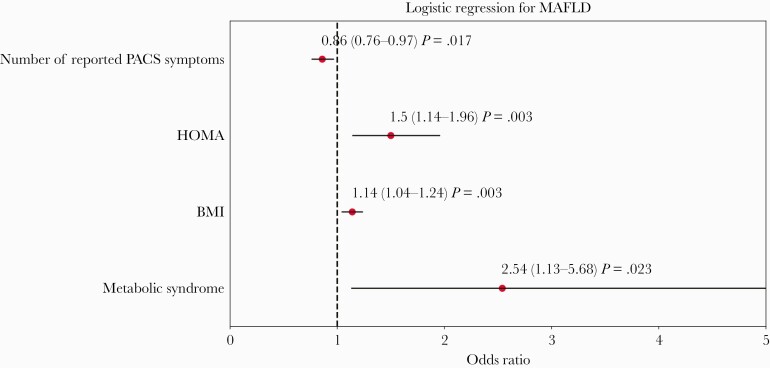
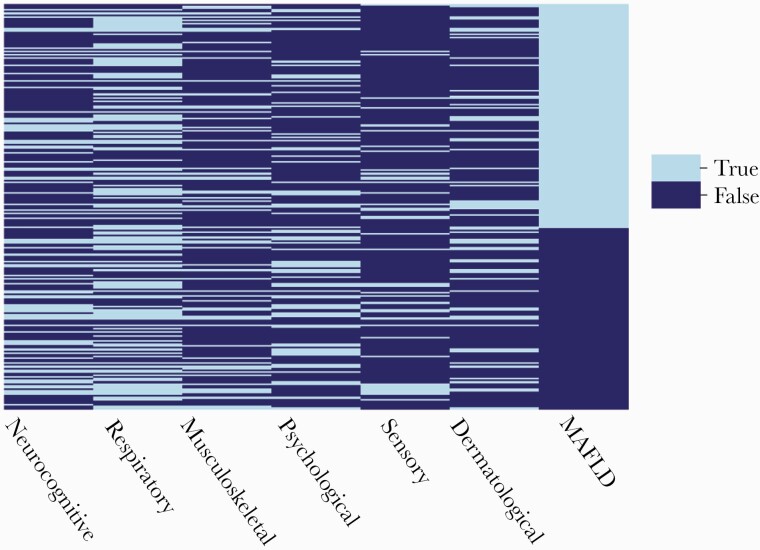
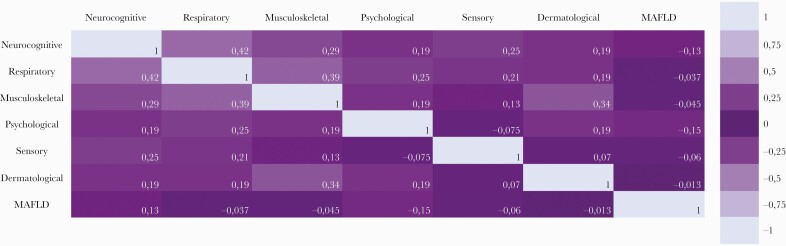
Results: Of 235 patients, 162 (69%) were men (median age 61). The prevalence of MAFLD was 55.3% at follow-up and 37.3% on admission (P < .001). Insulin resistance (odds ratio [OR] = 1.5; 95% confidence interval [CI], 1.14-1.96), body mass index (OR = 1.14; 95% CI, 1.04-1.24), and the metabolic syndrome (OR = 2.54; 95% CI, 1.13-5.68) were independent predictors of MAFLD. The number of PACS clusters was inversely associated with MAFLD (OR = 0.86; 95% CI, .76-0.97). Thirty-one patients (13.2%) had MAFLD with no other associated PACS clusters. All correlations between MAFLD and other PACS clusters were weak.
Conclusions: Metabolic-associated fatty liver disease was highly prevalent after hospital discharge and may represent a specific PACS-cluster phenotype, with potential long-term metabolic and cardiovascular health implications.
Keywords: 19; COVID; metabolic-associated fatty liver disease.
© The Author(s) 2022. Published by Oxford University Press on behalf of Infectious Diseases Society of America.
Figures