


Out-of-hospital cardiac arrest: Does rurality decrease chances of survival?
- PMID: 35146464
- PMCID: PMC8819014
- DOI: 10.1016/j.resplu.2022.100208
Out-of-hospital cardiac arrest: Does rurality decrease chances of survival?
Abstract
Background: Geographical setting is seldomly taken into account when investigating out-of-hospital cardiac arrest (OHCA). It is a common notion that living in rural areas means a lower chance of fast and effective helpwhen suffering a time-critical event. This retrospective cohort study investigates this hypothesis and compares across healthcare-divided administrative regions.
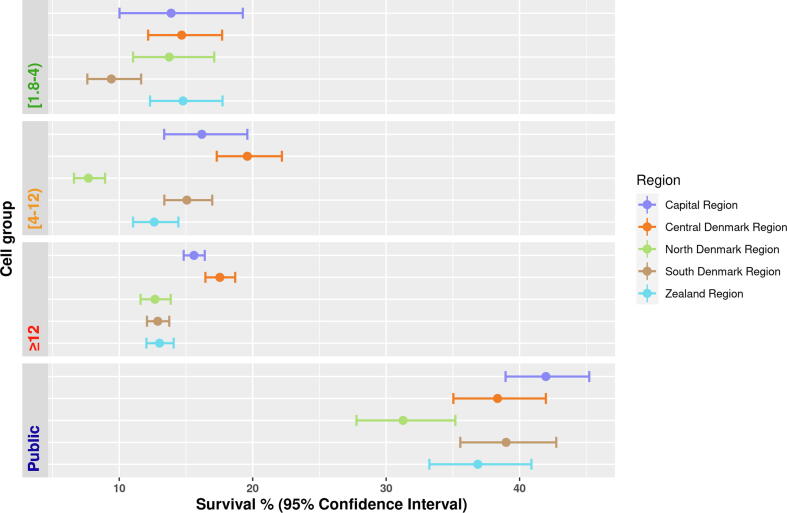
Methods: We included only witnessed OHCAs to minimize the risk that outcome was predetermined by time to caller arrival and/or recognition. Arrests were divided into public and residential. Residential arrests were categorized according to population density of the area in which they occurred. We investigated incidence, EMS response time and 30-day survival according to area type and subsidiarily by healthcare-divided administrative region.
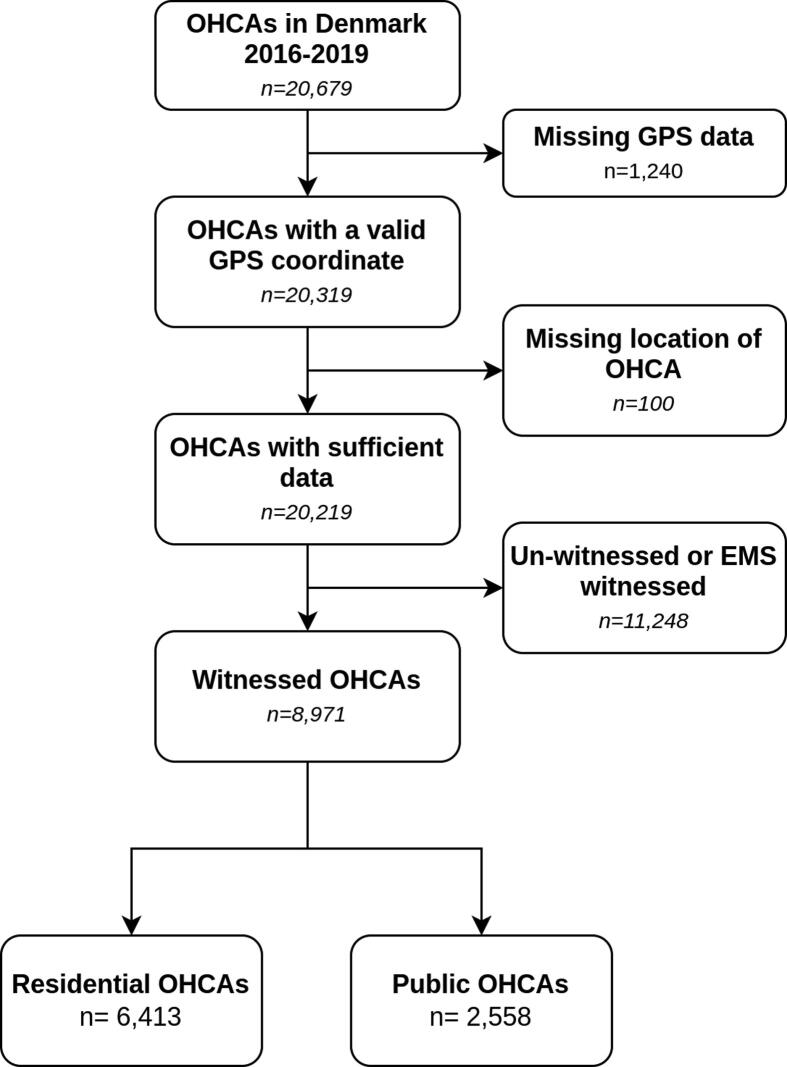
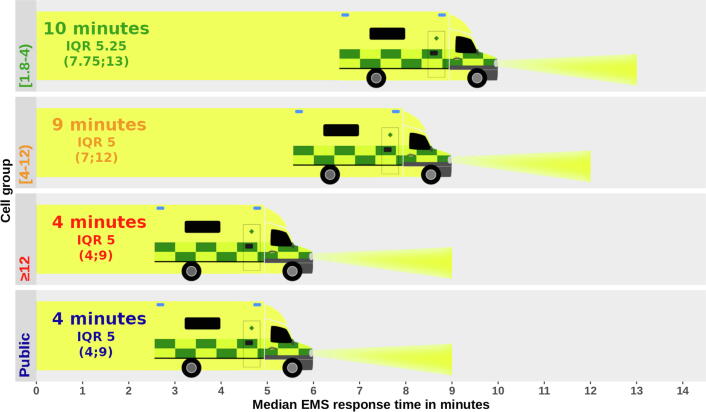
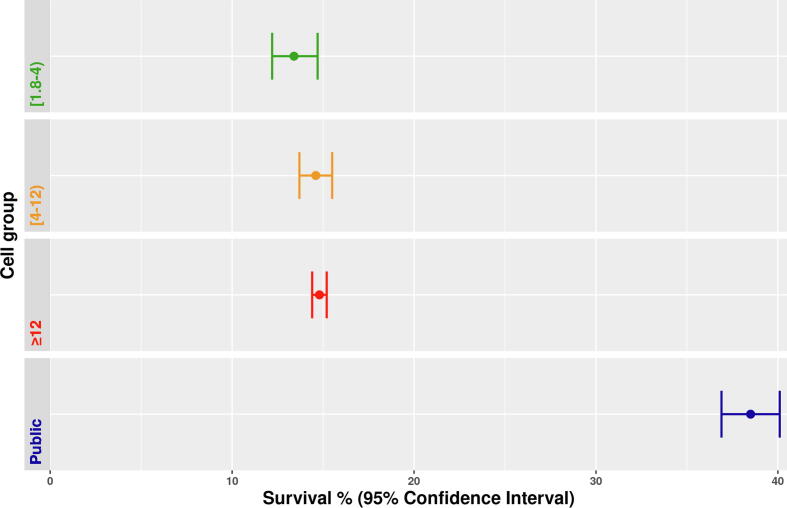
Results: The majority (71%) of 8,579 OHCAs were residential, and 53.2% of all arrests occurred in the most densely populated cell group amongst residential arrests. This group had a median EMS response time of six minutes, whereas the most sparsely populated group had a median of 10 minutes. Public arrests also had a median response time of six minutes. 30-day survival was highest in public arrests (38.5%, [95% CI 36.9;40.1]), and varied only slightly with no statistical significance between OHCAs in densely and sparsely populated areas from 14.8% (95% CI 14.4;15.2) and 13.4% (95% CI 12.2;14.7).
Conclusion: Our study demonstrates that while EMS response times in Denmark are longer in the rural areas, there is no statistically significant decrease in survival compared to the most densely populated areas.
Keywords: AED, Automated External Defibrillator; ALS, Advanced Life Support; BLS, Basic Life Support; EMS response time; EMS, Emergency Medical Services; GPS, Global Positioning System; Geography; HEMS, Helicopter Emergency Services; IQR, Interquartile Range; OHCA; OHCA, Out of Hospital Cardiac Arrest; Out-of-hospital cardiac arrest; Population density; Survival.
© 2022 The Authors.
Conflict of interest statement
The authors declare that they have no known competing financial interests or personal relationships that could have appeared to influence the work reported in this paper.
Figures
References
-
- Ten Programs – Global Resuscitation Alliance https://www.globalresuscitationalliance.org/ten-programs/ [accessed July 6, 2021].
-
- Bases. https://www.akutlaegehelikopter.dk/en/about-us/bases/ [accessed January 10, 202].
-
- Danske Regioner - Regional Denmark. https://www.regioner.dk/services/in-english/regional-denmark [accessed August 10, 2021]
LinkOut - more resources
Full Text Sources
Miscellaneous
