


A tale of two cohorts: Differing outcomes in infantile-onset focal epilepsy
- PMID: 35146752
- PMCID: PMC9007856
- DOI: 10.1111/epi.17181
A tale of two cohorts: Differing outcomes in infantile-onset focal epilepsy
Abstract
Objective: Infants with focal-onset epilepsy are an understudied population, requiring additional evaluation for clinical assessment and prognostication. Our goal was to characterize the etiology and natural history of infantile-onset focal epilepsy.
Methods: We retrospectively identified all infants (0-24 months) with onset of focal epilepsy while resident in Olmsted County, Minnesota, between 1980 and 2018, using the Rochester Epidemiology Project Database. We assessed the impact of etiology on both seizure and neurodevelopmental outcome, and mortality.
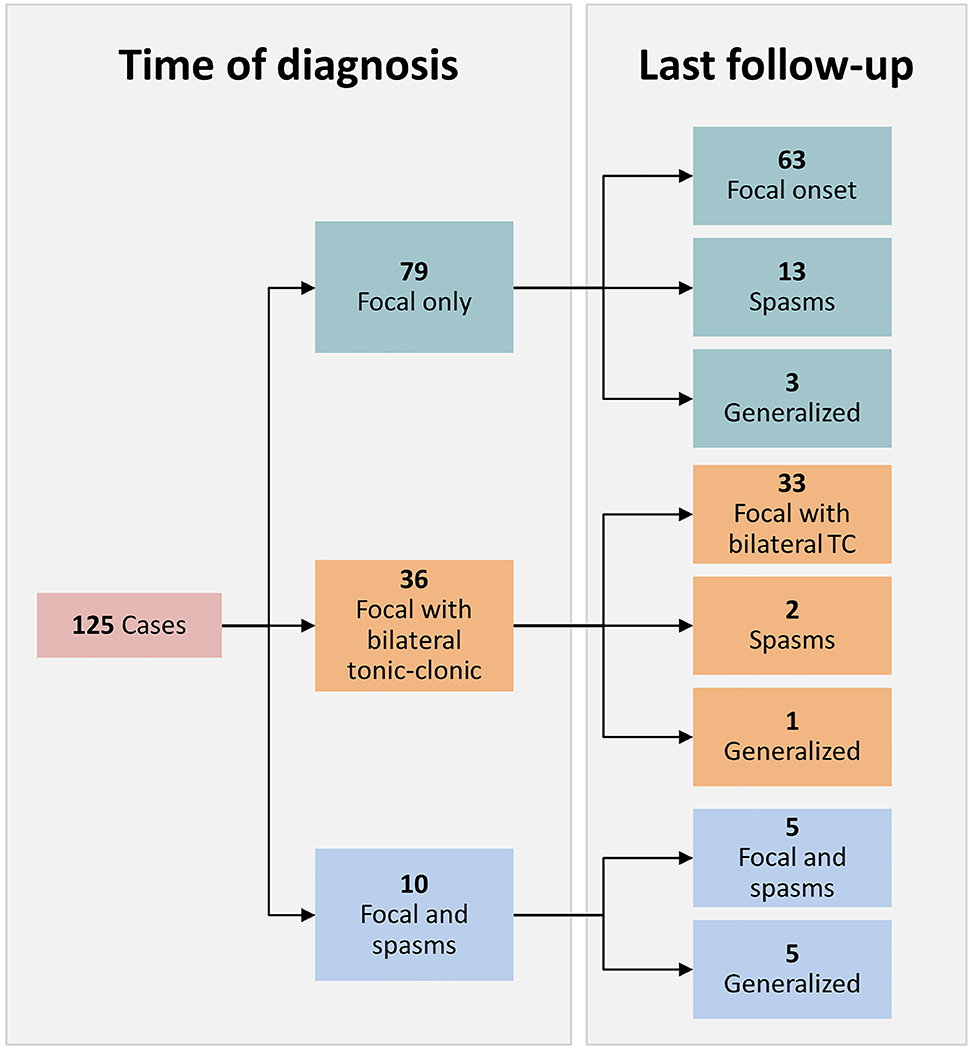
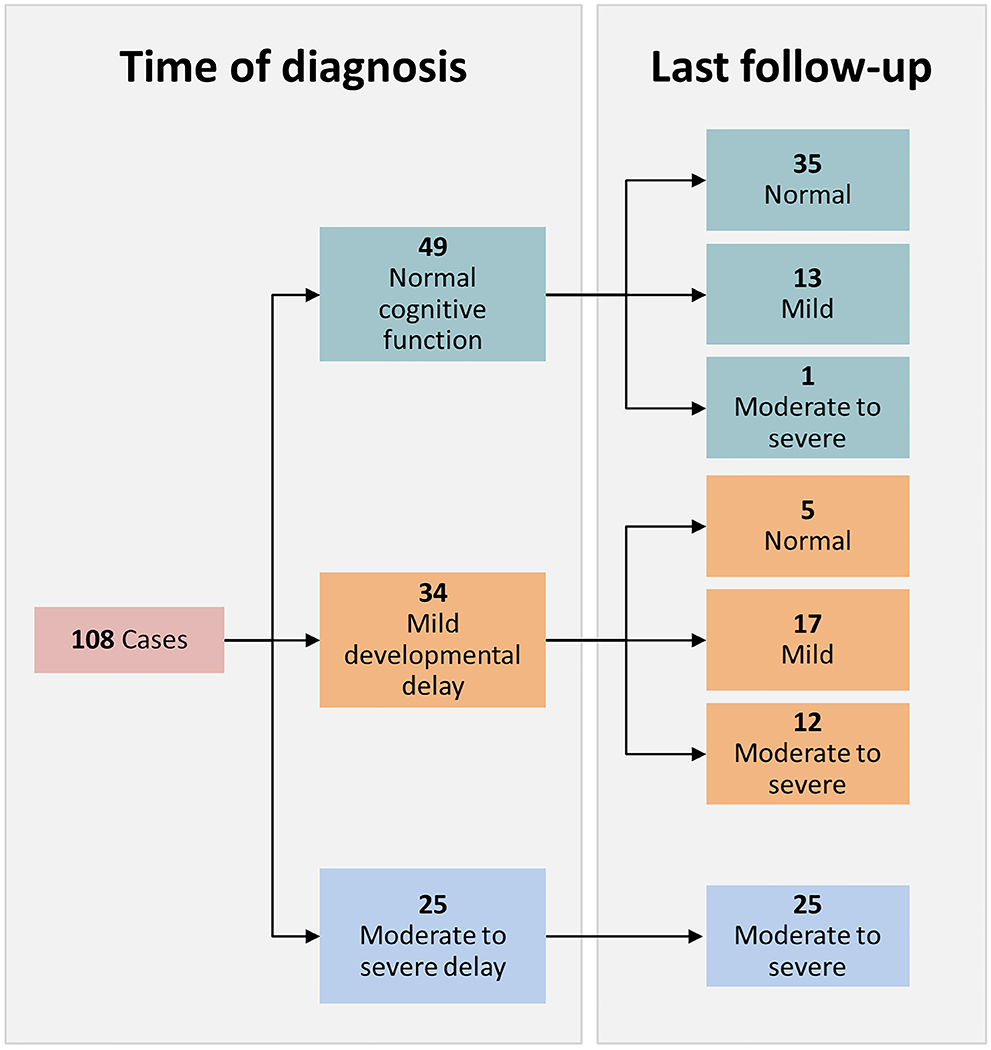
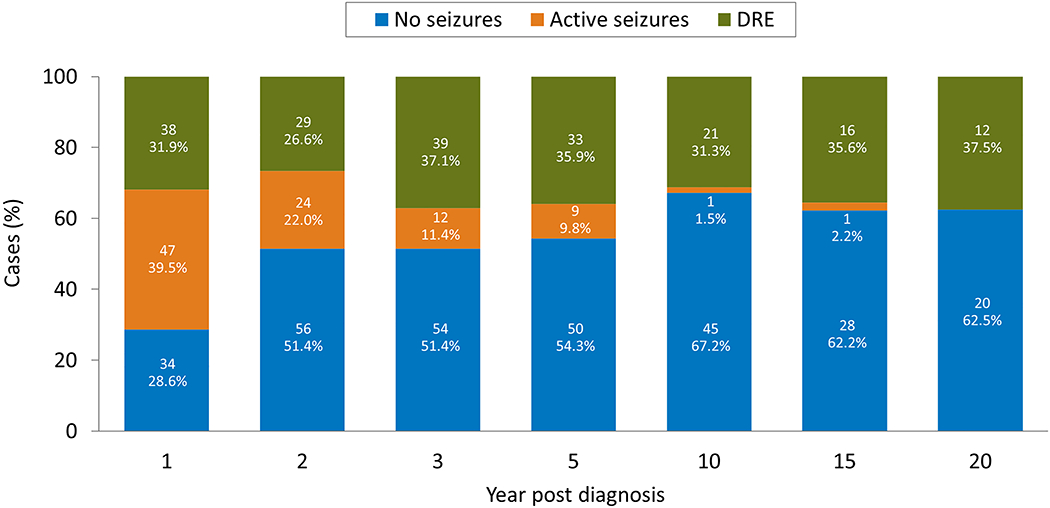
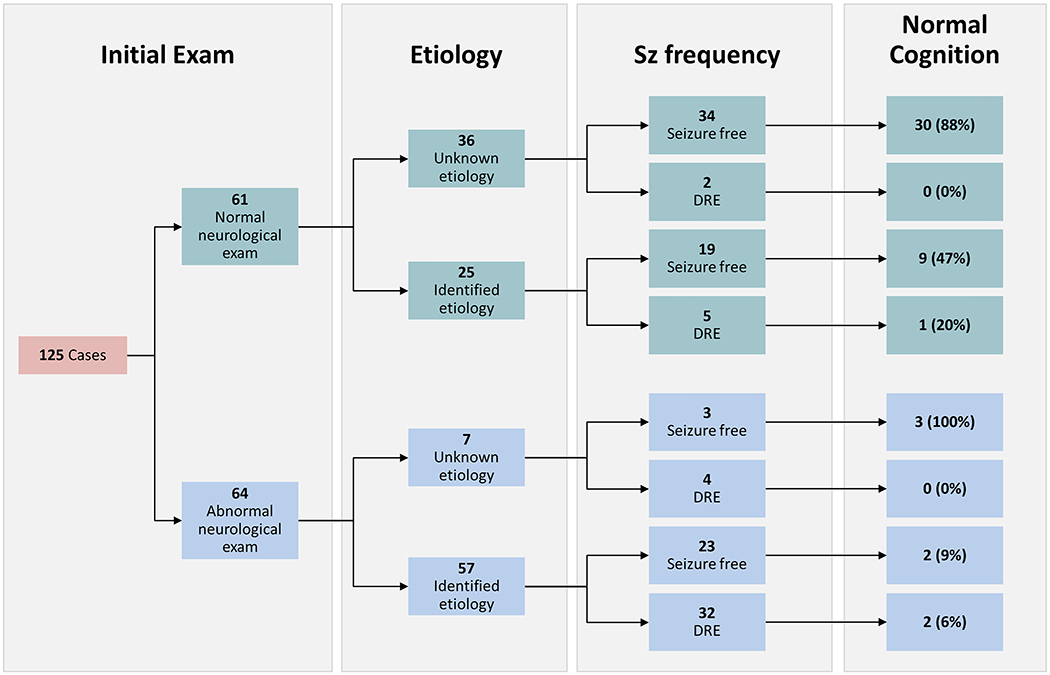
Results: Of 686 children with epilepsy onset <18 years, 125 (18.2%) presented with focal-onset seizures in infancy. Median follow-up for this group was 10.9 years (interquartile range [IQR] 6.2, 19.3). Etiology was identified in 65.6% (structural N = 62, genetic N = 13, both structural and genetic N = 3, metabolic N = 4). Of 107 patients followed >2 years, 38 (35.5%) developed drug-resistant epilepsy (DRE). DRE was more likely with younger age at onset, known etiology, and presence of epileptic spasms. Sixty-eight (63.0% of those with follow-up) were developmentally delayed at last follow-up, and known etiology, DRE, and presence of epileptic spasms were significantly associated with delay (p < .001 for all). Fifteen patients (12.0%) died at a median age of 7.1 years (IQR 1.7, 21.7), but only one death was seizure related (suspected sudden unexpected death in epilepsy [SUDEP]). Of 20 infants with normal development at onset and no known etiology with >2 years follow-up, none developed DRE, all were seizure-free at last follow-up (95% off antiseizure medications [ASMs]), and all remained developmentally normal.
Significance: Infantile-onset focal epilepsy accounts for 18% of all epilepsy in childhood, is frequently due to known etiologies, and has a high rate of DRE. However, developmentally normal infants without a known cause appear to have a very favorable course.
Keywords: epilepsy; focal epilepsy; infantile; infantile spasms.
© 2022 International League Against Epilepsy.
Conflict of interest statement
Disclosures
E Wirrell has served as a paid consultant for Encoded Therapeutics and Biomarin. She is the Editor-in-Chief of
E Triplet, K Nickels, L Wong-Kisiel and A Fine have no conflicts of interest.
Figures
Comment in
-
A Muddy Crystal Ball for Infantile-Onset Epilepsy Outcomes.Epilepsy Curr. 2022 Sep 19;22(6):342-344. doi: 10.1177/15357597221123901. eCollection 2022 Nov-Dec. Epilepsy Curr. 2022. PMID: 36426178 Free PMC article. No abstract available.
References
-
- Camfield CS, Camfield PR, Gordon K, Wirrell E, Dooley JM. Incidence of epilepsy in childhood and adolescence: a population-based study in Nova Scotia from 1977 to 1985. Epilepsia. 1996;37(1):19–23. - PubMed
-
- Hauser WA, Annegers JF, Kurland LT. Incidence of epilepsy and unprovoked seizures in Rochester, Minnesota: 1935-1984. Epilepsia. 1993;34(3):453–68. - PubMed
-
- Olafsson E, Ludvigsson P, Gudmundsson G, Hesdorffer D, Kjartansson O, Hauser WA. Incidence of unprovoked seizures and epilepsy in Iceland and assessment of the epilepsy syndrome classification: a prospective study. Lancet Neurol. 2005;4(10):627–34. - PubMed
