


Treat-to-Target in Lupus Nephritis. What is the Role of the Repeat Kidney Biopsy?
- PMID: 35147824
- PMCID: PMC8837511
- DOI: 10.1007/s00005-022-00646-9
Treat-to-Target in Lupus Nephritis. What is the Role of the Repeat Kidney Biopsy?
Abstract
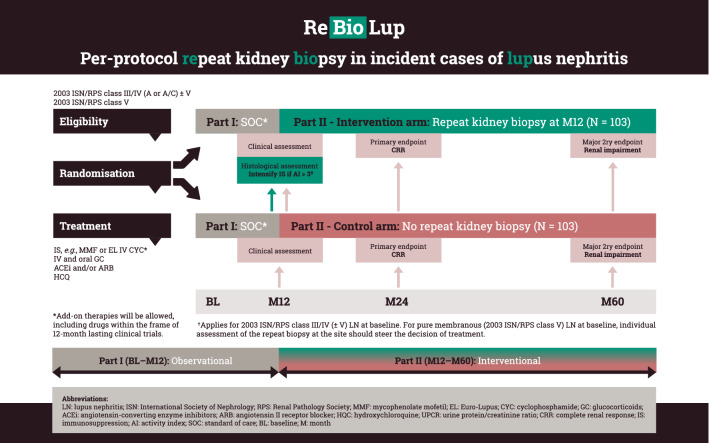
Kidney involvement, termed lupus nephritis (LN), develops in 35-60% of patients with systemic lupus erythematosus, often early during the disease course. When not treated promptly and efficiently, LN may lead to rapid and severe loss of kidney function, being the reason why it is considered one of the most severe lupus manifestations. Despite improved pharmacotherapy, 5-20% of LN patients develop end-stage kidney disease within ten years from the LN diagnosis. While the principal ground of LN therapy is prevention of renal function worsening, resembling a race against nephron loss, consensual agreement upon outcome measures and clinically meaningful short- and long-term targets of LN therapy have yet to be determined. Literature points to the importance of inclusion of tissue-based approaches in the determination of those targets, and evidence accumulates regarding the importance of per-protocol repeat kidney biopsies in the evaluation of the initial phase of therapy and prediction of long-term renal prognosis. The latter leads to the hypothesis that the information gleaned from repeat biopsies may contribute to optimised therapeutic decision making, and, therefore, increased probability to attain complete renal response in the short term, and a more favourable renal prognosis within a longer prospect. The multinational project ReBioLup was recently designed to serve as a key contributor to form evidence about the role of per-protocol repeat biopsies in a randomised fashion and aspires to unify the global LN community towards improved kidney and patient survival.
Keywords: Autoimmunity; Kidney biopsy; Kidney disorders; Lupus nephritis; Systemic lupus erythematosus; Treat-to-target.
© 2022. The Author(s).
Conflict of interest statement
The authors declare no conflicts of interest related to this work.
References
Publication types
MeSH terms
LinkOut - more resources
Full Text Sources
Medical
