


Developing a framework to describe stigma related to cervical cancer and HPV in western Kenya
- PMID: 35148778
- PMCID: PMC8832662
- DOI: 10.1186/s12905-022-01619-y
Developing a framework to describe stigma related to cervical cancer and HPV in western Kenya
Abstract
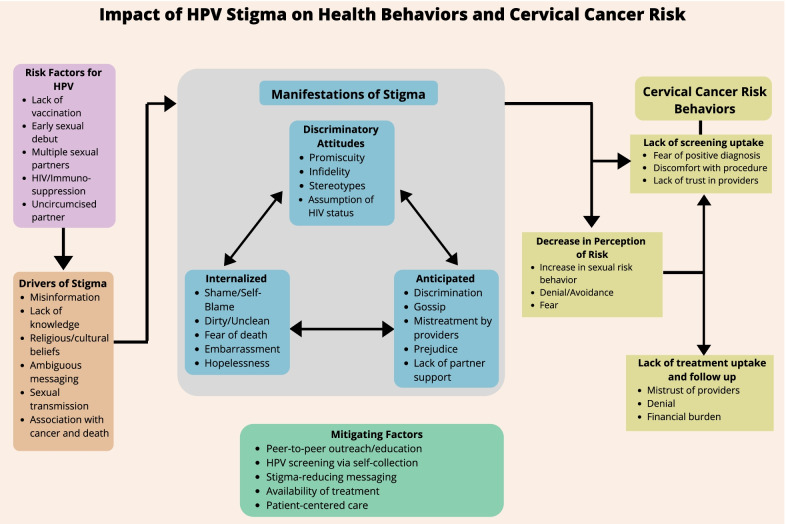
Background: Despite a high prevalence of human papillomavirus (HPV) and cervical cancer in low and middle-income countries, stigma remains an issue. Addressing HPV and cervical cancer stigma could significantly improve health outcomes for these conditions. The objective of this study was to identify the manifestations of stigma and their potential impacts on health-seeking behavior.
Methods: Twenty-six in-depth interviews were conducted with women living with HIV, HIV-negative women, community health volunteers, and health care providers in Kisumu, Kenya in 2019. The interviews were designed to draw out existing attitudes or experiences related to stigma within the community. We conducted a thematic analysis of the interviews to identify internalized, anticipated, and discriminatory attitudes.
Results: Within internalized attitudes, a prominent observed theme was a fear of death associated with a positive HPV test. This stemmed from a lack of understanding of differences between HPV and cervical cancer and posed a significant barrier for women deciding to seek screening or to continue with treatment. Discriminatory attitudes of community members, including assumptions of promiscuity, infidelity, or HIV status, were perceived to prevent women from accessing screening and treatment opportunities. The interviews also exhibited a limited awareness of HPV in this region, which may have contributed to a lack of enacted stigma towards people living with HPV or cervical cancer.
Conclusion: Stigma has the potential to lead to decreased screening and treatment uptake through its drivers. This includes a decreased perception of personal risk due to a lack of knowledge, which results in increased HPV-risk behaviors. Future research must focus on creating and integrating stigma-reducing interventions, primarily to encourage women to seek out primary and secondary preventative measures.
Keywords: Cervical cancer; HPV; Kenya; Stigma.
© 2022. The Author(s).
Conflict of interest statement
The authors declare that they have no competing interests.
Figures
References
-
- Bruni L, Albero G, Serrano B, Mena M, Gómez D, Muñoz J, et al. Human papillomavirus and related diseases report. 2019.
