Review
. 2022;21(2):617-646.
doi: 10.1007/s11101-022-09802-7. Epub 2022 Feb 8.

Momordica balsamina: phytochemistry and pharmacological potential of a gifted species

Affiliations
Review

Momordica balsamina: phytochemistry and pharmacological potential of a gifted species

Cátia Ramalhete et al. Phytochem Rev. 2022.

Abstract

Momordica balsamina L. (Cucurbitaceae), frequently named balsam apple, southern balsam pear or African pumpkin, is a vegetable with high nutritional value, being mostly used as food in sub-Saharan Africa. It has also been largely used in traditional medicine to treat several diseases, such as malaria fevers and diabetes. As a member of the Cucurbitaceae family, the main constituents are cucurbitane-type triterpenoids, with different oxidation patterns, named cucurbitacins. This review aims at summarizing our contribution to the phytochemical study of M. balsamina and the evaluation of the isolated cucurbitacins and derivatives as multidrug resistance reversers in cancer cells and bacteria. In this way, the selective antiproliferative activity against multidrug resistant cancer cells of cucurbitacins obtained from M. balsamina, their ability as P-glycoprotein inhibitors in cancer cells overexpressing this ABC transporter, as well as efflux pump inhibitors in resistant bacteria strains are reviewed. Moreover, the in vitro antimalarial activity of cucurbitacins and acyl derivatives against the blood and liver-stages of Plasmodium strains, and the in vivo activity of selected compounds is also reviewed. Besides our work, edible and medicinal uses, and other studies mainly reporting the biological activities of M. balsamina extracts, such as antidiabetic, antibacterial, anti-inflammatory, and antioxidant properties are also addressed.

Keywords: Antimalarial; Cucurbitaceae; Cucurbitane-type triterpenoids; Momordica balsamina; Multidrug resistance; Traditional medicine.


Conflict of interest statement

Conflict of interestThe authors have no conflicts of interest to declare.

Figures
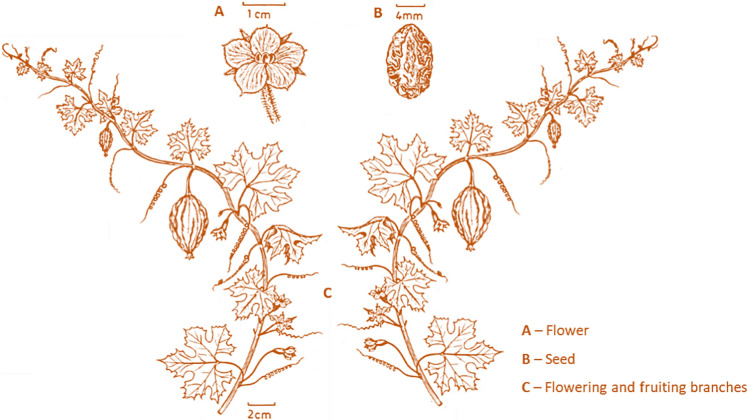
Fig. 1
Fig. 1
Momordica balsamina (adapted from Tropicos.org. 2021)
Fig. 2
Fig. 2
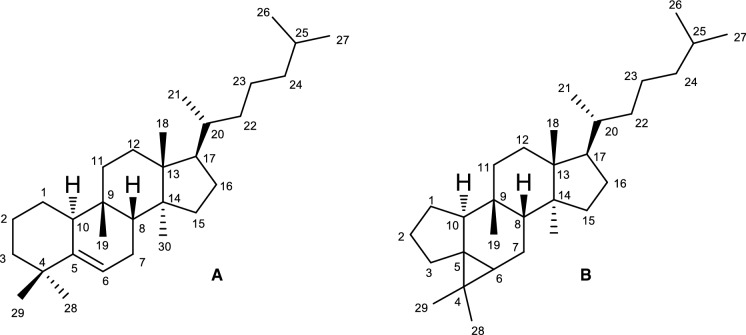
Basic scaffold of cucurbitacins (19(10 → 9β)-abeo-10α-lanost-5-ene) (A), and the new cucurbalsaminane skeleton (B)
Fig. 3
Fig. 3
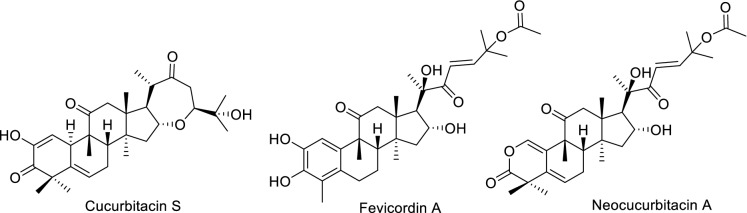
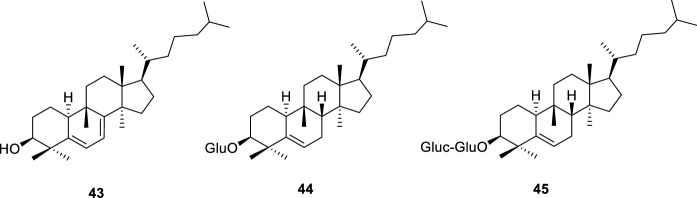
Cucurbitacins with less common structures
Fig. 4
Fig. 4
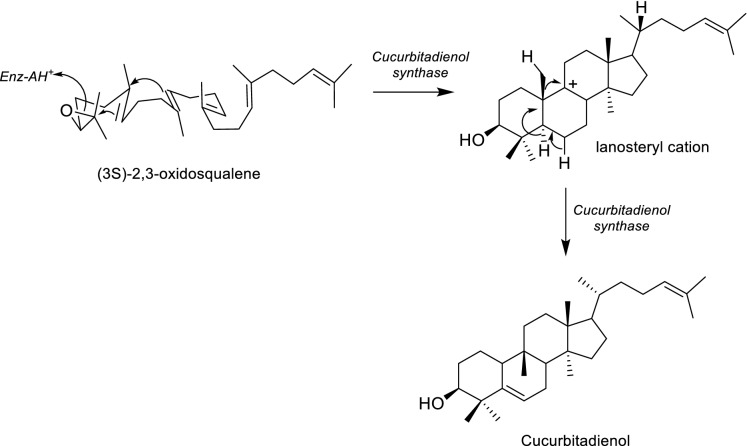
Formation of cucurbitadienol from (3S)-2,3-oxidosqualene via chair-boat–chair conformation
Fig. 5
Fig. 5
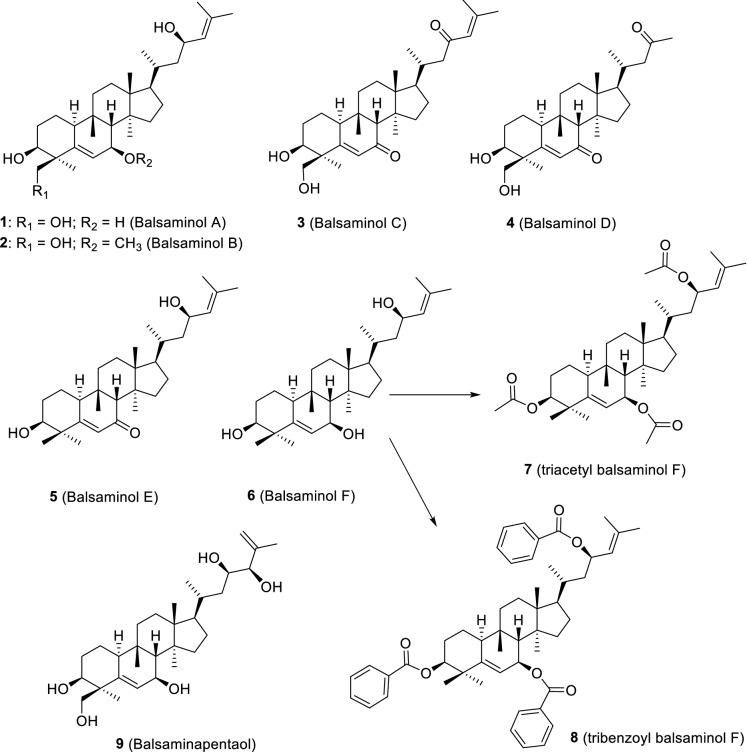
Cucurbitacins from the balsaminol set. Compounds 16 and 9 were isolated from M. balsamina aerial parts (Ramalhete et al. 2009a, 2010). Compounds 7 and 8 were obtained by acylation reactions (Ramalhete et al. 2011a)
Fig. 6
Fig. 6
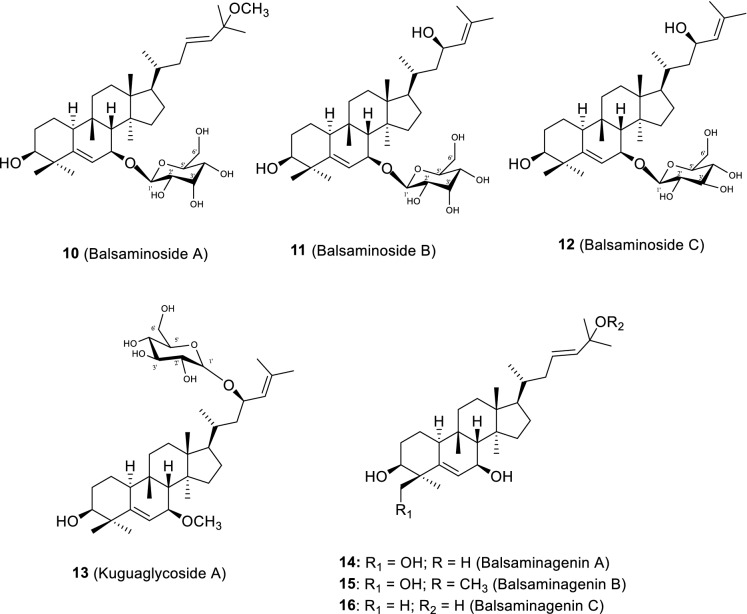
Cucurbitacins from the balsaminoside set (1013) and balsaminagenin set (1416) isolated from M. balsamina aerial parts (Ramalhete et al. 2009a, b, 2011a). Compounds 13 and 16 were firstly isolated from M. charantia roots and stems, respectively (Chang et al. ; Chen et al. 2008)
Fig. 7
Fig. 7
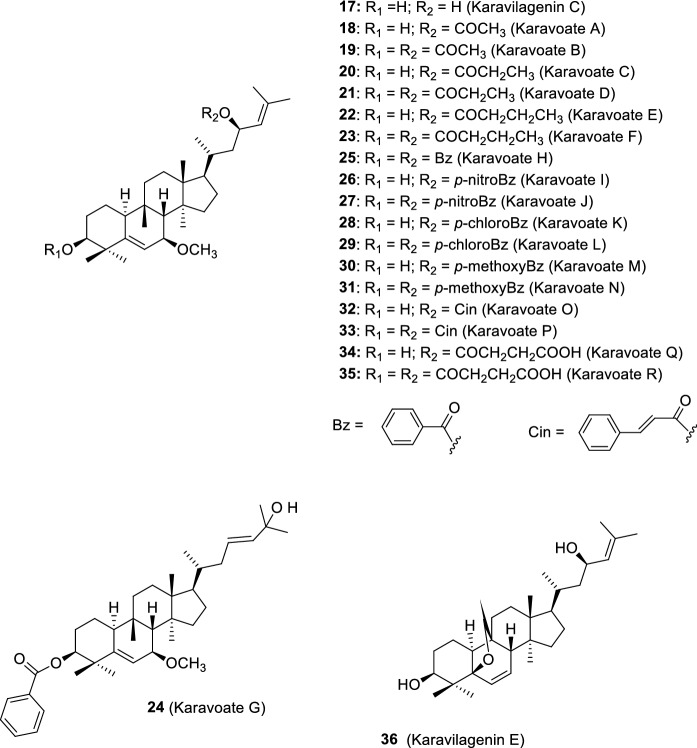
Cucurbitacins from the karavilagenin set (1736) (Ramalhete et al. 2009a, b). Compounds 1835 were obtained by acylation reactions (Ramalhete et al. 2011b, 2016). Compounds 17 and 36 were firstly isolated from M. charantia fruits (Nakamura et al. ; Matsuda et al. 2007)
Fig. 8
Fig. 8
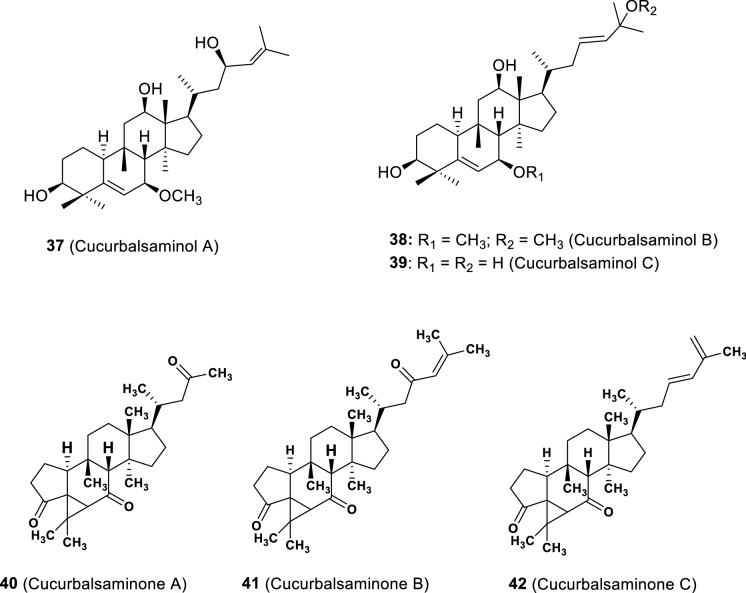
Cucurbitacins from the cucurbalsaminol set (3739) and cucurbalsaminane set (4042) (Ramalhete et al. , ; Mónico et al. 2019)
Fig. 9
Fig. 9
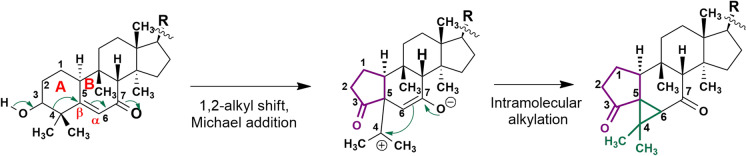
Proposed biogenetic pathway for the cucurbalsaminane skeleton (Mónico et al. 2019)
Fig. 10
Fig. 10
Cucurbitacins isolated from M. balsamina fruits (Kaushik et al. 2017)
Fig. 11
Fig. 11
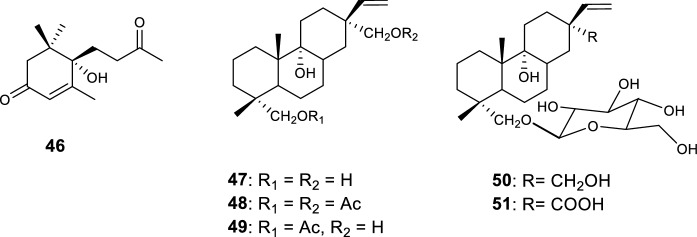
Nor-isoprenoid (46) and pimarane-type diterpenes (4751) isolated from M. balsamina aerial parts
Fig. 12
Fig. 12
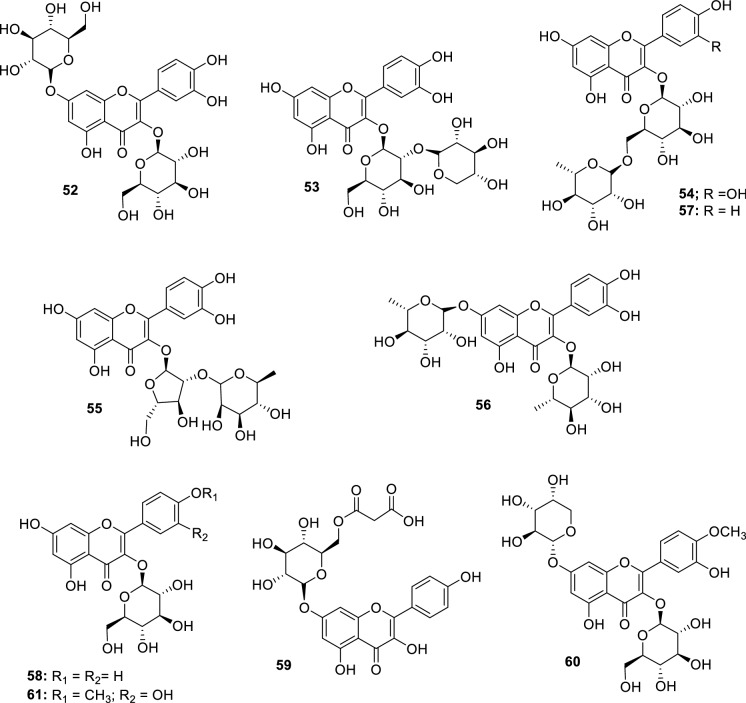
Flavonols identified in M. balsamina leaves
Fig. 13
Fig. 13
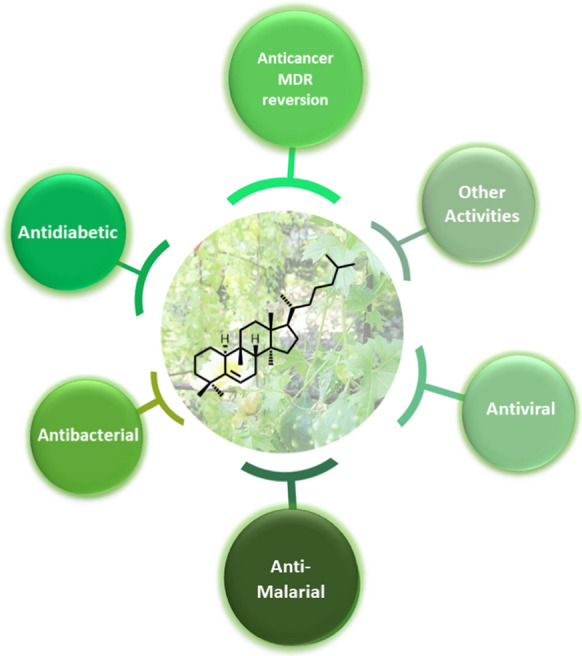
Main pharmacological activities reported for M. balsamina constituents, hemi-synthetic derivatives and plant extracts
Fig. 14
Fig. 14
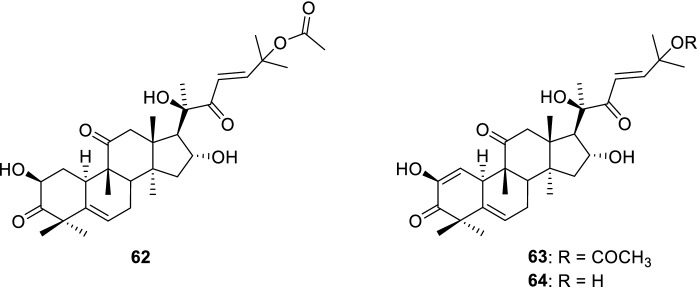
Cucurbitacins B (62), E (63) and I (64)

References

    1. Abu-Odeh AM, Talib WH. Middle east medicinal plants in the treatment of diabetes: a review. Molecules. 2021;26:742. doi: 10.3390/molecules26030742. - DOI - PMC - PubMed
    1. Achan J, Talisuna AO, Erhart A, et al. Quinine, an old anti-malarial drug in a modern world: role in the treatment of malaria. Malar J. 2011;10:144. doi: 10.1186/1475-2875-10-144. - DOI - PMC - PubMed
    1. Ajji PK, Walder K, Puri M. Functional analysis of a type-I ribosome inactivating protein Balsamin from Momordica balsamina with Anti-Microbial and DNase Activity. Plant Foods Hum Nutr. 2016;71:265–271. doi: 10.1007/s11130-016-0555-4. - DOI - PubMed
    1. Ajji PK, Sonkar SP, Walder K, Puri M. Purification and functional characterization of recombinant balsamin, a ribosome-inactivating protein from Momordica balsamina. Int J Biol Macromol. 2018;114:226–234. doi: 10.1016/j.ijbiomac.2018.02.114. - DOI - PubMed
    1. Akinyemi KO, Mendie UE, Smith ST, et al. Screening of some medicinal plants used in south-west Nigerian traditional medicine for anti-salmonella typhi activity. J Herb Pharmacother. 2005;5:45–60. doi: 10.1300/J157v05n01_06. - DOI - PubMed

LinkOut - more resources