


Variation in Amygdalin Content in Kernels of Six Almond Species (Prunus spp. L.) Distributed in China
- PMID: 35154172
- PMCID: PMC8831915
- DOI: 10.3389/fpls.2021.753151
Variation in Amygdalin Content in Kernels of Six Almond Species (Prunus spp. L.) Distributed in China
Abstract
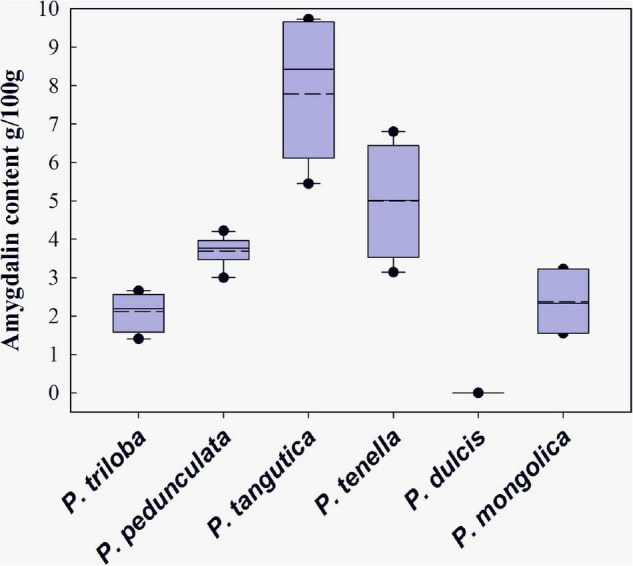
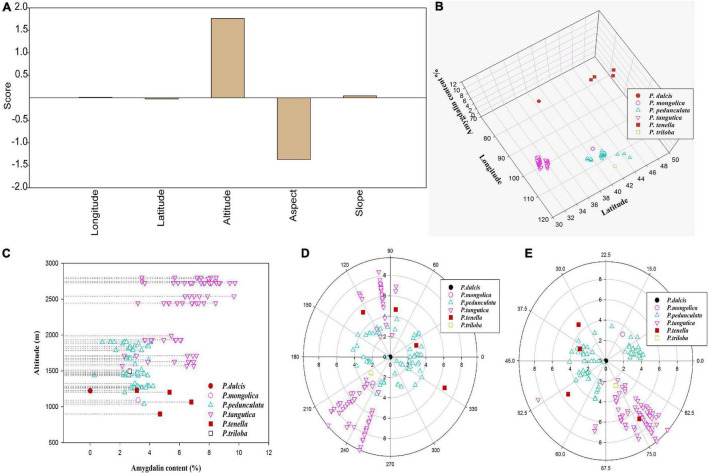
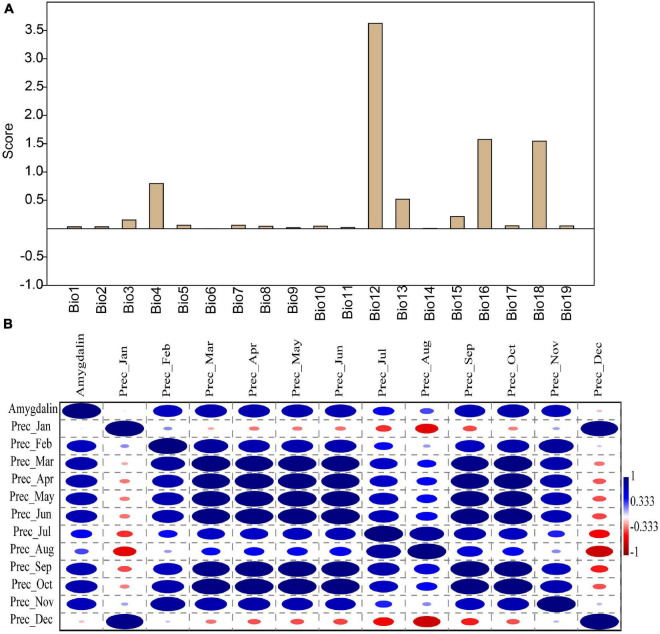
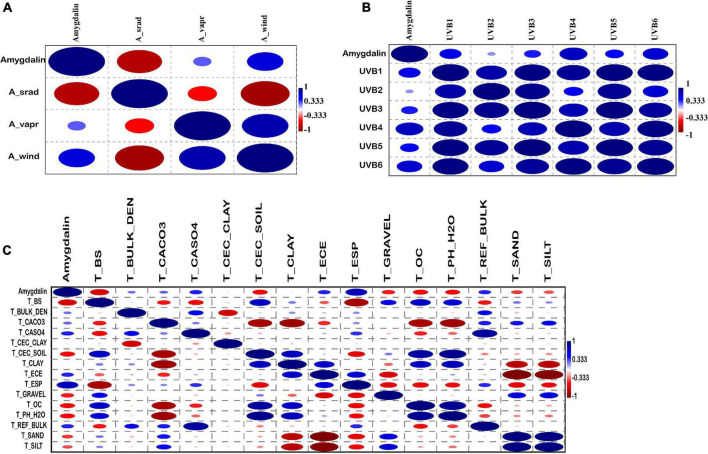
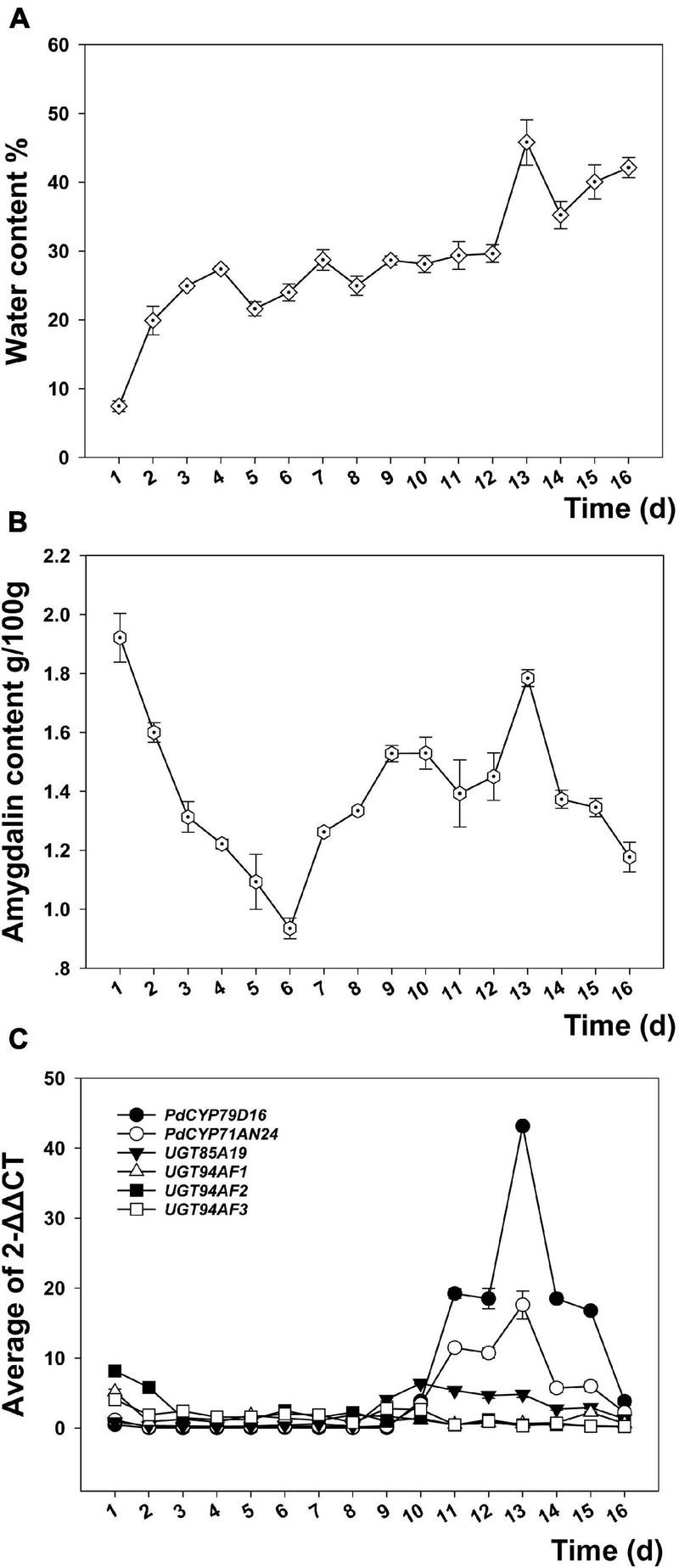
Amygdalin, a naturally occurring compound, is one of the main active ingredients of the Chinese raw bitter almond. The variation in amygdalin composition of seed kernels among the six almond species was determined, and relationships with geoenvironmental factors were analyzed. The amygdalin content exhibited great diversity, ranging from 0.0004 to 9.73 g/100 g. The highest level of amygdalin was detected in Tangut almond, with 5.45-9.73 g/100 g. The other kernels showed a range from 3.14 to 6.80 g/100 g in wild almond and from 3.00 to 4.22 g/100 g in longstalk almond. Amygdalin in common almond was almost undetectable. Factor analysis showed that amygdalin content in Prunus spp. kernels increased with altitude and decreased with the degree of aspect. Many environmental factors were closely related to amygdalin content, including annual precipitation (Bio12), UV intensity, and topsoil base saturation (T_BS), which all had a significant effect on amygdalin content. The amygdalin content is closely related to rainfall indicators, especially annual precipitation (Bio12), with the highest factor analysis value (3.63). Water regulates amygdalin in diverse ways. Since amygdalin is water-soluble, water can reduce the inhibitory effect of amygdalin on germination and regulate the synthesis of amygdalin at the late stage of germination by activating the amygdalin synthesis genes CYP79D16 and CYP71AN24. This study expands the understanding of amygdalin in almond resources and provides the direction for the regulation of amygdalin.
Keywords: almond kernel; almond species; amygdalin; amygdalin diversity; amygdalin synthesis; environmental factor.
Copyright © 2022 Wang, Xiao, Xu, Li and Zhang.
Conflict of interest statement
The authors declare that the research was conducted in the absence of any commercial or financial relationships that could be construed as a potential conflict of interest.
Figures
References
-
- Chinese-pharmacopoeia-commission (2015). Pharmacopoeia of the People’s Republic of China. Beijing: People’s Medical Publishing House.
-
- Fischer G., Nachtergaele F., Prieler S., van Velthuizen H. T., Verelst L., Wiberg D. (2008). Global Agro-Ecological Zones Assessment. Rome: FAO.
-
- Giovino A., Marino P., Domina G., Rapisarda P., Rizza G., Saia S. (2015). Fatty acid composition of the seed lipids of Chamaerops humilis L. natural populations and its relation with the environment. Plant Biosyst. 149 767–776. 10.1080/11263504.2013.870249 - DOI
LinkOut - more resources
Full Text Sources
Miscellaneous
