


Anti-tumour necrosis factor discontinuation in inflammatory bowel disease patients in remission: study protocol of a prospective, multicentre, randomized clinical trial
- PMID: 35154384
- PMCID: PMC8832302
- DOI: 10.1177/1756284819874202
Anti-tumour necrosis factor discontinuation in inflammatory bowel disease patients in remission: study protocol of a prospective, multicentre, randomized clinical trial
Abstract
Background: Patients with inflammatory bowel disease who achieve remission with anti-tumour necrosis factor (anti-TNF) drugs may have treatment withdrawn due to safety concerns and cost considerations, but there is a lack of prospective, controlled data investigating this strategy. The primary study aim is to compare the rates of clinical remission at 1 year in patients who discontinue anti-TNF treatment versus those who continue treatment.
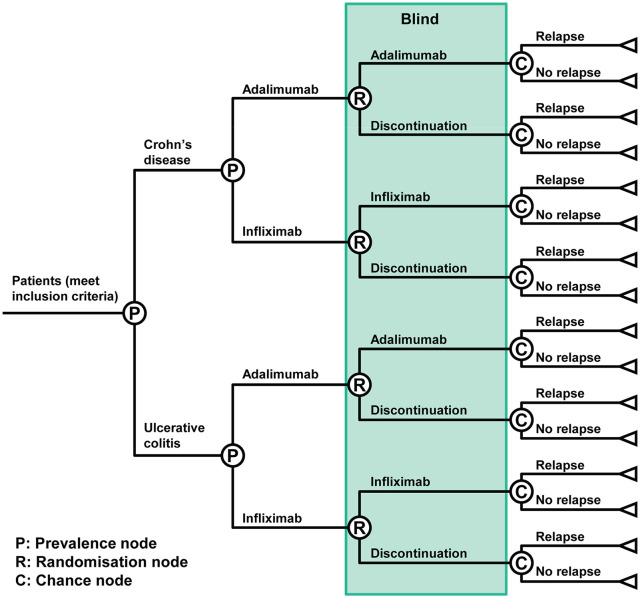
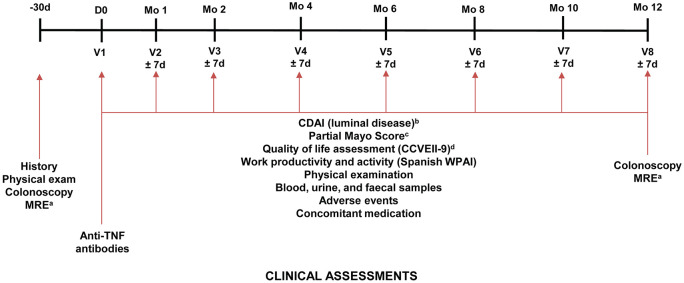
Methods: This is an ongoing, prospective, double-blind, multicentre, randomized, placebo-controlled study in patients with Crohn's disease or ulcerative colitis who have achieved clinical remission for ⩾6 months with an anti-TNF treatment and an immunosuppressant. Patients are being randomized 1:1 to discontinue anti-TNF therapy or continue therapy. Randomization stratifies patients by the type of inflammatory bowel disease and drug (infliximab versus adalimumab) at study inclusion. The primary endpoint of the study is sustained clinical remission at 1 year. Other endpoints include endoscopic and radiological activity, patient-reported outcomes (quality of life, work productivity), safety and predictive factors for relapse. The required sample size is 194 patients. In addition to the main analysis (discontinuation versus continuation), subanalyses will include stratification by type of inflammatory bowel disease, phenotype and previous treatment. Biological samples will be obtained to identify factors predictive of relapse after treatment withdrawal.
Results: Enrolment began in 2016, and the study is expected to end in 2020.
Conclusions: This study will contribute prospective, controlled data on outcomes and predictors of relapse in patients with inflammatory bowel disease after withdrawal of anti-TNF agents following achievement of clinical remission.
Clinical trial reference number: EudraCT 2015-001410-10.
Keywords: anti-tumour necrosis factor; inflammatory bowel disease; withdrawal.
© The Author(s), 2019.
Conflict of interest statement
Conflict of interest statement: J.P. Gisbert has served as a speaker, a consultant and advisory member for or has received research funding from AbbVie, Advia, Allergan, Almirall, AstraZeneca, Biogen, Casen Fleet, Casen Recordati, Celgene, Chiesi, Diasorin, Dr. Falk Pharma GmbH, Faes Farma, Ferring Pharmaceuticals, Gebro Pharma, Janssen, Hospira, Kern Pharma, Mayoly, MSD, Nycomed, Otsuka Pharmaceutical, Pfizer, Roche, Sandoz, Shire Pharmaceuticals, Takeda, Tillotts Pharma AG and Vifor Pharma. M. Chaparro has served as a speaker, or has received research or education funding from AbbVie, Dr. Falk Pharma GmbH, Ferring Pharmaceuticals, Janssen, Hospira, MSD, Pfizer, Shire Pharmaceuticals, Takeda and Tillotts Pharma AG. M. Barreiro-de Acosta has served as a speaker, a consultant and advisory member for or has received research funding from AbbVie, AMGEN, Chiesi, Dr. Falk Pharma GmbH, Faes Farma, Ferring Pharmaceuticals, Gebro Pharma, Janssen, Hospira, Kern Pharma, MSD, Otsuka Pharmaceuticals, Pfizer, Sandoz, Shire Pharmaceuticals, Takeda and Tillotts Pharma AG. E. Domènech has served as a speaker, or has received research or education funding or advisory fees from AbbVie, Adacyte Therapeutics, Celgene, Ferring Pharmaceuticals, Gebro Pharma GmbH, Grifols, Janssen, Kern Pharma, MSD, Otsuka Pharmaceuticals, Pfizer, Shire Pharmaceuticals, Takeda, Thermofisher and Tillots Pharma AG. M. Esteve reports personal fees from Janssen, Menarini, Pfizer, Takeda and Tillots Pharma AG, and grants from AbbVie and MSD, outside the submitted work. P. Nos has participated in educational activities, research projects and scientific meetings sponsored by AbbVie, Faes Farma, Ferring Pharmaceuticals, Janssen, MSD, Otsuka, Takeda and Tillots Pharma AG. J. Panés has received consulting fees from AbbVie, Arena Pharmaceuticals, Boehringer Ingelheim, Celgene, Celltrion, Ferring Pharmaceuticals, Genentech, GlaxoSmithKline, Janssen, MSD, Nestle, Oppilan, Progenity, Pfizer, Robarts, Roche, Second Genome, Takeda, Theravance, TiGenix and Topivert; speaker fees from AbbVie, Biogen, Ferring Pharmaceuticals, Janssen, MSD, Shire Pharmaceuticals, Takeda and Tillotts Pharma AG; and research funding from AbbVie and MSD.
Figures
References
-
- Gomollón F, Dignass A, Annese V, et al. Third European evidence-based consensus on the diagnosis and management of Crohn’s disease 2016: part 1: diagnosis and medical management. J Crohns Colitis 2017; 11: 3–25. - PubMed
-
- Harbord M, Eliakim R, Bettenworth D, et al. Third European evidence-based consensus on diagnosis and management of ulcerative colitis. Part 2: current management. J Crohns Colitis 2017; 11: 769–784. - PubMed
-
- Lichtenstein GR, Yan S, Bala M, et al. Infliximab maintenance treatment reduces hospitalizations, surgeries, and procedures in fistulizing Crohn’s disease. Gastroenterology 2005; 128: 862–869. - PubMed
-
- Pariente B, Laharie D. Review article: why, when and how to de-escalate therapy in inflammatory bowel diseases. Aliment Pharmacol Ther 2014; 40: 338–353. - PubMed
-
- Gisbert JP, Marin AC, Chaparro M. The risk of relapse after anti-TNF discontinuation in inflammatory bowel disease: systematic review and meta-analysis. Am J Gastroenterol 2016; 111: 632–647. - PubMed
LinkOut - more resources
Full Text Sources
