


Technical Note: Arthroscopic Rotator Cuff Repair with Patch Augmentation with Acellular Dermal Allograft
- PMID: 35155102
- PMCID: PMC8820992
- DOI: 10.1016/j.eats.2021.09.011
Technical Note: Arthroscopic Rotator Cuff Repair with Patch Augmentation with Acellular Dermal Allograft
Abstract
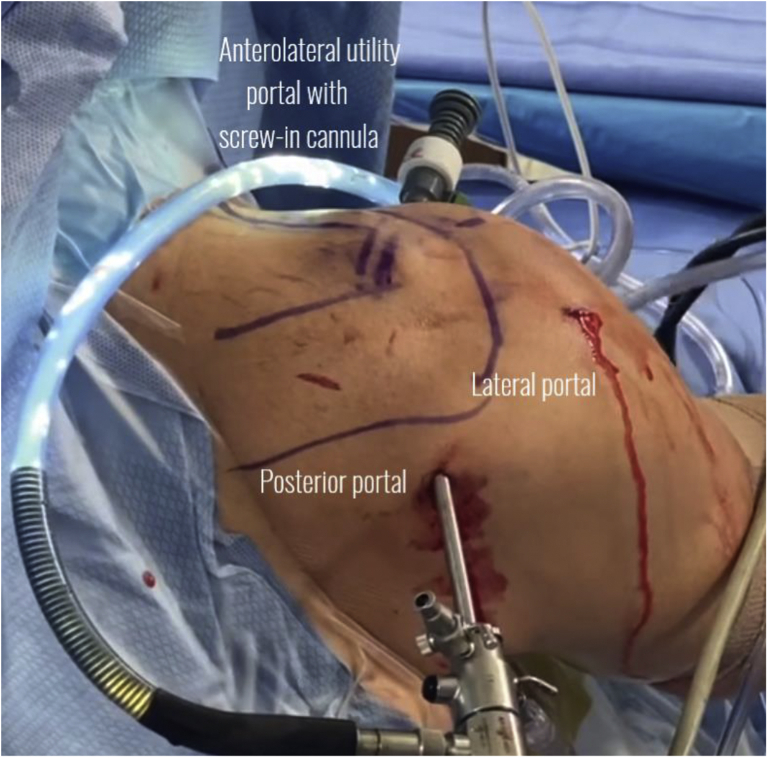
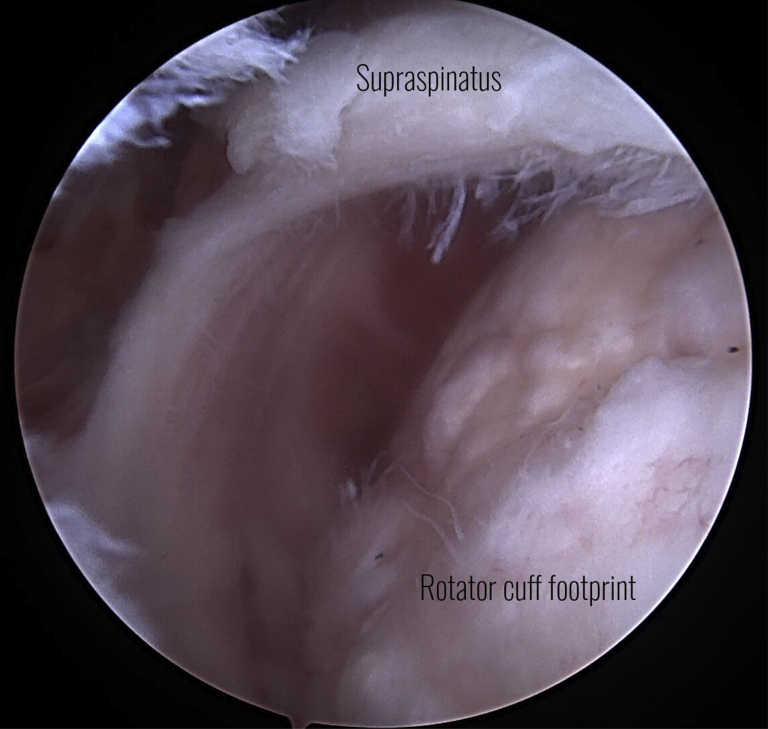
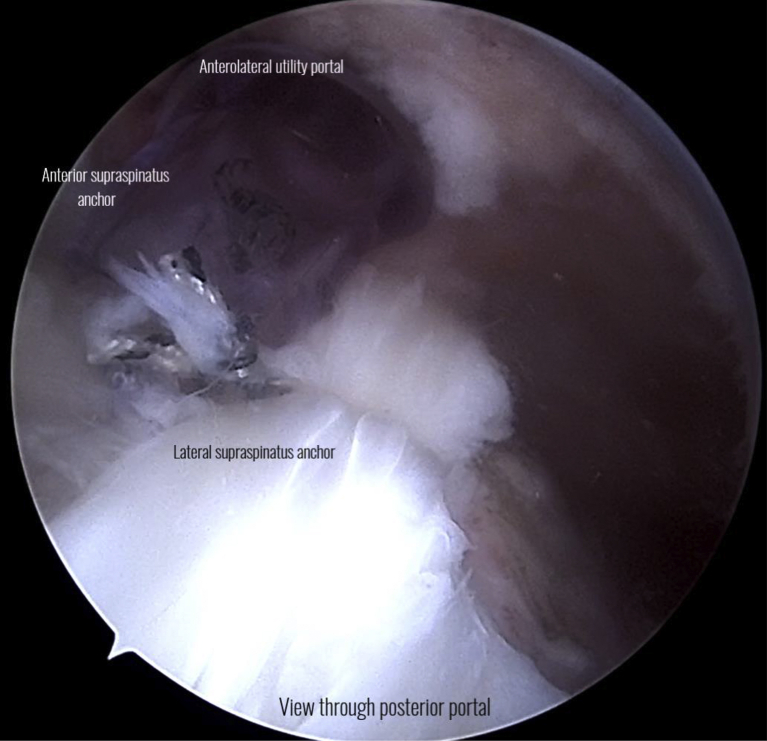
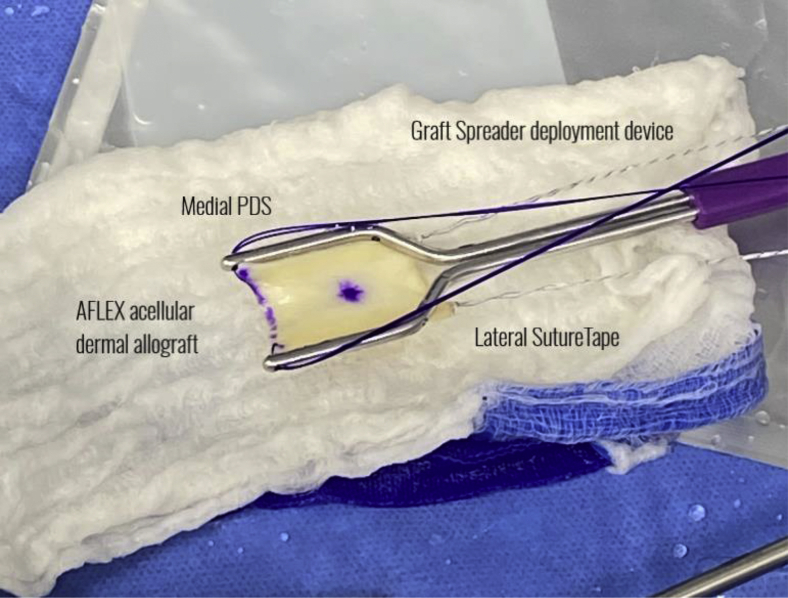
Rotator cuff tears are one of the most common causes of shoulder pain and dysfunction seen by orthopaedic surgeons. Although rotator cuff repair (RCR) has been shown to provide optimal outcomes, retear rates average roughly 60% and have been reported to exceed 90%. Retear after RCR is especially prevalent in patients with large, multitendon tears with poor tissue quality. Allograft augmentation of RCR may reinforce anatomically reparable tears, particularly in patients with poor tissue quality. Although various techniques of patch augmented RCR have been described, the procedure remains challenging. This Technical Note describes RCR augmented with acellular dermal allograft using the CuffMend system (Arthrex Inc, Naples, FL), which significantly decreases surgeon demand and helps avoid the pitfalls common with this procedure.
© 2021 The Authors.
Figures
References
-
- Le B.T., Wu X.L., Lam P.H., Murrell G.A. Factors predicting rotator cuff retears: An analysis of 1000 consecutive rotator cuff repairs. Am J Sports Med. 2014;42:1134–1142. - PubMed
-
- Steinhaus M.E., Makhni E.C., Cole B.J., Romeo A.A., Verma N.N. Outcomes after patch use in rotator cuff repair. Arthroscopy. 2016;32:1676–1690. - PubMed
-
- Seldes R.M., Abramchayev I. Arthroscopic insertion of a biologic rotator cuff tissue augmentation after rotator cuff repair. Arthroscopy. 2006;22:113–116. - PubMed
LinkOut - more resources
Full Text Sources
