


Effects of Mindfulness Exercise Guided by a Smartphone App on Negative Emotions and Stress in Non-Clinical Populations: A Systematic Review and Meta-Analysis
- PMID: 35155341
- PMCID: PMC8825782
- DOI: 10.3389/fpubh.2021.773296
Effects of Mindfulness Exercise Guided by a Smartphone App on Negative Emotions and Stress in Non-Clinical Populations: A Systematic Review and Meta-Analysis
Abstract
Background: Studies have acknowledged that mindfulness exercise guided by a smartphone app has a positive impact on mental health and physical health. However, mindfulness guided by a smartphone app on mental health is still in its infancy stage. Therefore, we conducted a meta-analysis evaluating the effect of mindfulness intervention guided by a smartphone app on negative emotions and stress in a non-clinical population with emotional symptoms.
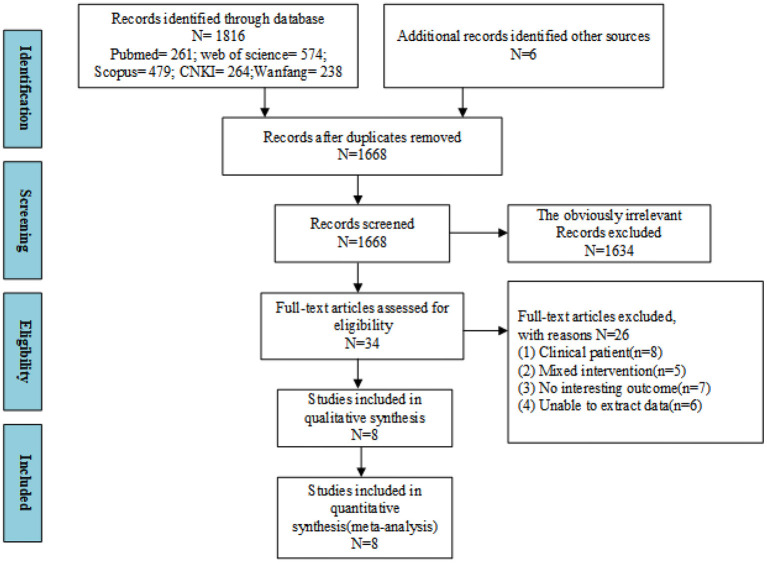
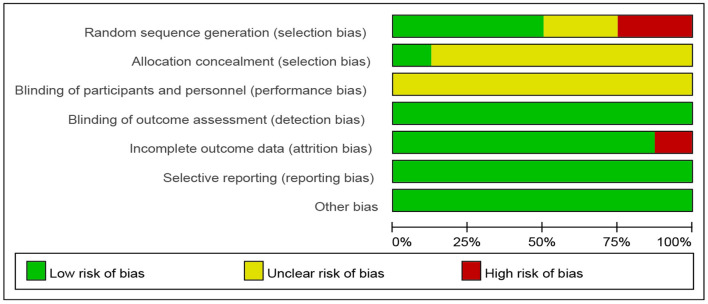
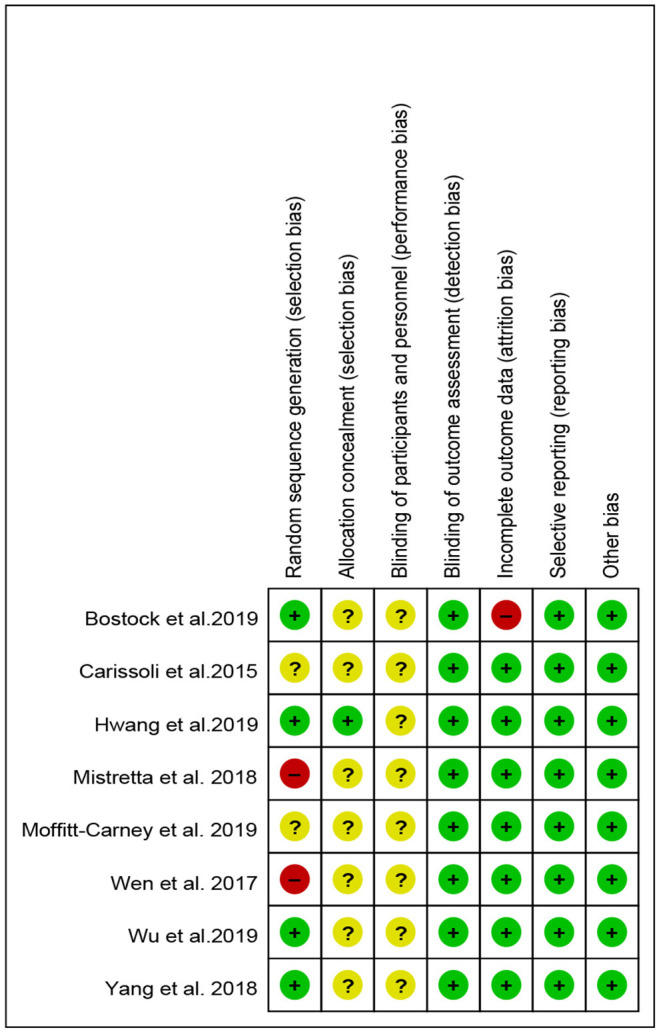
Methods: We searched major databases, namely, Web of Science, PubMed, Scopus, China National Knowledge Infrastructure (CNKI), and Wanfang, to identify all of the relevant studies published in English or Chinese from their inception until November 9, 2021. The methodological quality of the included studies was assessed with Cochrane risk-of-bias bias assessment tool. Two researchers independently conducted document retrieval, study selection, data extraction, and methodological quality evaluation.
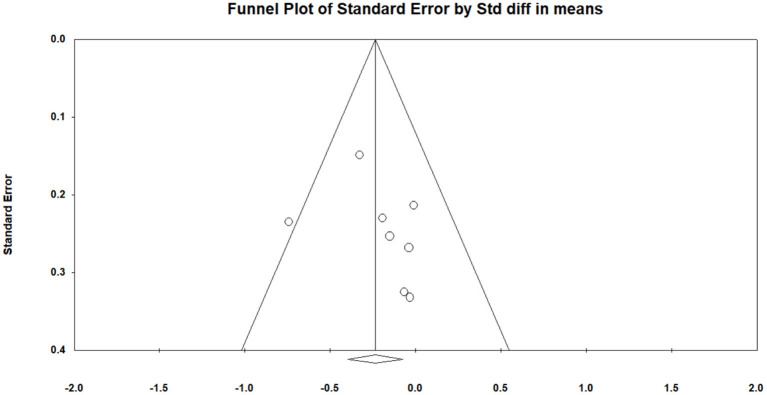
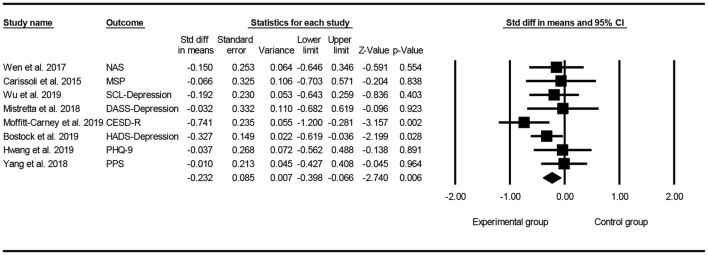
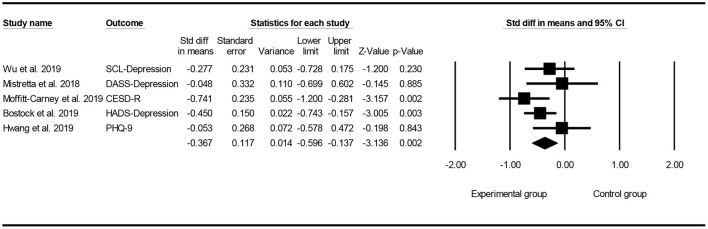
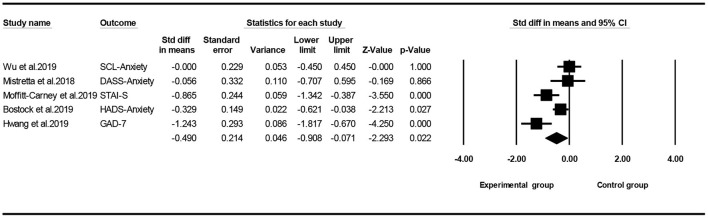
Result: A total of eight studies were included in the study, with 574 subjects (experimental group: 348; control group: 226). A random effects model was selected to combine effect sizes. The results of the meta-analysis showed that mindfulness exercise guided by a smartphone app reduced negative emotions [standardized mean difference (SMD) = -0.232, 95% CI: -0.398 to -0.066, p = 0.006], depressive symptoms (SMD = -0.367, 95% CI: -0.596 to -0.137, p = 0.002), and anxiety symptoms (SMD = -0.490, 95% CI: -0.908 to -0.071, p = 0.022).
Conclusions: The findings indicate the potentially beneficial effect of mindfulness exercise guided by a smartphone app on symptoms of depression and anxiety among individuals in a non-clinical population with emotional symptoms. Considering the small number and overall methodological weakness of the included studies and lack of randomized controlled trials (RCTs), the results should be interpreted with caution, and future rigorously designed RCTs are warranted to provide more reliable evidence.
Keywords: anxiety; app; depression; mindfulness; negative emotions; smartphone; stress.
Copyright © 2022 Wu, Ma, Zuo, Zheng, Zhou, Qin and Ren.
Conflict of interest statement
The authors declare that the research was conducted in the absence of any commercial or financial relationships that could be construed as a potential conflict of interest. The reviewer SL declared a shared affiliation with one of the authors, KZ, to the handling editor at the time of review.
Figures
References
Publication types
MeSH terms
LinkOut - more resources
Full Text Sources
Medical
