


Antibody-Drug Conjugates as an Emerging Therapy in Oncodermatology
- PMID: 35159045
- PMCID: PMC8833781
- DOI: 10.3390/cancers14030778
Antibody-Drug Conjugates as an Emerging Therapy in Oncodermatology
Abstract
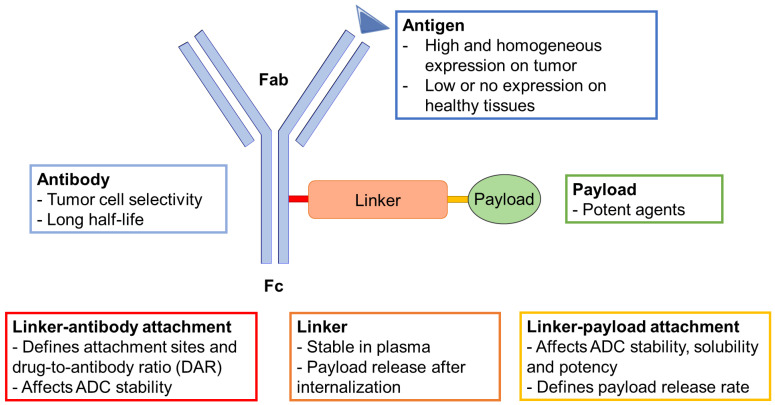
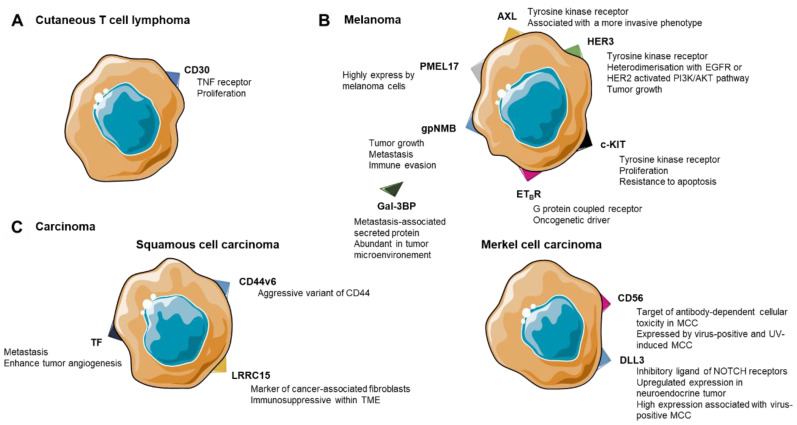
Antibody-drug conjugates (ADCs) are an emerging class of therapeutics, with twelve FDA- and EMA-approved drugs for hematological and solid cancers. Such drugs consist in a monoclonal antibody linked to a cytotoxic agent, allowing a specific cytotoxicity to tumor cells. In recent years, tremendous progress has been observed in therapeutic approaches for advanced skin cancer patients. In this regard, targeted therapies (e.g., kinase inhibitors) or immune checkpoint-blocking antibodies outperformed conventional chemotherapy, with proven benefit to survival. Nevertheless, primary and acquired resistances as well as adverse events remain limitations of these therapies. Therefore, ADCs appear as an emerging therapeutic option in oncodermatology. After providing an overview of ADC design and development, the goal of this article is to review the potential ADC indications in the field of oncodermatology.
Keywords: antibody–drug conjugates; cutaneous T-cell lymphoma and Merkel cell carcinoma; melanoma; oncodermatology; skin squamous cell carcinoma.
Conflict of interest statement
A.D., C.M. and M.-C.V.-M. are employees of McSAF, who is the owner of the patent Adcitmer®. A.T., T.K. and M.S. filed this patent. T.K. is A.D.’s husband. The other authors declare no conflict of interest.
Figures

References
-
- Kakadia S., Yarlagadda N., Awad R., Kundranda M., Niu J., Naraev B., Mina L., Dragovich T., Gimbel M., Mahmoud F. Mechanisms of Resistance to BRAF and MEK Inhibitors and Clinical Update of US Food and Drug Administration-Approved Targeted Therapy in Advanced Melanoma. OncoTargets Ther. 2018;11:7095–7107. doi: 10.2147/OTT.S182721. - DOI - PMC - PubMed
Publication types
LinkOut - more resources
Full Text Sources
Research Materials
