Review
. 2022 Jan 22;11(3):368.
doi: 10.3390/cells11030368.

Golgi Apparatus Regulates Plasma Membrane Composition and Function

Affiliations
Review

Golgi Apparatus Regulates Plasma Membrane Composition and Function

Ilenia Agliarulo et al. Cells. .

Abstract

Golgi apparatus is the central component of the mammalian secretory pathway and it regulates the biosynthesis of the plasma membrane through three distinct but interacting processes: (a) processing of protein and lipid cargoes; (b) creation of a sharp transition in membrane lipid composition by non-vesicular transport of lipids; and (c) vesicular sorting of proteins and lipids at the trans-Golgi network to target them to appropriate compartments. We discuss the molecules involved in these processes and their importance in physiology and development. We also discuss how mutations in these molecules affect plasma membrane composition and signaling leading to genetic diseases and cancer.

Keywords: Golgi apparatus; TGN sorting; glycosylation; membrane contact sites; palmitoylation.


Conflict of interest statement

The authors declare no conflict of interest.

Figures
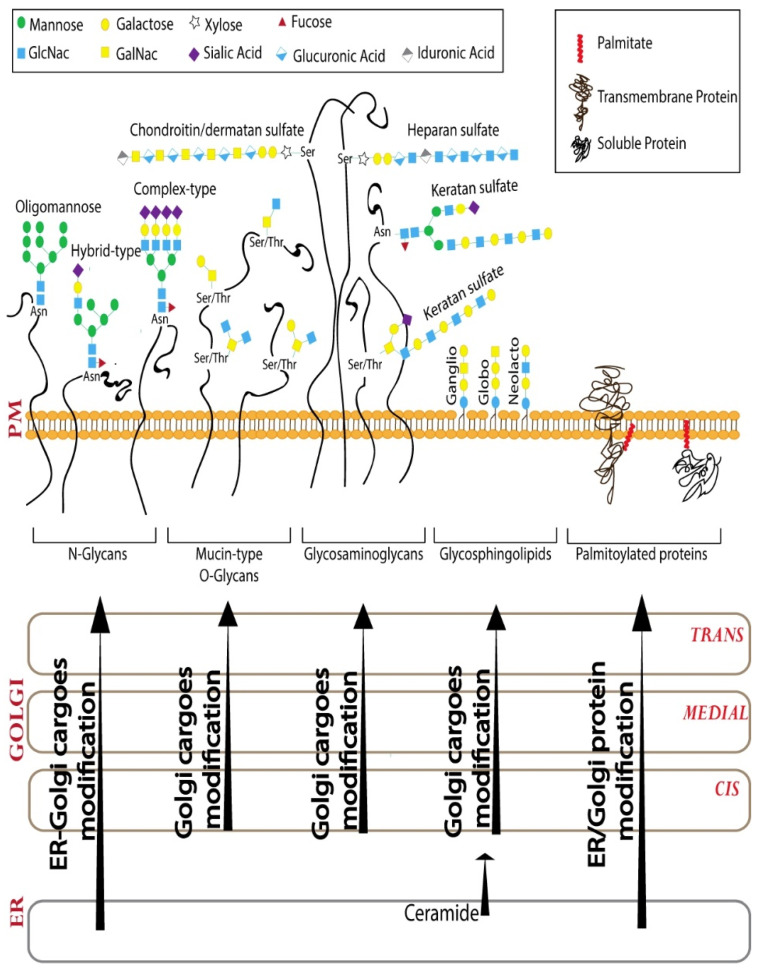
Figure 1
Figure 1
Cargo processing in the Golgi. N-glycosylation, mucin-type O-glycosylation, glycosaminoglycan, and glycosphingolipid pathways are 4 of the 16 distinct glycosylation pathways that modify cargoes passing through Golgi and modulate signaling from PM. Golgi apparatus is also the major palmitoylation location in the cell. While some of the processing reactions happen exclusively in the Golgi apparatus, some of them are shared between ER and Golgi as shown.
Figure 2
Figure 2
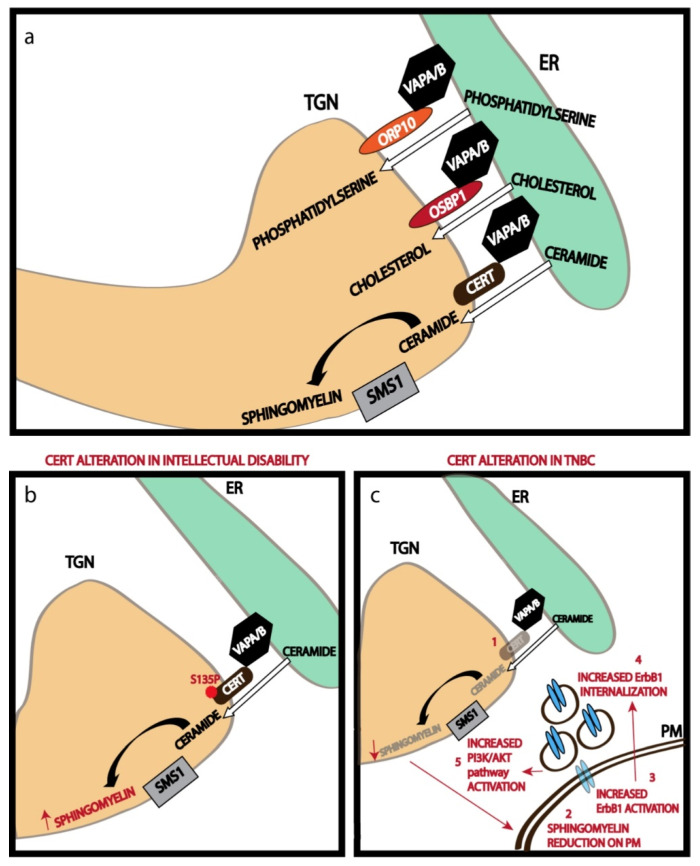
Non-vesicular transport of lipids at the TGN. (a) LTPs acting at the ER-TGN MCSs transfer the indicated lipids from the ER to TGN, where they can be further metabolized as in the case of ceramide which is converted to Sphingomyelin. (b) A mutation in CERT hyperactivates it, thus increasing the production of Sphingomyelin, which is associated with intellectual disability. (c) CERT alteration in triple negative breast cancer cells reduces its activity and hence Sphingomyelin production, which leads to a cascade of events culminating in increased PI3K/Akt activation.
Figure 3
Figure 3
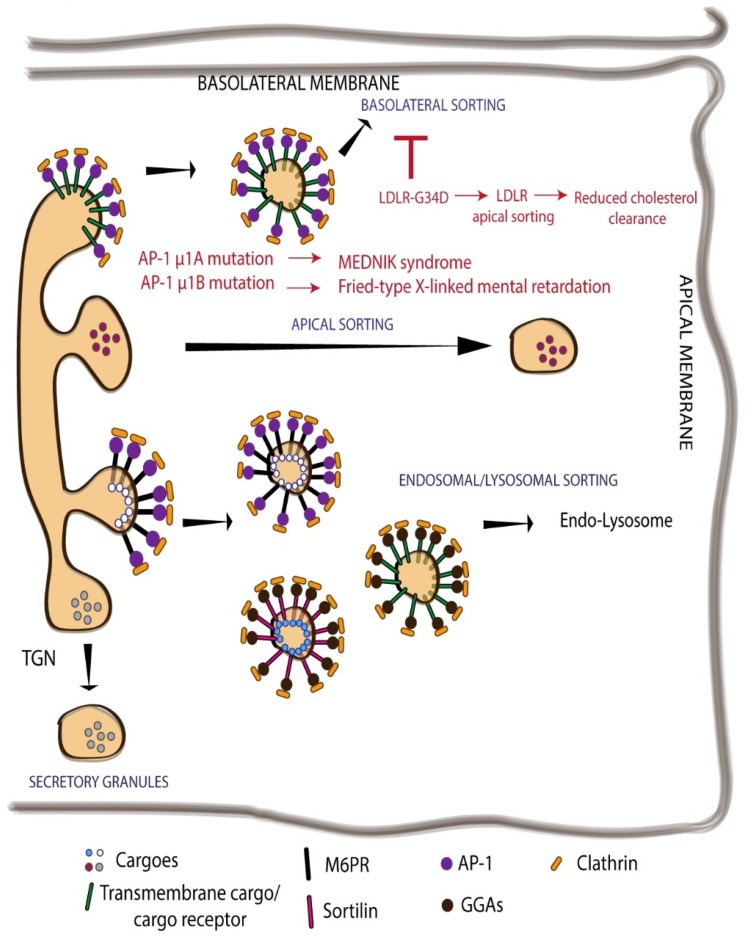
TGN sorting affects PM composition. Cargoes modified in the Golgi are correctly sorted to their final destination at the TGN. Several TGN exit routes have been reported. Two well-described sorting mechanisms at TGN are the receptor-mediated sorting of lysosomal hydrolases via M6P receptor (M6PR) to the lysosome, and the sorting of soluble proteins via sortilin to endosomes, both in clathrin-coated vesicles. Transmembrane proteins or constitutively secreted cargo can be transported towards the apical or basolateral PM. In professional secretory cells, proteins leave the TGN in secretory granules that fuse with the PM and release their content into the extracellular space. Mutations of key players that mediate protein sorting at the TGN, such as adaptor proteins or targeting signals in the cargoes, have been associated with pathological conditions (in red).
Figure 4
Figure 4
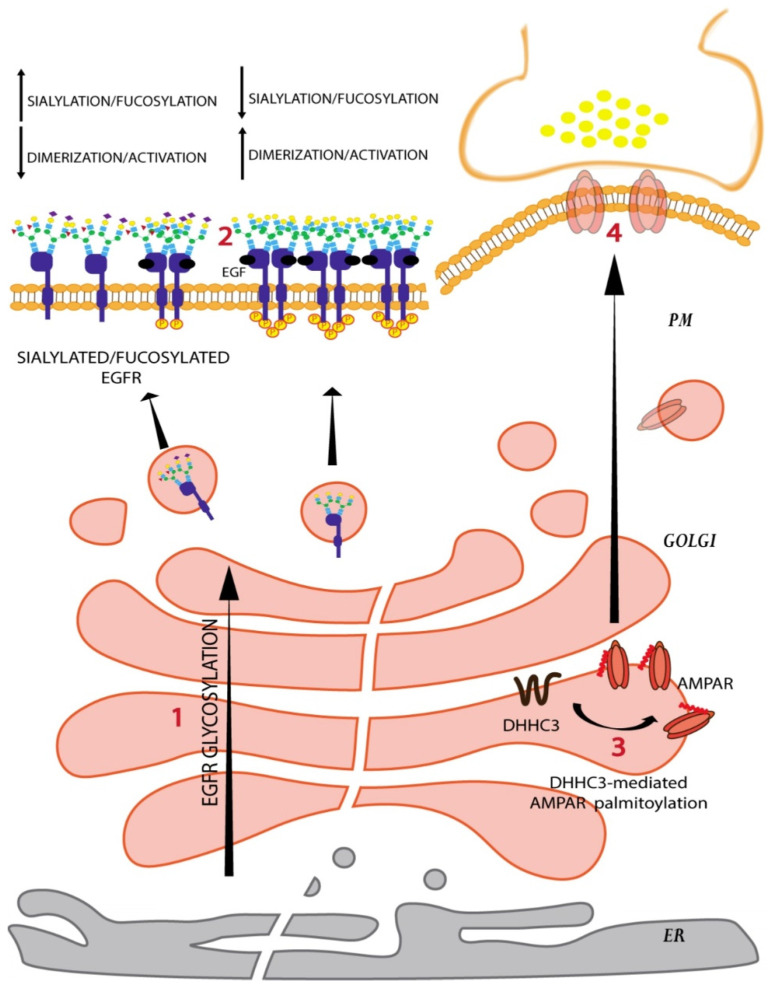
Golgi glycosylation and palmitoylation affect protein localization and function processing reactions in the Golgi,= determine the sialylation and fucosylation levels of EGFR. Increased sialylation or fucosylation reduces EGFR dimerization and activation (1) while reduced sialylation or fucosyaltion promotes it (2). The glutamate-gated ion channels AMPARs are made by different combinations of four subunits, GLUA1-4, each of which is palmitoylated. Palmitoylation of GLUA1 and GLUA2 is mediated by the Golgi resident palmitoyltransferase DHHC3 (3) and causes AMPAR retention in the Golgi and reduction of its expression at PM (4). This in turn impacts synaptic plasticity.
Figure 5
Figure 5
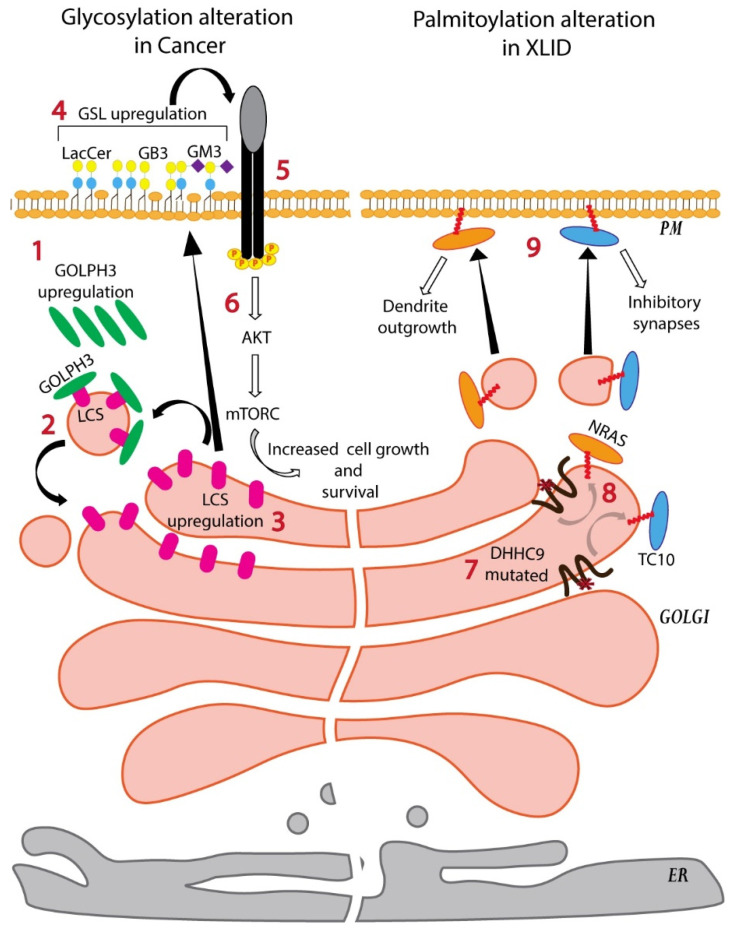
Impaired Golgi processing results in pathological conditions. The peripheral membrane protein GOLPH3 is upregulated in several solid tumours and promotes mitogenic signaling and cell proliferation (1). GOLPH3 binds LCS and a subset of other GSL biosynthetic enzymes, and promotes their entry into COPI vesicles for intra-Golgi retrograde trafficking and thus preventing their transport to lysosomes (2). This increases the levels of these enzymes in the Golgi thus promoting the biosynthesis of GSLs (3). Increased GSLs in the PM (4) likely increase the activity receptors in the PM (5) and that lead to increase mTOR signaling in the cell and increased cell growth (6). The palmitoyltransferase DHHC9 controls both dendrite outgrowth and inhibitory synapses in neurons and therefore its activity is required to maintain a balance between excitatory and inhibitory synapses. It acts by palmitoylating the GTPases NRAS and TC10, respectively, and localizing them to PM. Loss-of-functions mutations in DHHC9 found in patients with X-linked intellectual disability (XLID) (7) impairs the palmitoylation of NRAS and TC10 (8) and likely affects their PM localization (9). This impairment likely contributes to XLID and epilepsy.

References

    1. Miaczynska M. Effects of Membrane Trafficking on Signaling by Receptor Tyrosine Kinases. Cold Spring Harb. Perspect. Biol. 2013;5:a009035. doi: 10.1101/cshperspect.a009035. - DOI - PMC - PubMed
    1. Villaseñor R., Kalaidzidis Y., Zerial M. Signal processing by the endosomal system. Curr. Opin. Cell Biol. 2016;39:53–60. doi: 10.1016/j.ceb.2016.02.002. - DOI - PubMed
    1. Hall C., Yu H., Choi E. Insulin receptor endocytosis in the pathophysiology of insulin resistance. Exp. Mol. Med. 2020;52:911–920. doi: 10.1038/s12276-020-0456-3. - DOI - PMC - PubMed
    1. Lee M.F., Trotman L.C. PTEN: Bridging Endocytosis and Signaling. Cold Spring Harb. Perspect. Med. 2020;10:a036103. doi: 10.1101/cshperspect.a036103. - DOI - PMC - PubMed
    1. Klumperman J. Architecture of the Mammalian Golgi. Cold Spring Harb. Perspect. Biol. 2011;3:a005181. doi: 10.1101/cshperspect.a005181. - DOI - PMC - PubMed

Publication types

Substances

LinkOut - more resources