


Temporary Right-Ventricular Assist Devices: A Systematic Review
- PMID: 35160064
- PMCID: PMC8837135
- DOI: 10.3390/jcm11030613
Temporary Right-Ventricular Assist Devices: A Systematic Review
Abstract
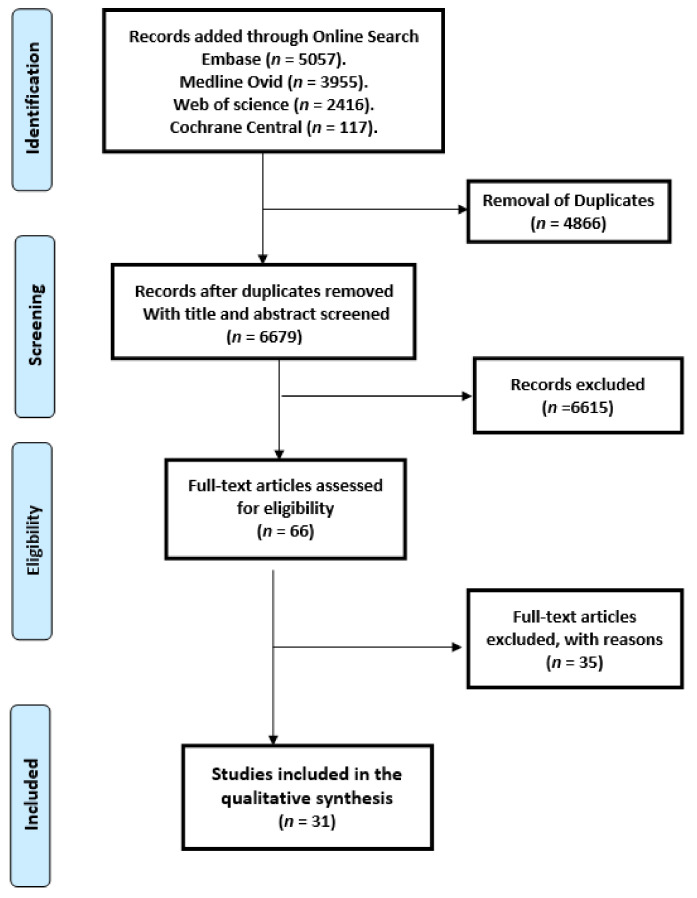
Acute right-sided heart failure (RHF) is a complex clinical syndrome, with a wide range of clinical presentations, associated with increased mortality and morbidity, but about which there is a scarcity of evidence-based literature. A temporary right-ventricular assist device (t-RVAD) is a potential treatment option for selected patients with severe right-ventricular dysfunction as a bridge-to-recovery or as a permanent solution. We sought to conduct a systematic review to determine the safety and efficacy of t-RVAD implantation. Thirty-one studies met the inclusion criteria, from which data were extracted. Successful t-RVAD weaning ranged between 23% and 100%. Moreover, 30-day survival post-temporary RAVD implantation ranged from 46% to 100%. Bleeding, acute kidney injury, stroke, and device malfunction were the most commonly reported complications. Notwithstanding this, t-RVAD is a lifesaving option for patients with severe RHF, but the evidence stems from small non-randomized heterogeneous studies utilizing a variety of devices. Both the etiology of RHF and time of intervention might play a major role in determining the t-RVAD outcome. Standardized endpoints definitions, design and methodology for t-RVAD trials is needed. Furthermore, efforts should continue in improving the technology as well as improving the timely provision of a t-RVAD.
Keywords: efficacy; right-sided heart failure; safety; systematic review; temporary right ventricular assist device.
Conflict of interest statement
The authors declare no conflict of interest.
Figures
References
-
- Konstam M.A., Kiernan M.S., Bernstein D., Bozkurt B., Jacob M., Kapur N.K., Kociol R.D., Lewis E.F., Mehra M.R., Pagani F.D., et al. Evaluation and Management of Right-Sided Heart Failure: A Scientific Statement From the American Heart Association. Circulation. 2018;137:e578–e622. doi: 10.1161/CIR.0000000000000560. - DOI - PubMed
Publication types
LinkOut - more resources
Full Text Sources
Miscellaneous
