


Endothelial Dysfunction after Hematopoietic Stem Cell Transplantation: A Review Based on Physiopathology
- PMID: 35160072
- PMCID: PMC8837122
- DOI: 10.3390/jcm11030623
Endothelial Dysfunction after Hematopoietic Stem Cell Transplantation: A Review Based on Physiopathology
Abstract
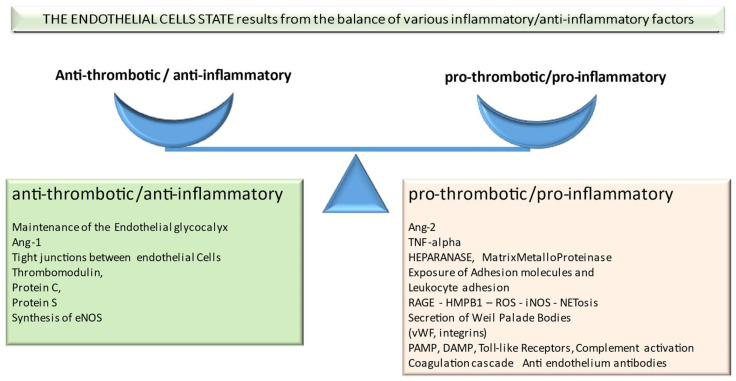
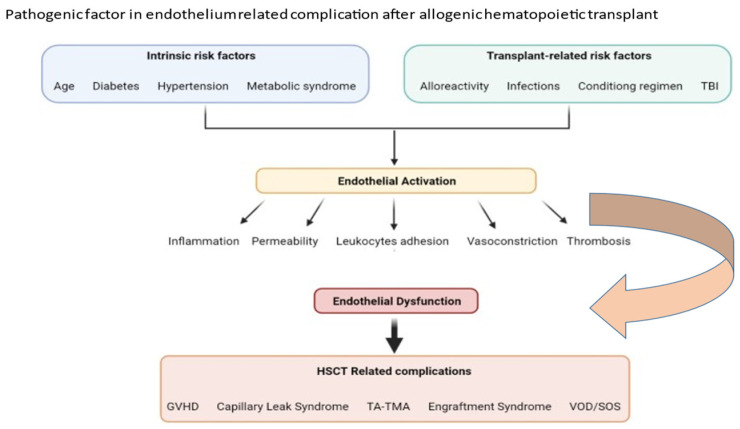
Endothelial dysfunction (ED) is frequently encountered in transplant medicine. ED is an argument of high complexity, and its understanding requires a wide spectrum of knowledge based on many fields of basic sciences such as molecular biology, immunology, and pathology. After hematopoietic stem cell transplantation (HSCT), ED participates in the pathogenesis of various complications such as sinusoidal obstruction syndrome/veno-occlusive disease (SOS/VOD), graft-versus-host disease (GVHD), transplant-associated thrombotic microangiopathy (TA-TMA), idiopathic pneumonia syndrome (IPS), capillary leak syndrome (CLS), and engraftment syndrome (ES). In the first part of the present manuscript, we briefly review some biological aspects of factors involved in ED: adhesion molecules, cytokines, Toll-like receptors, complement, angiopoietin-1, angiopoietin-2, thrombomodulin, high-mobility group B-1 protein, nitric oxide, glycocalyx, coagulation cascade. In the second part, we review the abnormalities of these factors found in the ED complications associated with HSCT. In the third part, a review of agents used in the treatment of ED after HSCT is presented.
Keywords: acute graft-versus-host disease; capillary leak syndrome; endothelial dysfunction; engraftment syndrome; idiopathic pneumonia syndrome; liver sinusoidal obstructive syndrome/veno-occlusive disease; transplant-associated thrombotic microangiopathy.
Conflict of interest statement
The authors declare no conflict of interest.
Figures
References
Publication types
LinkOut - more resources
Full Text Sources
Other Literature Sources
