


Opioid Consumption in Chronic Pain Patients: Role of Perceived Injustice and Other Psychological and Socioeconomic Factors
- PMID: 35160101
- PMCID: PMC8837077
- DOI: 10.3390/jcm11030647
Opioid Consumption in Chronic Pain Patients: Role of Perceived Injustice and Other Psychological and Socioeconomic Factors
Abstract
Background: Chronic pain is a complex biopsychosocial phenomenon. Lifestyle, behavioral, socioeconomic, and psychosocial factors such as depression and perceived injustice are often associated with the development of chronic pain and vice versa. We sought to examine the interaction of these factors with opioid intake.
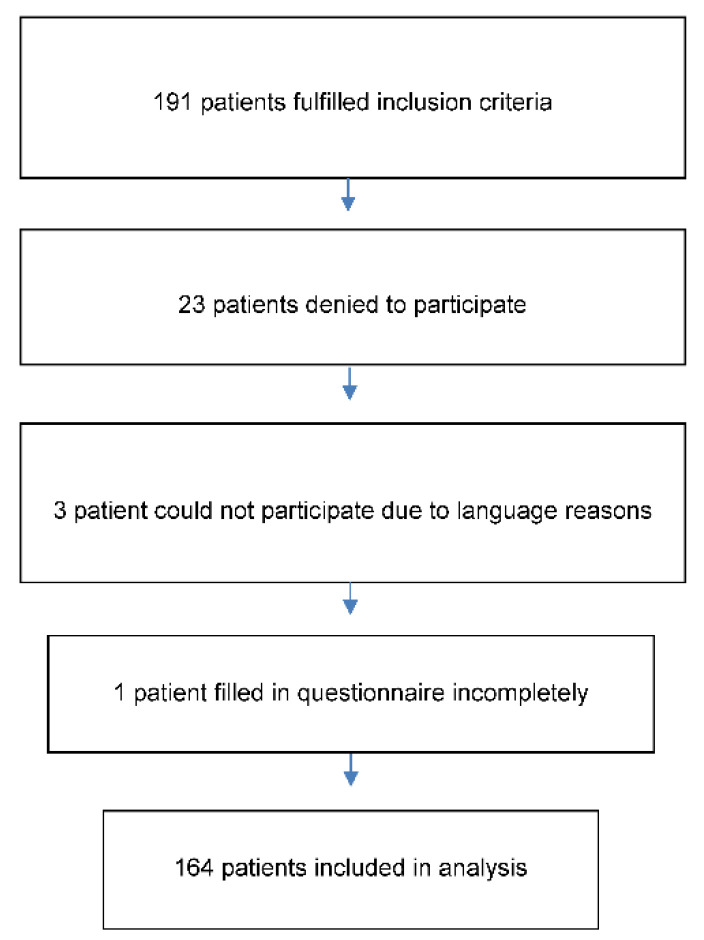
Methods: At our institution, 164 patients with chronic pain undergoing an interdisciplinary assessment within a three-month period participated in the study and completed the Injustice Experience Questionnaire (IEQ). Data regarding opioid intake, pain levels, pain diagnosis, depression, anxiety, stress, quality of life, pain-related disability, habitual well-being, occupational status, and ongoing workers compensation litigation were extracted from the patients' charts.
Results: Approximately one-fourth of the patients used opioids. The IEQ total was significantly higher in patients using Schedule III opioids. Depression, but not the anxiety and stress scores, were significantly higher in patients using opioids. There were no significant differences regarding pain-related disability, habitual well-being, and the coded psychosocial diagnoses. In the patient group without opioids, the percentage of employed persons was significantly higher but there were no significant differences regarding work leave, pension application, or professional education.
Conclusions: Opioid use appears to be more closely related to psychological factors and single social determinants of pain than to somatic factors.
Keywords: chronic pain; lifestyle; opioid use; perceived injustice; psychological factors; socioeconomic factors.
Conflict of interest statement
The authors declare that they have no conflict of interest.
Figures
References
-
- Scherrer J.F., Salas J., Copeland L.A., Stock E.M., Ahmedani B.K., Sullivan M.D., Burroughs T., Schneider F.D., Bucholz K.K., Lustman P.J. Prescription Opioid Duration, Dose, and Increased Risk of Depression in 3 Large Patient Populations. Ann. Fam. Med. 2016;14:54–62. doi: 10.1370/afm.1885. - DOI - PMC - PubMed
-
- Braden J.B., Sullivan M.D., Ray G.T., Saunders K., Merrill J., Silverberg M.J., Rutter C.M., Weisner C., Banta-Green C., Campbell C., et al. Trends in long-term opioid therapy for noncancer pain among persons with a history of depression. Gen. Hosp. Psychiatry. 2009;31:564–570. doi: 10.1016/j.genhosppsych.2009.07.003. - DOI - PMC - PubMed
-
- Sellinger J.J., Sofuoglu M., Kerns R.D., Rosenheck R.A. Combined Use of Opioids and Antidepressants in the Treatment of Pain: A Review of Veterans Health Administration Data for Patients with Pain Both With and Without Co-morbid Depression. Psychiatr. Q. 2016;87:585–593. doi: 10.1007/s11126-015-9411-1. - DOI - PubMed
LinkOut - more resources
Full Text Sources
