


Genome Mining and Gene Expression Reveal Maytansine Biosynthetic Genes from Endophytic Communities Living inside Gymnosporia heterophylla (Eckl. and Zeyh.) Loes. and the Relationship with the Plant Biosynthetic Gene, Friedelin Synthase
- PMID: 35161302
- PMCID: PMC8840412
- DOI: 10.3390/plants11030321
Genome Mining and Gene Expression Reveal Maytansine Biosynthetic Genes from Endophytic Communities Living inside Gymnosporia heterophylla (Eckl. and Zeyh.) Loes. and the Relationship with the Plant Biosynthetic Gene, Friedelin Synthase
Abstract
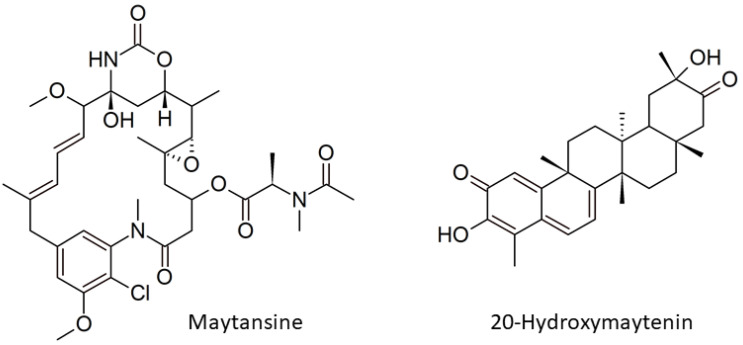
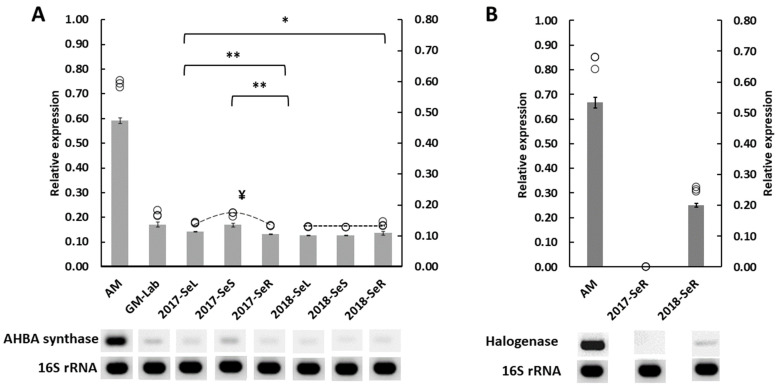
Even though maytansine was first discovered from Celastraceae plants, it was later proven to be an endophytic bacterial metabolite. However, a pure bacterial culture cannot synthesize maytansine. Therefore, an exclusive interaction between plant and endophytes is required for maytansine production. Unfortunately, our understanding of plant-endophyte interaction is minimal, and critical questions remain. For example: how do endophytes synthesize maytansine inside their plant host, and what is the impact of maytansine production in plant secondary metabolites? Our study aimed to address these questions. We selected Gymnosporia heterophylla as our model and used amino-hydroxybenzoic acid (AHBA) synthase and halogenase genes as biomarkers, as these two genes respond to biosynthesize maytansine. As a result, we found a consortium of seven endophytes involved in maytansine production in G. heterophylla, based on genome mining and gene expression experiments. Subsequently, we evaluated the friedelin synthase (FRS) gene's expression level in response to biosynthesized 20-hydroxymaytenin in the plant. We found that the FRS expression level was elevated and linked with the expression of the maytansine biosynthetic genes. Thus, we achieved our goals and provided new evidence on endophyte-endophyte and plant-endophyte interactions, focusing on maytansine production and its impact on plant metabolite biosynthesis in G. heterophylla.
Keywords: AHBA synthase gene; FRS gene; endophyte–endophyte interaction; halogenase gene; maytansine-producible endophytes; plant–endophyte interaction.
Conflict of interest statement
The authors declare no conflict of interest.
Figures




References
-
- Salvatore M.M., Andolfi A., Nicoletti R. The Thin Line between Pathogenicity and Endophytism: The Case of Lasiodiplodia theobromae. Agriculture. 2020;10:488. doi: 10.3390/agriculture10100488. - DOI
-
- Khan A.L., Gilani S.A., Waqas M., Al-Hosni K., Al-Khiziri S., Kim Y.-H., Ali L., Kang S.-M., Asaf S., Shahzad R., et al. Endophytes from Medicinal Plants and Their Potential for Producing Indole Acetic Acid, Improving Seed Germination and Mitigating Oxidative Stress. J. Zhejiang Univ. Sci. B. 2017;18:125–137. doi: 10.1631/jzus.B1500271. - DOI - PMC - PubMed
Grants and funding
LinkOut - more resources
Full Text Sources
Molecular Biology Databases
Research Materials
