


A Wearable Multimodal Sensing System for Tracking Changes in Pulmonary Fluid Status, Lung Sounds, and Respiratory Markers
- PMID: 35161876
- PMCID: PMC8838360
- DOI: 10.3390/s22031130
A Wearable Multimodal Sensing System for Tracking Changes in Pulmonary Fluid Status, Lung Sounds, and Respiratory Markers
Abstract
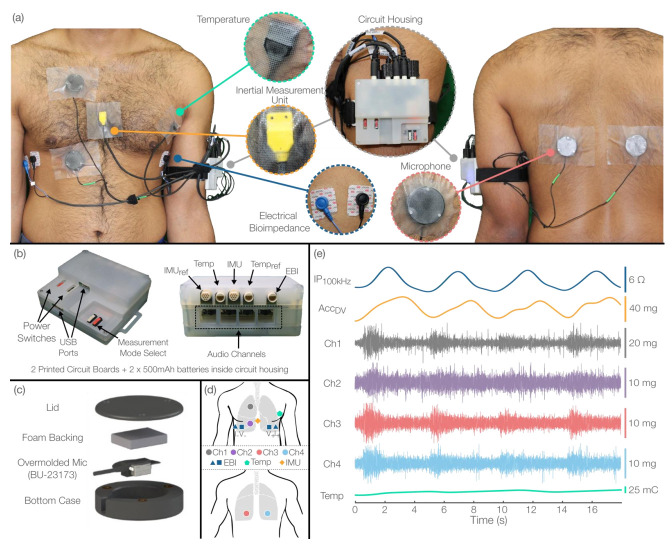
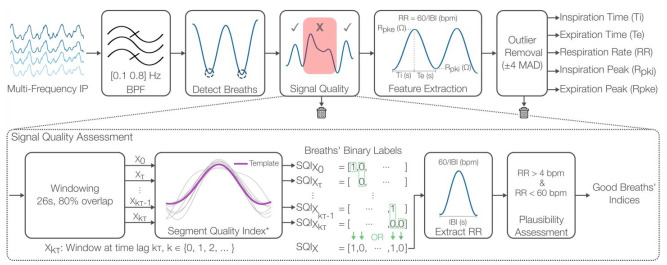
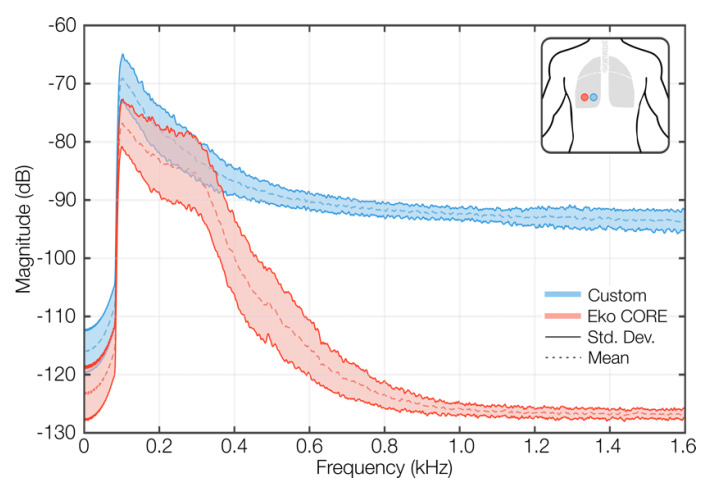
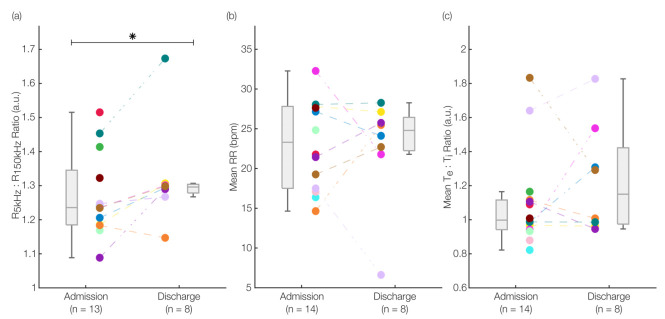
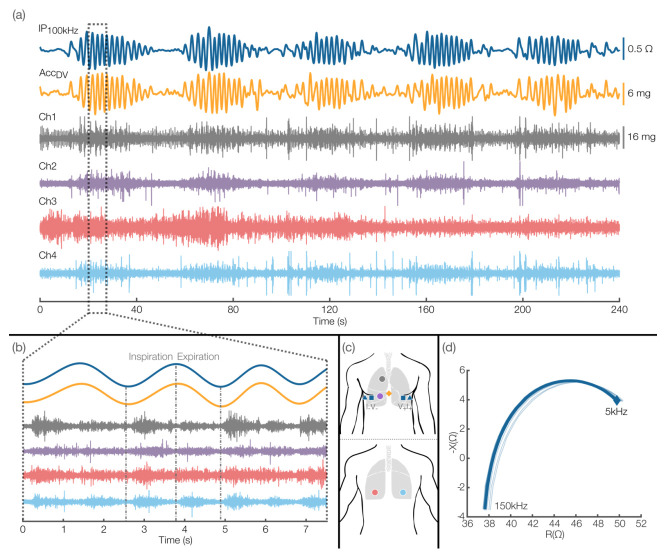
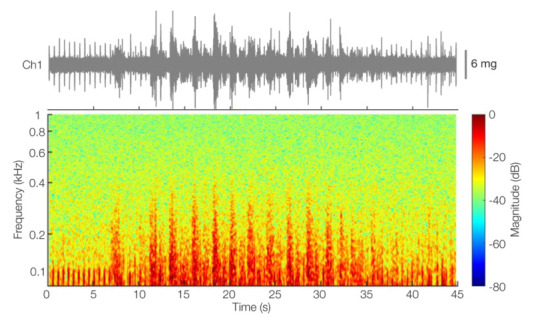
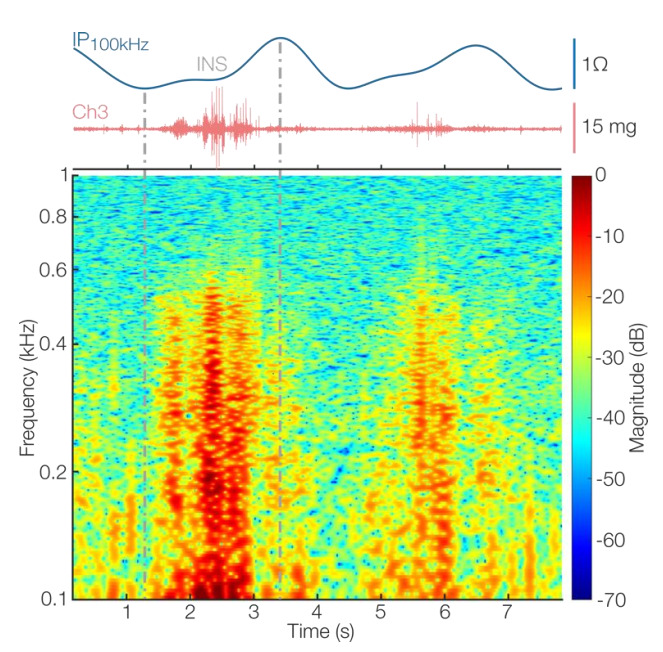
Heart failure (HF) exacerbations, characterized by pulmonary congestion and breathlessness, require frequent hospitalizations, often resulting in poor outcomes. Current methods for tracking lung fluid and respiratory distress are unable to produce continuous, holistic measures of cardiopulmonary health. We present a multimodal sensing system that captures bioimpedance spectroscopy (BIS), multi-channel lung sounds from four contact microphones, multi-frequency impedance pneumography (IP), temperature, and kinematics to track changes in cardiopulmonary status. We first validated the system on healthy subjects (n = 10) and then conducted a feasibility study on patients (n = 14) with HF in clinical settings. Three measurements were taken throughout the course of hospitalization, and parameters relevant to lung fluid status-the ratio of the resistances at 5 kHz to those at 150 kHz (K)-and respiratory timings (e.g., respiratory rate) were extracted. We found a statistically significant increase in K (p < 0.05) from admission to discharge and observed respiratory timings in physiologically plausible ranges. The IP-derived respiratory signals and lung sounds were sensitive enough to detect abnormal respiratory patterns (Cheyne-Stokes) and inspiratory crackles from patient recordings, respectively. We demonstrated that the proposed system is suitable for detecting changes in pulmonary fluid status and capturing high-quality respiratory signals and lung sounds in a clinical setting.
Keywords: bioimpedance spectroscopy; cardiorespiratory monitoring; fluid status; heart failure; impedance pneumography; lung sounds; sensor fusion; wearable sensing.
Conflict of interest statement
The authors declare no conflict of interest.
Figures
References
-
- Virani S.S., Alonso A., Benjamin E.J., Bittencourt M.S., Callaway C.W., Carson A.P., Chamberlain A.M., Chang A.R., Cheng S., Delling F.N., et al. Heart disease and stroke statistics-2020 update: A report from the american heart association. Circulation. 2020;141:E139–E596. doi: 10.1161/CIR.0000000000000757. - DOI - PubMed
-
- Solomon S.D., Dobson J., Pocock S., Skali H., Mcmurray J., Granger C.B., Yusuf S., Swedberg K., Young J.B., Michelson E.L., et al. Influence of nonfatal hospitalization for heart failure on subsequent mortality in patients with chronic heart failure. Circulation. 2007;116:1482–1487. doi: 10.1161/CIRCULATIONAHA.107.696906. - DOI - PubMed
-
- Ambrosy A.P., Pang P.S., Khan S., Konstam M.A., Fonarow G.C., Traver B., Maggioni A.P., Cook T., Swedberg K., Burnett J.C., et al. Clinical course and predictive value of congestion during hospitalization in patients admitted for worsening signs and symptoms of heart failure with reduced ejection fraction: Findings from the EVEREST trial. Eur. Heart J. 2013;34:835–843. doi: 10.1093/eurheartj/ehs444. - DOI - PubMed
MeSH terms
Grants and funding
LinkOut - more resources
Full Text Sources
Other Literature Sources
Medical
Research Materials
Miscellaneous
