


The Biological Role of Vitamins in Athletes' Muscle, Heart and Microbiota
- PMID: 35162272
- PMCID: PMC8834970
- DOI: 10.3390/ijerph19031249
The Biological Role of Vitamins in Athletes' Muscle, Heart and Microbiota
Abstract
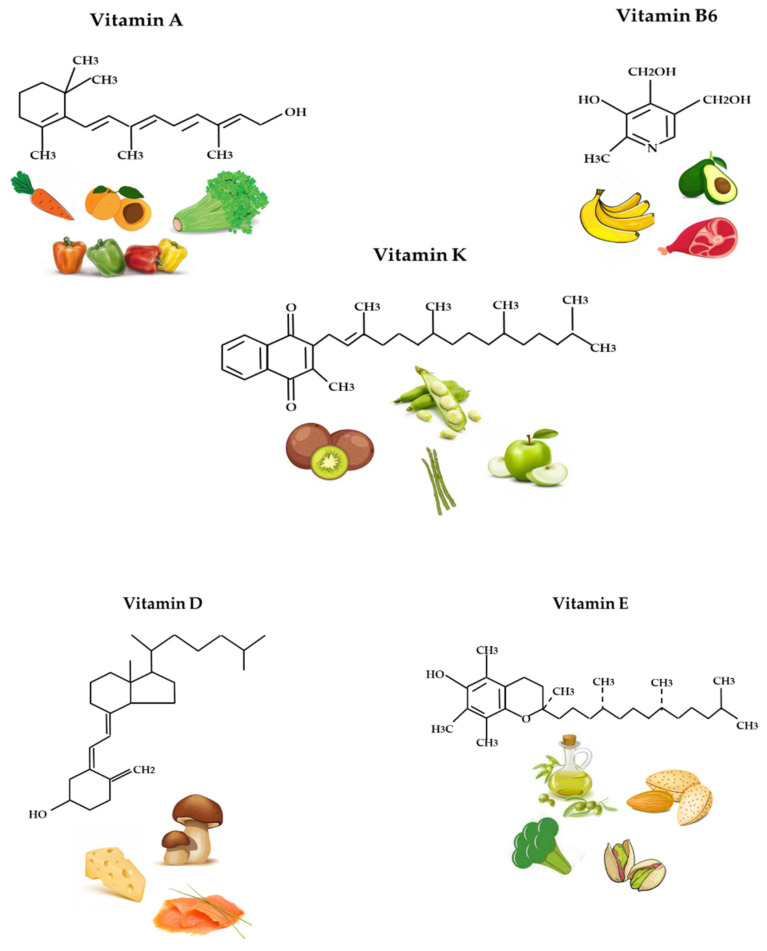
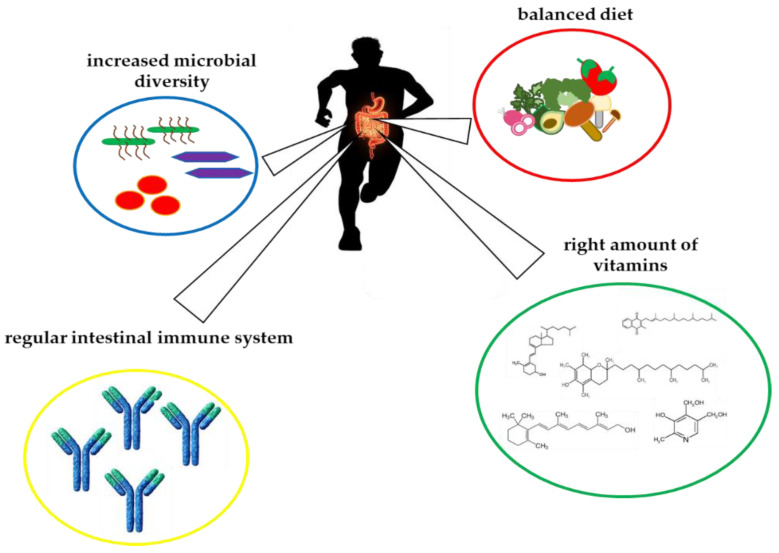
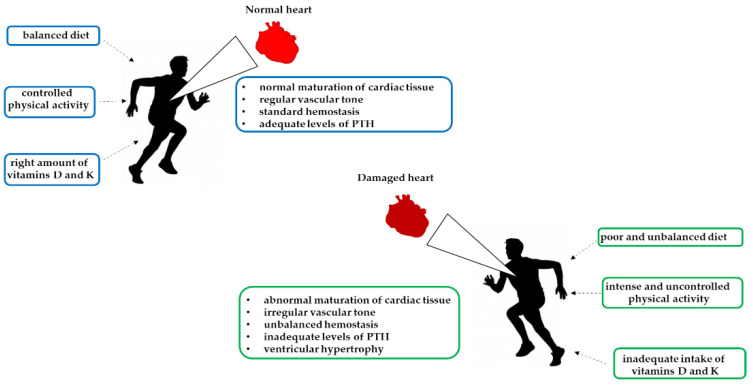
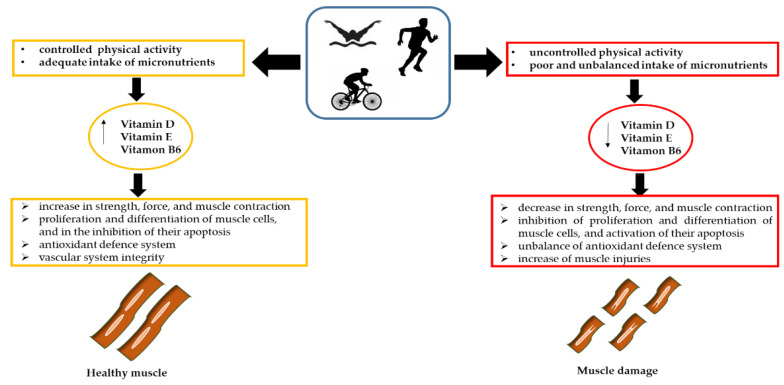
Physical activity, combined with adequate nutrition, is considered a protective factor against cardiovascular disease, musculoskeletal disorders, and intestinal dysbiosis. Achieving optimal performance requires a significantly high energy expenditure, which must be correctly supplied to avoid the occurrence of diseases such as muscle injuries, oxidative stress, and heart pathologies, and a decrease in physical performance during competition. Moreover, in sports activities, the replenishment of water, vitamins, and minerals consumed during training is essential for safeguarding athletes' health. In this scenario, vitamins play a pivotal role in numerous metabolic reactions and some muscle biochemical adaptation processes induced by sports activity. Vitamins are introduced to the diet because the human body is unable to produce these micronutrients. The aim of this review is to highlight the fundamental role of vitamin supplementation in physical activity. Above all, we focus on the roles of vitamins A, B6, D, E, and K in the prevention and treatment of cardiovascular disorders, muscle injuries, and regulation of the microbiome.
Keywords: athletic performance; cardiac pathologies; gut microbiota; micronutrients; muscle damage; nutrition.
Conflict of interest statement
The authors declare no conflict of interest.
Figures
References
-
- Institute of Medicine (US) Standing Committee on the Scientific Evaluation of Dietary Reference Intakes . Dietary Reference Intakes for Calcium, Phosphorus, Magnesium, Vitamin D, and Fluoride. National Academies Press; Washington, DC, USA: 1997. - PubMed
-
- Institute of Medicine (US) Standing Committee on the Scientific Evaluation of Dietary Reference Intakes and its Panel on Folate, Other B Vitamins, and Choline . Dietary Reference Intakes for Thiamin, Riboflavin, Niacin, Vitamin B6, Folate, Vitamin B12, Pantothenic Acid, Biotin, and Choline. National Academies Press; Washington, DC, USA: 1998. - PubMed
-
- Institute of Medicine (US) Panel on Dietary Antioxidants and Related Compounds . Dietary Reference Intakes for Vitamin C, Vitamin E, Selenium, and Carotenoids. National Academies Press; Washington, DC, USA: 2000. - PubMed
-
- Institute of Medicine (US) Panel on Micronutrients . Dietary Reference Intakes for Vitamin A, Vitamin K, Arsenic, Boron, Chromium, Copper, Iodine, Iron, Manganese, Molybdenum, Nickel, Silicon, Vanadium, and Zinc. National Academies Press; Washington, DC, USA: 2001. - PubMed
Publication types
MeSH terms
Substances
LinkOut - more resources
Full Text Sources
