


Association of Cardiorespiratory Fitness and Cognitive Function with Psychological Well-Being in School-Aged Children
- PMID: 35162451
- PMCID: PMC8835533
- DOI: 10.3390/ijerph19031434
Association of Cardiorespiratory Fitness and Cognitive Function with Psychological Well-Being in School-Aged Children
Abstract
Background: Promotion of psychological well-being (PWB) is an emerging social, educational, and health objective, especially for school-aged children. Few studies have examined key correlates and determinants of PWB in school-aged children. This study aimed to examine associations of cardiorespiratory fitness and cognitive function with psychological well-being in school-aged children.
Methods: The study participants were 752 fourth-grade students (mean age = 9.61 years, SD = 0.608) recruited from six elementary schools. Students took the Progressive Aerobic Cardiovascular Endurance Run® test to assess their cardiorespiratory fitness, and the d2 Test of Attention to assess concentration performance, attention span, and attention accuracy. They also completed the Warwick-Edinburgh Mental Well-Being Scale to assess their psychological well-being (PWB). After removing missing values and outliers from the original data set, the final data set, consisting of 689 cases (370 boys vs. 319 girls), was used for data analysis. Data were analyzed by means of descriptive statistics, bivariate correlation, multiple linear regression models, and independent sample t-tests.
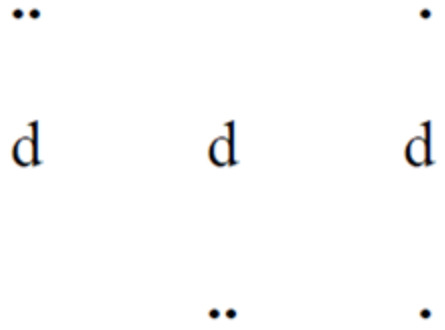
Results: The results indicated that cardiorespiratory fitness and cognitive function are significant correlates of PWB (r = -0.069, r = 0.161). Further, the results found that cardiorespiratory fitness, concentration performance, attention span, and attention accuracy were significantly collective predictors of psychological well-being (F = 13.299, p = 0.000), accounting for 12% of the total variance. Cardiorespiratory fitness was the most significantly individual predictor of PWB (β = 0.174, p = 0.000), followed by the attention accuracy (β = -0.090, p = 0.031). The Welch's tests revealed that the high-PWB group scored significantly higher than the low-PWB group in cardiorespiratory fitness, concentration performance, and attention accuracy (t = 4.093, p = 0.000, Cohen's d = 0.310; t = 3.340, p = 0.001, Cohen's d = 0.256; t = -2.958, p = 0.003, Cohen's d = 0.130).
Conclusions: Cardiorespiratory fitness and cognitive function are significant correlates and predictors of PWB among school-aged children. The students with a higher level of psychological well-being showed a higher cardiorespiratory fitness, concentration performance, and attention accuracy compared to the lower level of PWB group.
Keywords: aerobic fitness; attention accuracy; attention span; cognition; concentration performance; well-being.
Conflict of interest statement
The authors declare no conflict of interest.
Similar articles
-
Potential Predictors of Psychological Wellbeing in Elementary School Students.Children (Basel). 2021 Sep 11;8(9):798. doi: 10.3390/children8090798. Children (Basel). 2021. PMID: 34572230 Free PMC article.
-
The Impacts of Coordinated-Bilateral Ball Skills Intervention on Attention and Concentration, and Cardiorespiratory Fitness among Fourth-Grade Students.Int J Environ Res Public Health. 2021 Nov 5;18(21):11634. doi: 10.3390/ijerph182111634. Int J Environ Res Public Health. 2021. PMID: 34770147 Free PMC article.
-
Associations between gender, school socioeconomic status, and cardiorespiratory fitness among elementary and middle school students.BMC Public Health. 2020 Oct 2;20(1):1495. doi: 10.1186/s12889-020-09571-y. BMC Public Health. 2020. PMID: 33008360 Free PMC article.
-
Predicting academic performance associated with physical fitness of primary school students using machine learning methods.Complement Ther Clin Pract. 2023 May;51:101736. doi: 10.1016/j.ctcp.2023.101736. Epub 2023 Feb 11. Complement Ther Clin Pract. 2023. PMID: 36821949 Review.
-
Outdoor walking better? environmental elements of cardiorespiratory fitness training trails.Front Sports Act Living. 2023 Jan 9;4:1036777. doi: 10.3389/fspor.2022.1036777. eCollection 2022. Front Sports Act Living. 2023. PMID: 36699982 Free PMC article. Review.
Cited by
-
Associations between Sleep, Depression, and Cognitive Performance in Adolescence.Eur J Investig Health Psychol Educ. 2023 Feb 18;13(2):501-511. doi: 10.3390/ejihpe13020038. Eur J Investig Health Psychol Educ. 2023. PMID: 36826222 Free PMC article.
-
Relationship between cognitive functioning and physical fitness in regard to age and sex.BMC Pediatr. 2023 Apr 29;23(1):204. doi: 10.1186/s12887-023-04028-8. BMC Pediatr. 2023. PMID: 37120530 Free PMC article.
-
Direct and indirect effects of physiological, psychological and cognitive variables on academic achievement in children.Pediatr Res. 2024 Dec;96(7):1861-1867. doi: 10.1038/s41390-024-03322-0. Epub 2024 Jun 28. Pediatr Res. 2024. PMID: 38944661
-
Association between Physical Fitness Index and Psychological Symptoms in Chinese Children and Adolescents.Children (Basel). 2022 Aug 26;9(9):1286. doi: 10.3390/children9091286. Children (Basel). 2022. PMID: 36138597 Free PMC article.
-
Ratings of perceived exertion (RPE) from a submaximal 20-m shuttle-run test accurately predict children's VO2peak, but when should we stop the test?Eur J Appl Physiol. 2025 Feb;125(2):551-559. doi: 10.1007/s00421-024-05618-9. Epub 2024 Sep 30. Eur J Appl Physiol. 2025. PMID: 39347821 Free PMC article.
References
-
- World Health Organization (WHO) Mental Health: A State of Well-Being. World Health Organization (WHO); Geneva, Switzerland: 2014.
-
- Dodge R., Daly A.P., Huyton J., Sanders L.D. The challenge of defining wellbeing. Int. Lournal Wellbeing. 2012;2:222–235. doi: 10.5502/ijw.v2i3.4. - DOI
-
- Liddle I., Carter G.F. Emotional and psychological well-being in children: The development and validation of the Stirling Children’s Well-being Scale. Educ. Psychol. Pract. 2015;31:174–185. doi: 10.1080/02667363.2015.1008409. - DOI
Publication types
MeSH terms
LinkOut - more resources
Full Text Sources
