


Climate Change Impacts on Microbiota in Beach Sand and Water: Looking Ahead
- PMID: 35162479
- PMCID: PMC8834802
- DOI: 10.3390/ijerph19031444
Climate Change Impacts on Microbiota in Beach Sand and Water: Looking Ahead
Abstract
Beach sand and water have both shown relevance for human health and their microbiology have been the subjects of study for decades. Recently, the World Health Organization recommended that recreational beach sands be added to the matrices monitored for enterococci and Fungi. Global climate change is affecting beach microbial contamination, via changes to conditions like water temperature, sea level, precipitation, and waves. In addition, the world is changing, and humans travel and relocate, often carrying endemic allochthonous microbiota. Coastal areas are amongst the most frequent relocation choices, especially in regions where desertification is taking place. A warmer future will likely require looking beyond the use of traditional water quality indicators to protect human health, in order to guarantee that waterways are safe to use for bathing and recreation. Finally, since sand is a complex matrix, an alternative set of microbial standards is necessary to guarantee that the health of beach users is protected from both sand and water contaminants. We need to plan for the future safer use of beaches by adapting regulations to a climate-changing world.
Keywords: FIB; bathing water; beach sand; climate change; global warming; recreational water; sand.
Conflict of interest statement
The authors declare no conflict of interest.
Figures
References
-
- IPCC . In: Climate Change Synthesis Report 2014. Pachauri R.K., Meyer L., editors. Intergovernmental Panel on Climate Change; New York, NY, USA: 2014.
-
- IPCC . In: Climate Change the Physical Science Basis 2013. Stocker T.F., Qin D., editors. Intergovernmental Panel on Climate Change; New York, NY, USA: 2013.
-
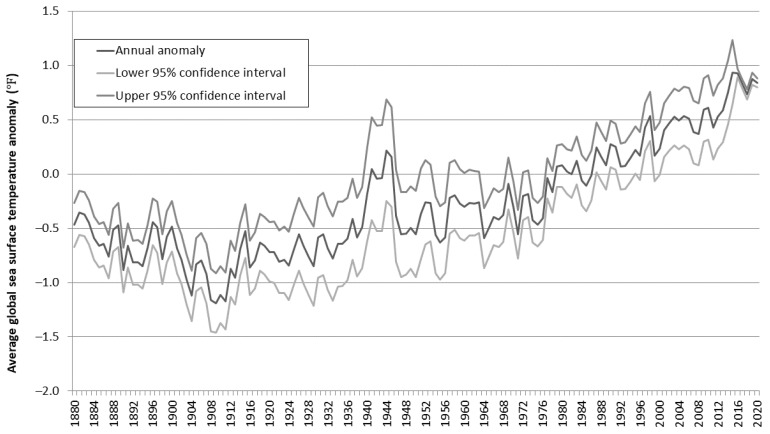
- NOAA Extended Reconstructed Sea Surface Temperature (ERSST.v5) [(accessed on 10 December 2021)];2021 Available online: https://www.epa.gov/climate-indicators/climate-change-indicators-sea-sur....
-
- Johansson M.M., Pellikka H., Kahma K.K., Ruosteenoja K. Global sea level rise scenarios adapted to the Finnish coast. J. Mar. Syst. 2014;129:35–46. doi: 10.1016/j.jmarsys.2012.08.007. - DOI
-
- O’Reilly C.M., Sharma S., Gray D.K., Hampton S.E., Read J.S., Rowley R.J., Schneider P., Lenters J.D., McIntyre P.B., Kraemer B.M., et al. Rapid and highly variable warming of lake surface waters around the globe. Geophys. Res. Lett. 2015;42:10773–10781. doi: 10.1002/2015GL066235. - DOI
Publication types
MeSH terms
Substances
LinkOut - more resources
Full Text Sources
