


Polyamine Oxidase Triggers H2O2-Mediated Spermidine Improved Oxidative Stress Tolerance of Tomato Seedlings Subjected to Saline-Alkaline Stress
- PMID: 35163549
- PMCID: PMC8836047
- DOI: 10.3390/ijms23031625
Polyamine Oxidase Triggers H2O2-Mediated Spermidine Improved Oxidative Stress Tolerance of Tomato Seedlings Subjected to Saline-Alkaline Stress
Abstract
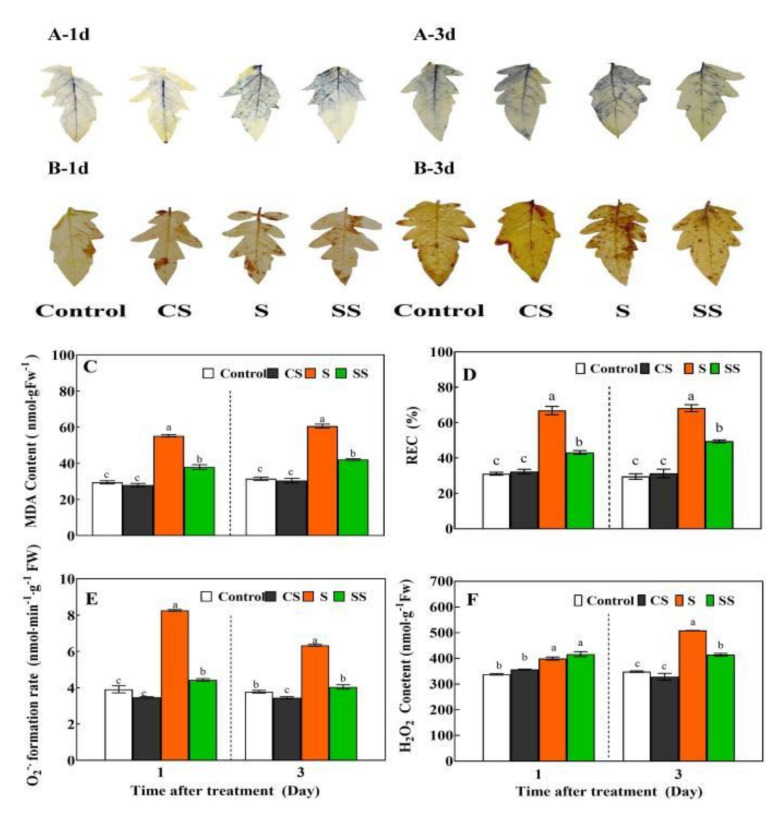
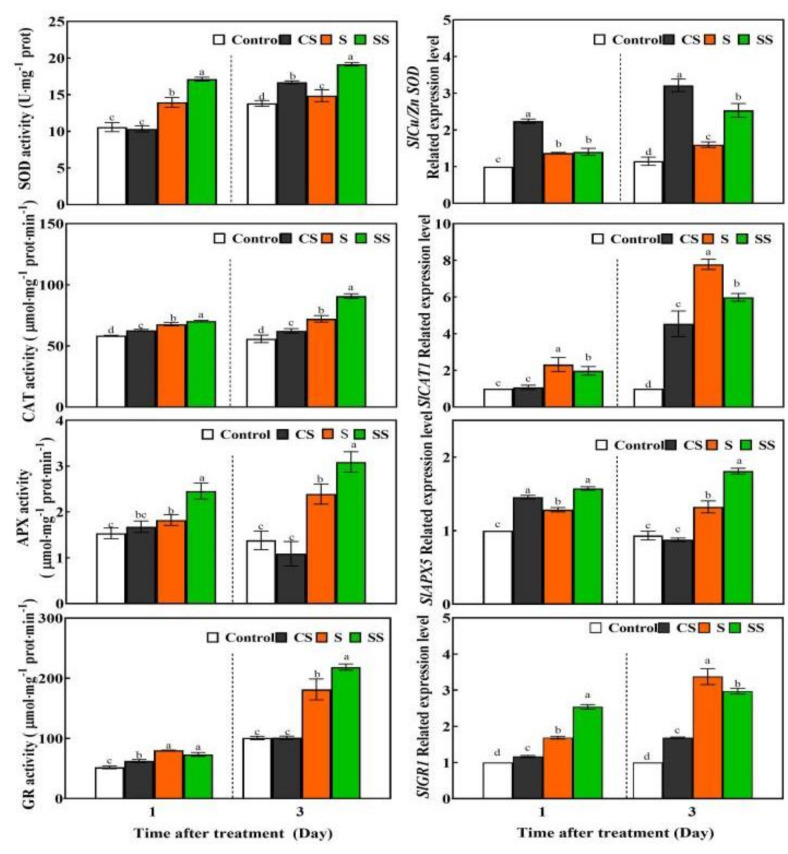
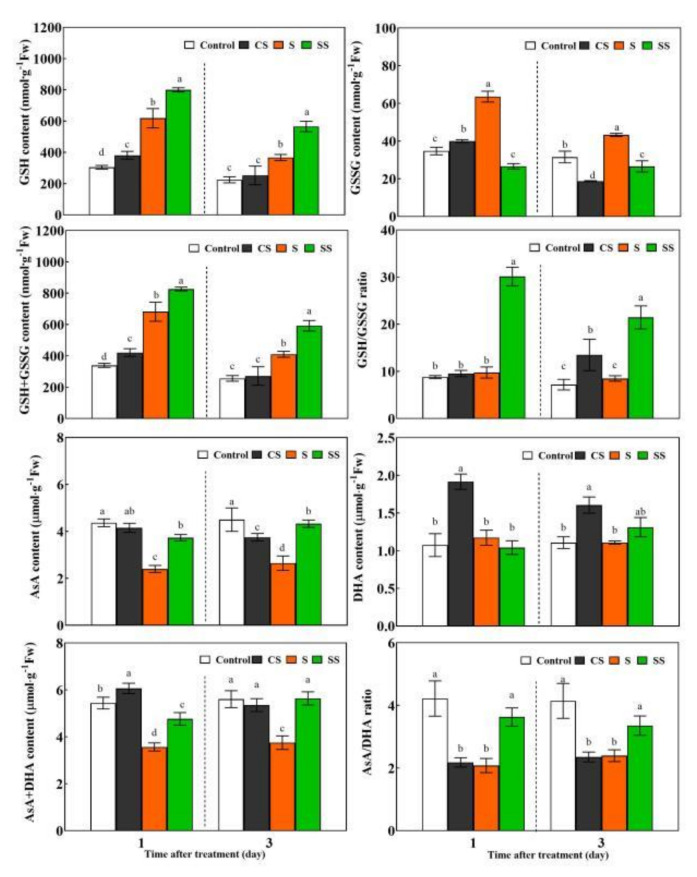
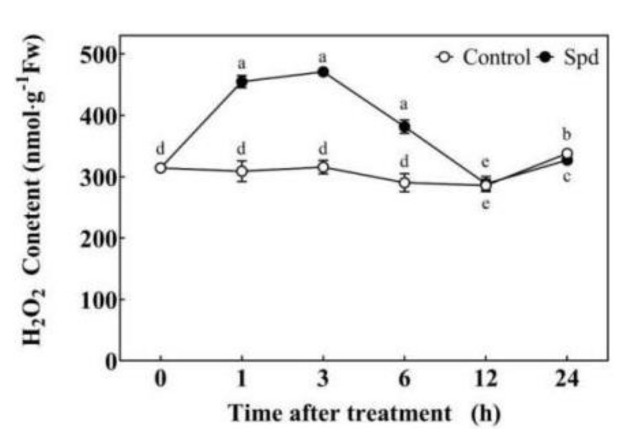
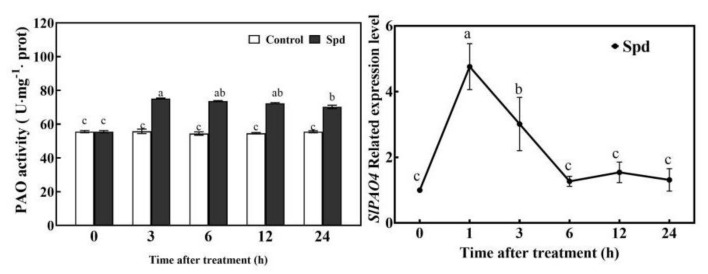
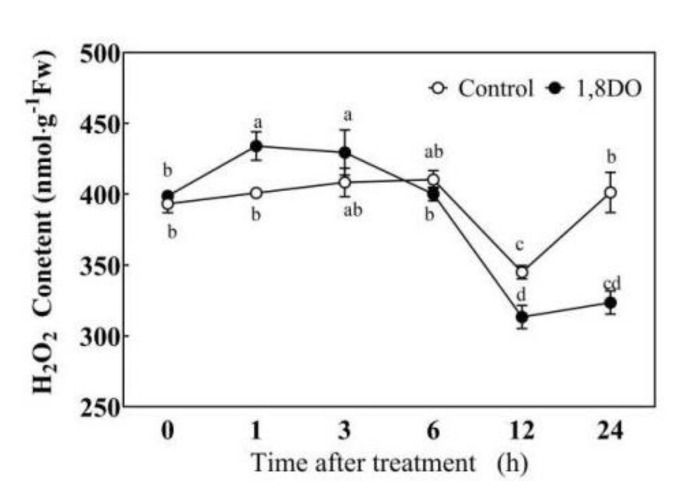
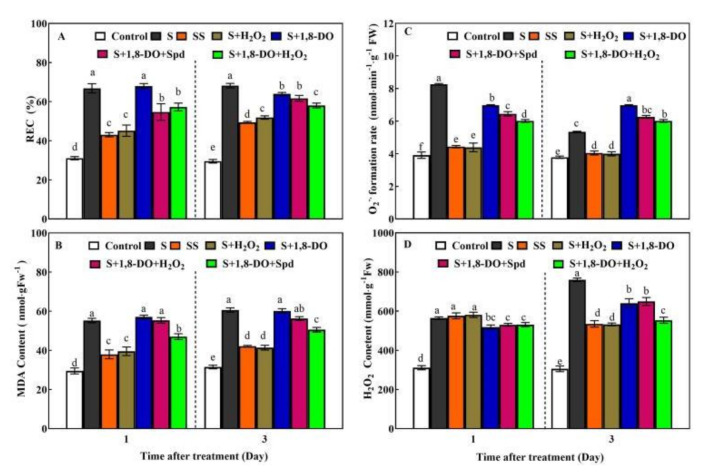
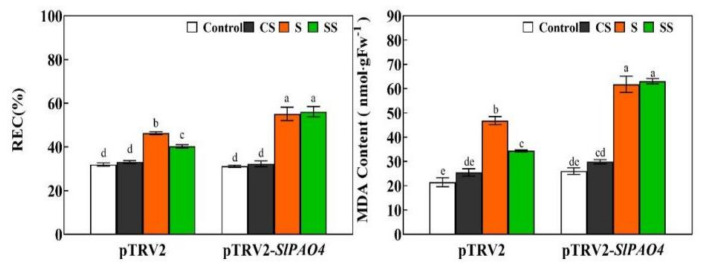
Saline-alkaline stress is one of several major abiotic stresses in crop production. Exogenous spermidine (Spd) can effectively increase tomato saline-alkaline stress resistance by relieving membrane lipid peroxidation damage. However, the mechanism through which exogenous Spd pre-treatment triggers the tomato antioxidant system to resist saline-alkaline stress remains unclear. Whether H2O2 and polyamine oxidase (PAO) are involved in Spd-induced tomato saline-alkaline stress tolerance needs to be determined. Here, we investigated the role of PAO and H2O2 in exogenous Spd-induced tolerance of tomato to saline-alkaline stress. Results showed that Spd application increased the expression and activities of superoxide dismutase (SOD), catalase (CAT), ascorbate peroxidase (APX), glutathione reductase (GR), and the ratio of reduced ascorbate (AsA) and glutathione (GSH) contents under saline-alkaline stress condition. Exogenous Spd treatment triggered endogenous H2O2 levels, SlPAO4 gene expression, as well as PAO activity under normal conditions. Inhibiting endogenous PAO activity by 1,8-diaminooctane (1,8-DO, an inhibitor of polyamine oxidase) significantly reduced H2O2 levels in the later stage. Moreover, inhibiting endogenous PAO or silencing the SlPAO4 gene increased the peroxidation damage of tomato leaves under saline-alkaline stress. These findings indicated that exogenous Spd treatment stimulated SlPAO4 gene expression and increased PAO activity, which mediated the elevation of H2O2 level under normal conditions. Consequently, the downstream antioxidant system was activated to eliminate excessive ROS accumulation and relieve membrane lipid peroxidation damage and growth inhibition under saline-alkaline stress. In conclusion, PAO triggered H2O2-mediated Spd-induced increase in the tolerance of tomato to saline-alkaline stress.
Keywords: Solanum lycopersicum; hydrogen peroxide; polyamine oxidase; saline-alkaline stress; spermidine.
Conflict of interest statement
The authors declare no conflict of interest.
Figures
References
-
- Shu S., Yuan R.N., Shen J.L., Chen J., Wang L.J., Wu J.Q., Sun J., Wang Y., Guo S.R. The positive regulation of putrescine on light-harvesting complex II and excitation energy dissipation in salt-stressed cucumber seedlings. Environ. Exp. Bot. 2019;162:283–294. doi: 10.1016/j.envexpbot.2019.02.027. - DOI
-
- Li X., Li Y., Ahammed G.J., Zhang X.N., Ying L., Zhang L., Yan P., Zhang L.P., Li Q.Y., Han W.Y. RBOH1-dependent apoplastic H2O2 mediates epigallocatechin-3-gallate-induced abiotic stress tolerance in Solanum lycopersicum L. Environ. Exp. Bot. 2019;161:357–366. doi: 10.1016/j.envexpbot.2018.11.013. - DOI
MeSH terms
Substances
Grants and funding
LinkOut - more resources
Full Text Sources
Miscellaneous
