Review
. 2022 Jan 31;27(3):959.
doi: 10.3390/molecules27030959.

Pentacyclic Triterpenoids Isolated from Celastraceae: A Focus in the 13C-NMR Data

Affiliations
Review

Pentacyclic Triterpenoids Isolated from Celastraceae: A Focus in the 13C-NMR Data

Karen Caroline Camargo et al. Molecules. .

Abstract

The Celastraceae family comprises about 96 genera and more than 1.350 species, occurring mainly in tropical and subtropical regions of the world. The species of this family stand out as important plant sources of triterpenes, both in terms of abundance and structural diversity. Triterpenoids found in Celastraceae species display mainly lupane, ursane, oleanane, and friedelane skeletons, exhibiting a wide range of biological activities such as antiviral, antimicrobial, analgesic, anti-inflammatory, and cytotoxic against various tumor cell lines. This review aimed to document all triterpenes isolated from different botanical parts of species of the Celastraceae family covering 2001 to 2021. Furthermore, a compilation of their 13C-NMR data was carried out to help characterize compounds in future investigations. A total of 504 pentacyclic triterpenes were compiled and distinguished as 29 aromatic, 50 dimers, 103 friedelanes, 89 lupanes, 102 oleananes, 22 quinonemethides, 88 ursanes and 21 classified as others.

Keywords: 13C-NMR; Celastraceae; quinonemethide; triterpenes.


Conflict of interest statement

The authors declare no conflict of interest.

Figures
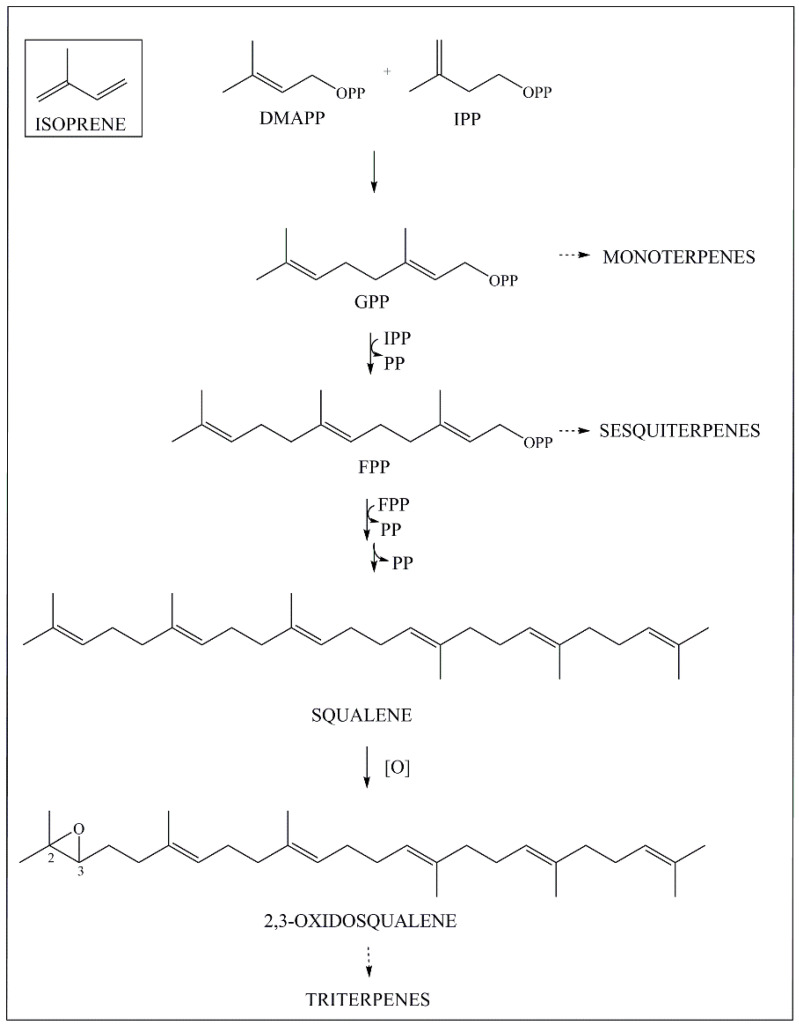
Figure 2
Figure 2
Simplified biosynthetic route of 2,3−oxidosqualene, the direct precursor of triterpenes, from isoprene. DMAPP: dimethylallyl diphosphate; IPP: isopentenyl diphosphate; GPP: geranyl diphosphate; FPP: farnesyl diphosphate; PP: diphosphate [26,28].
Figure 3
Figure 3
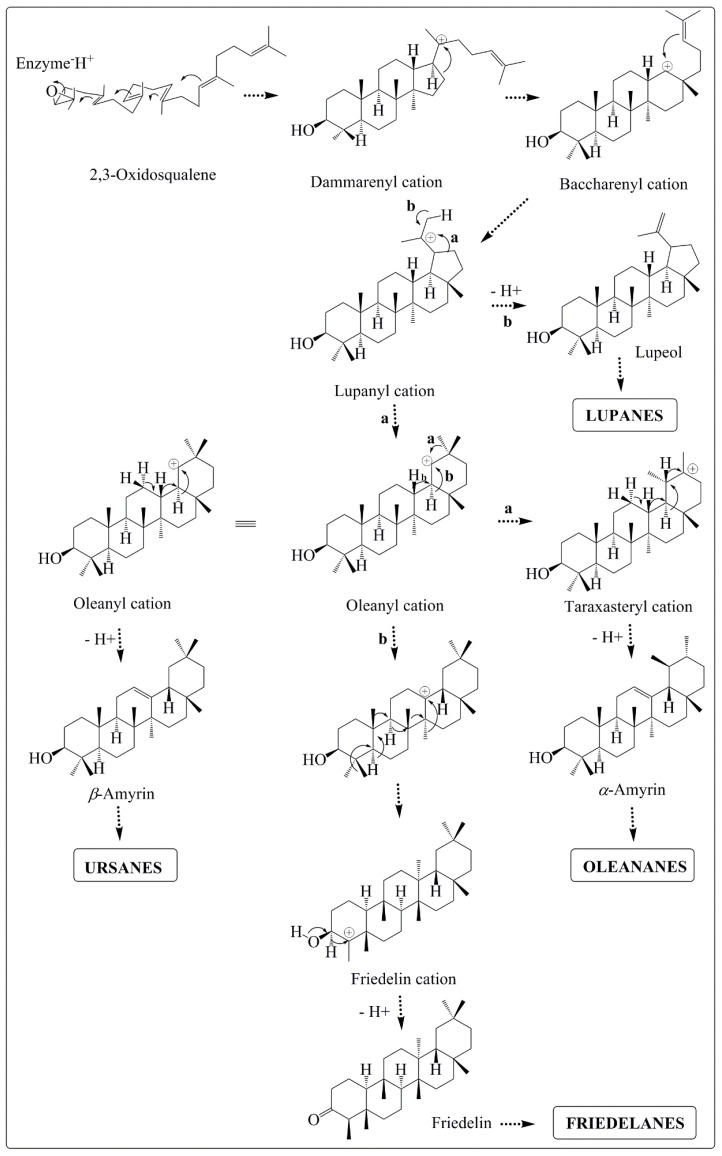
Simplified terpenoid biosynthetic route for the formation of the main pentacyclic triterpene skeletons isolated from Celastraceae species. “a” and “b” indicate two possible biosynthetic pathways [26,28].
Figure 1
Figure 1
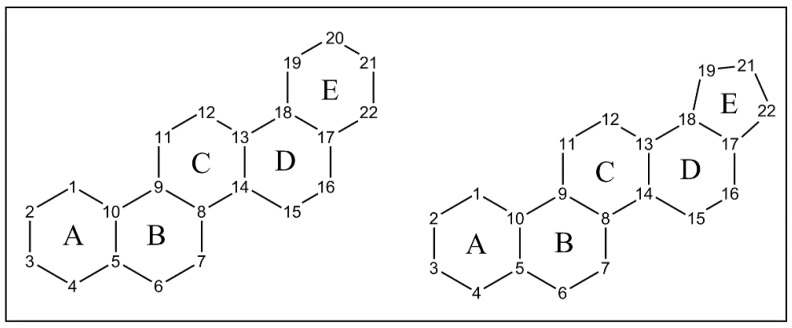
Core rings A, B, C, D, and E found in PCTTs.
Figure 4
Figure 4
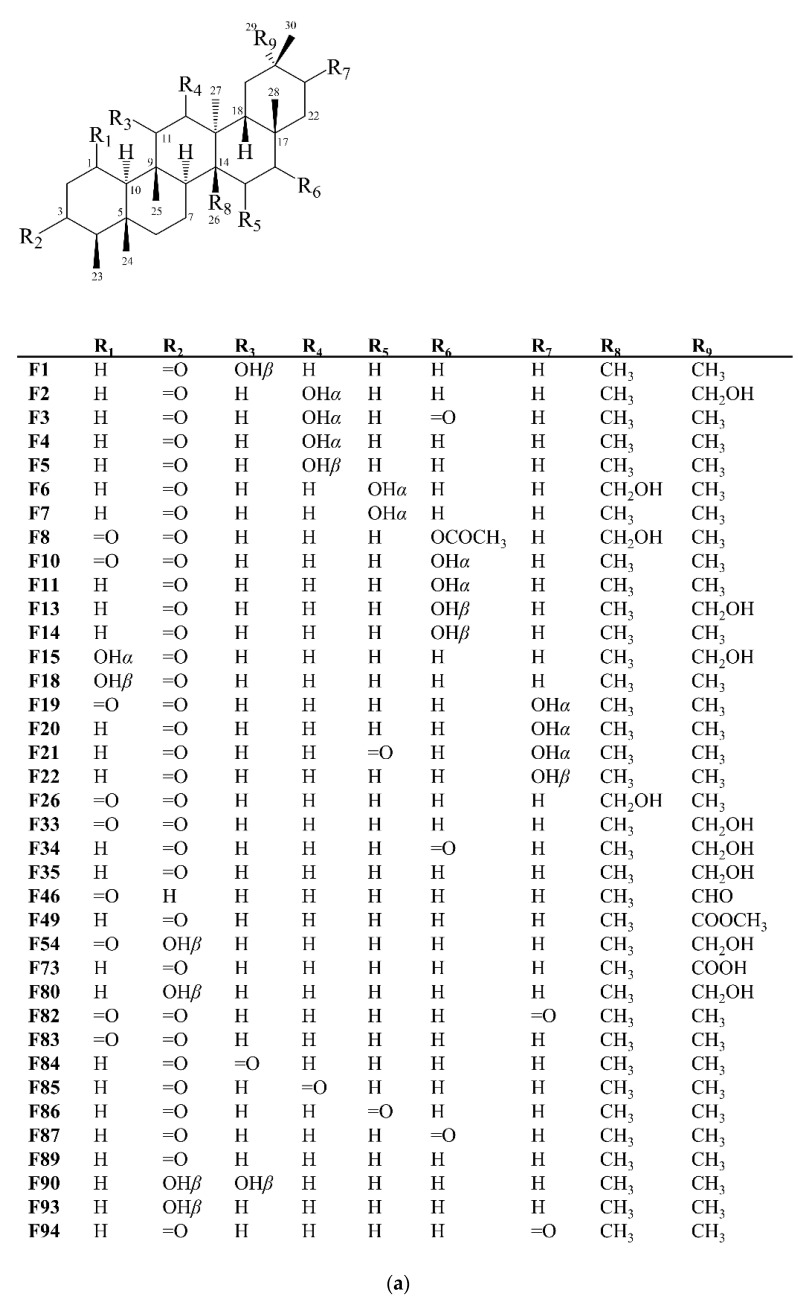
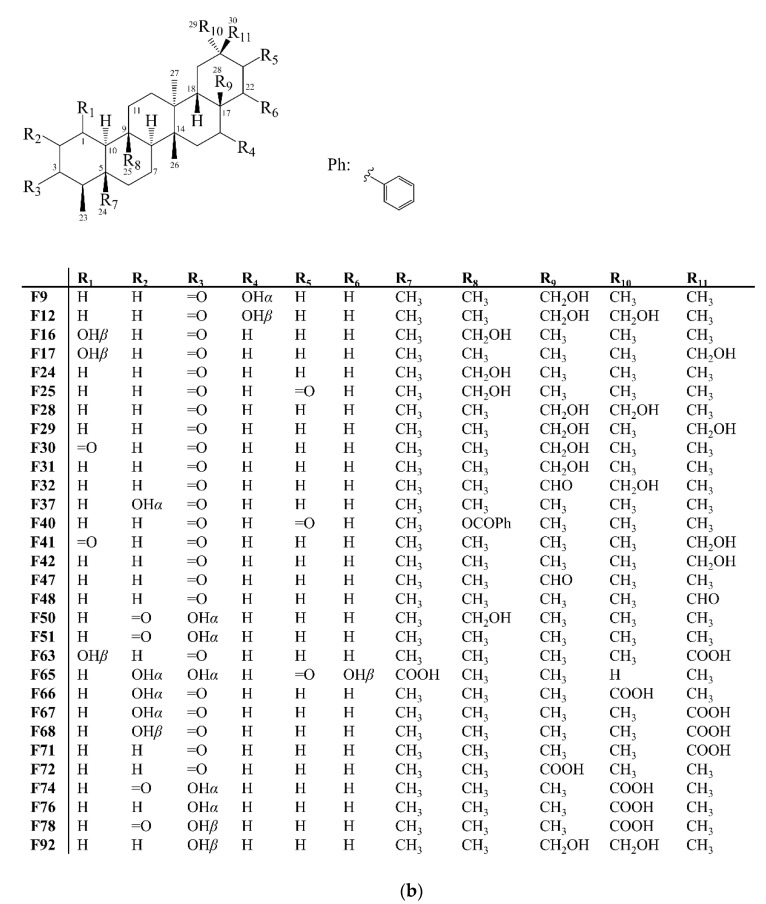
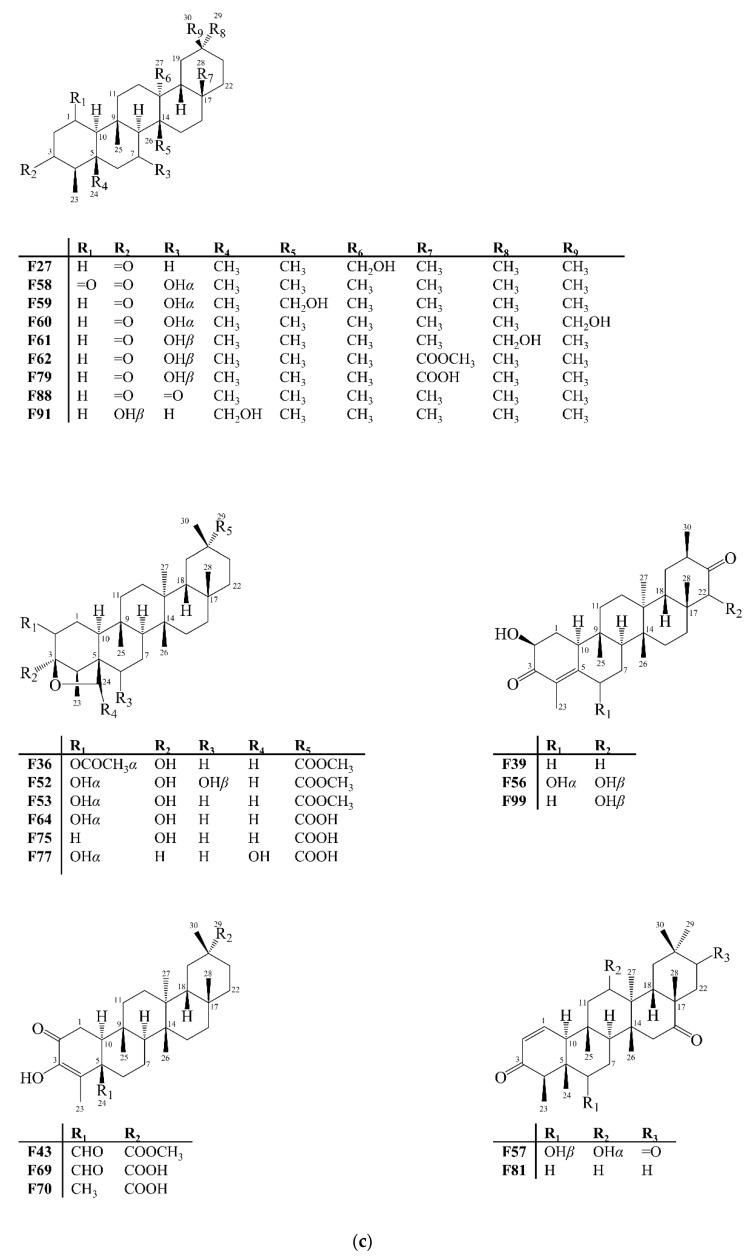
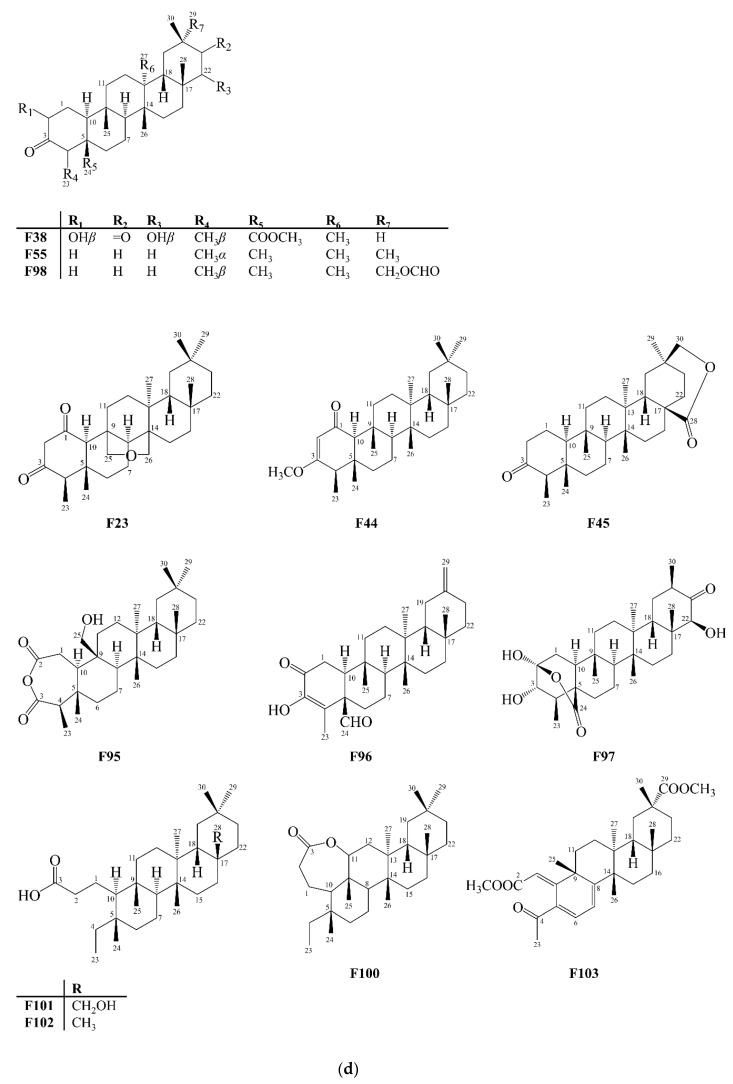
Structures of friedelane-type pentacyclic isolated from Celastraceae species (2001–2021). (a) Compounds F1F8, F10, F11, F13F15, F18F22, F26, F33F35, F46, F49, F54, F73, F80, F82F87, F89, F90, F93 and F94. (b) Compounds F9, F12, F16, F17, F24, F25, F28F32, F37, F40F42, F47, F48, F50, F51, F63, F65F68, F71, F72, F74, F76, F78 and F92. (c) Compounds F27, F36, F39, F43, F52, F53, F56, F57, F58F62, F64, F69, F70, F75, F77, F79, F81, F88, F91 and F99. (d) Compounds F23, F38, F44, F45, F55, F95F98, F100F103.
Figure 4
Figure 4
Structures of friedelane-type pentacyclic isolated from Celastraceae species (2001–2021). (a) Compounds F1F8, F10, F11, F13F15, F18F22, F26, F33F35, F46, F49, F54, F73, F80, F82F87, F89, F90, F93 and F94. (b) Compounds F9, F12, F16, F17, F24, F25, F28F32, F37, F40F42, F47, F48, F50, F51, F63, F65F68, F71, F72, F74, F76, F78 and F92. (c) Compounds F27, F36, F39, F43, F52, F53, F56, F57, F58F62, F64, F69, F70, F75, F77, F79, F81, F88, F91 and F99. (d) Compounds F23, F38, F44, F45, F55, F95F98, F100F103.
Figure 4
Figure 4
Structures of friedelane-type pentacyclic isolated from Celastraceae species (2001–2021). (a) Compounds F1F8, F10, F11, F13F15, F18F22, F26, F33F35, F46, F49, F54, F73, F80, F82F87, F89, F90, F93 and F94. (b) Compounds F9, F12, F16, F17, F24, F25, F28F32, F37, F40F42, F47, F48, F50, F51, F63, F65F68, F71, F72, F74, F76, F78 and F92. (c) Compounds F27, F36, F39, F43, F52, F53, F56, F57, F58F62, F64, F69, F70, F75, F77, F79, F81, F88, F91 and F99. (d) Compounds F23, F38, F44, F45, F55, F95F98, F100F103.
Figure 4
Figure 4
Structures of friedelane-type pentacyclic isolated from Celastraceae species (2001–2021). (a) Compounds F1F8, F10, F11, F13F15, F18F22, F26, F33F35, F46, F49, F54, F73, F80, F82F87, F89, F90, F93 and F94. (b) Compounds F9, F12, F16, F17, F24, F25, F28F32, F37, F40F42, F47, F48, F50, F51, F63, F65F68, F71, F72, F74, F76, F78 and F92. (c) Compounds F27, F36, F39, F43, F52, F53, F56, F57, F58F62, F64, F69, F70, F75, F77, F79, F81, F88, F91 and F99. (d) Compounds F23, F38, F44, F45, F55, F95F98, F100F103.
Figure 5
Figure 5
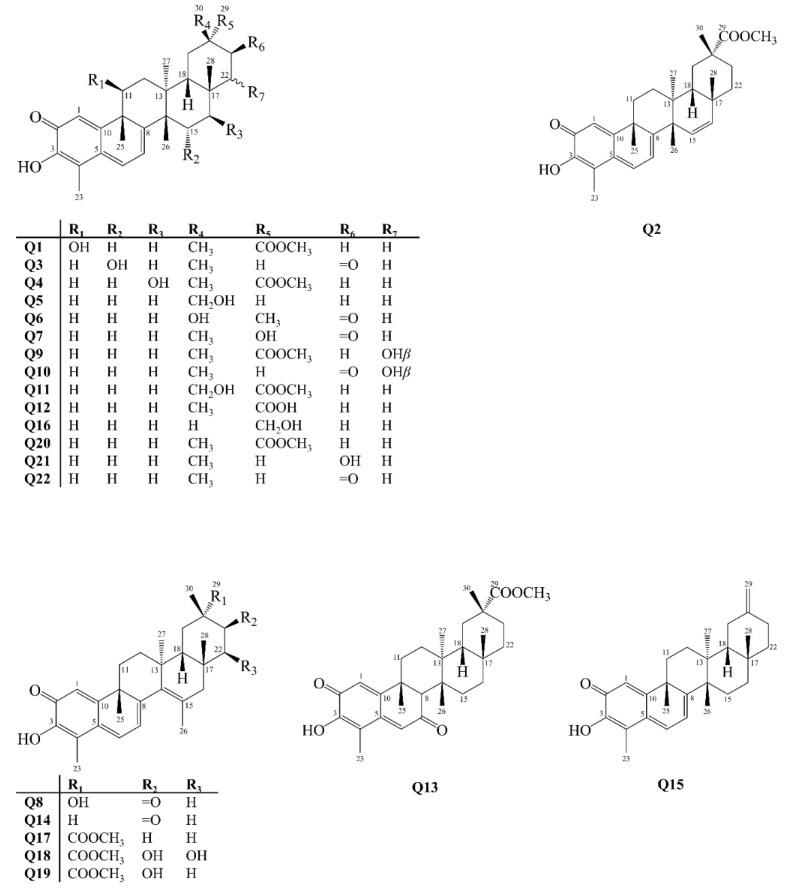
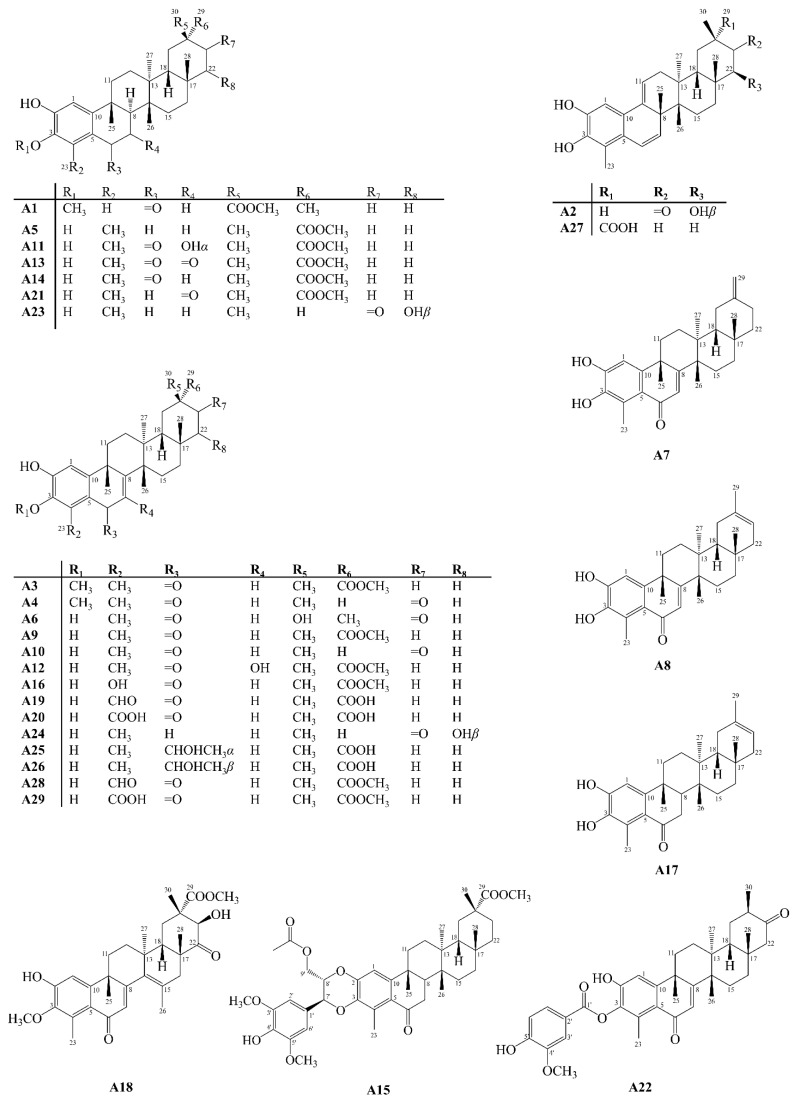
Structures of quinonemethide-type pentacyclic triterpenoids isolated from Celastraceae species (2001–2021).
Figure 6
Figure 6
Structures of aromatic-type pentacyclic triterpenoids isolated from Celastraceae species (2001–2021).
Figure 7
Figure 7
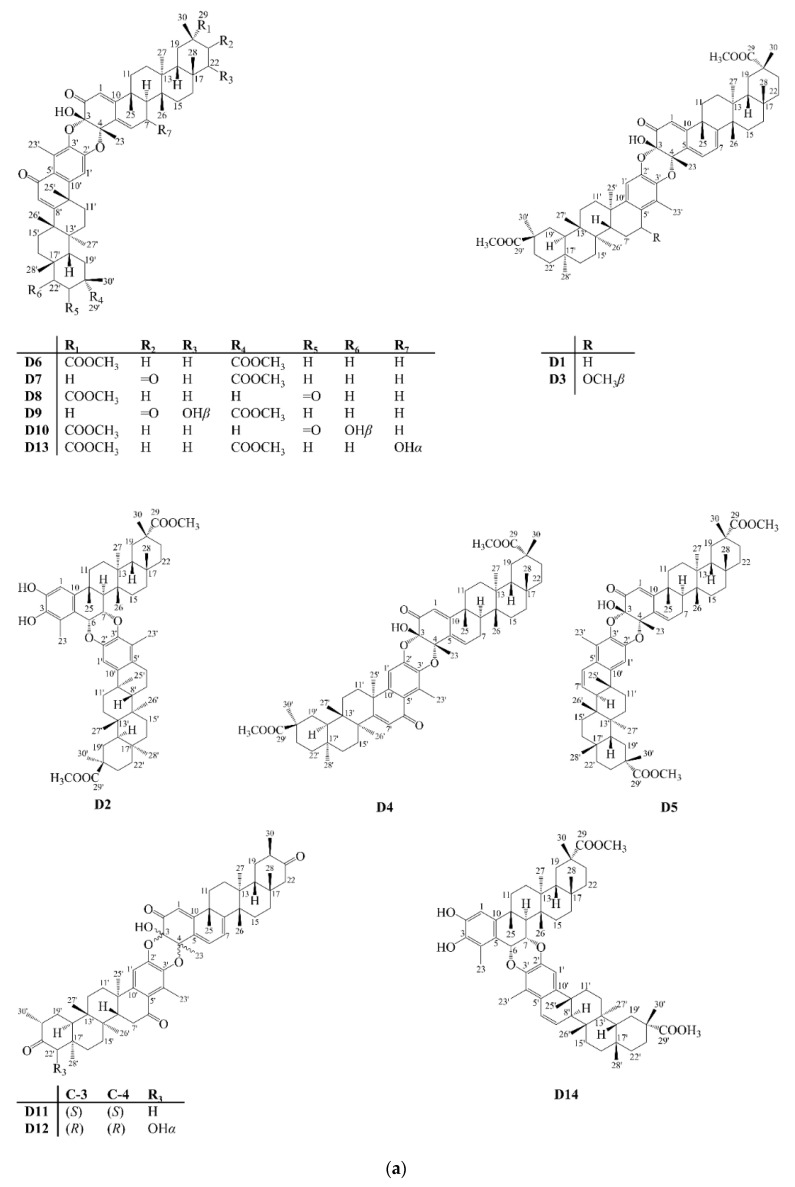
Structures of dimer-type pentacyclic triterpenoids isolated from Celastraceae species (2001–2021). (a) Compounds D1D14. (b) Compounds D15D26, D37, D38 and D40D47. (c) Compounds D27D30 and D32D36. (d) Compounds D31, D39 and D48D50.
Figure 7
Figure 7
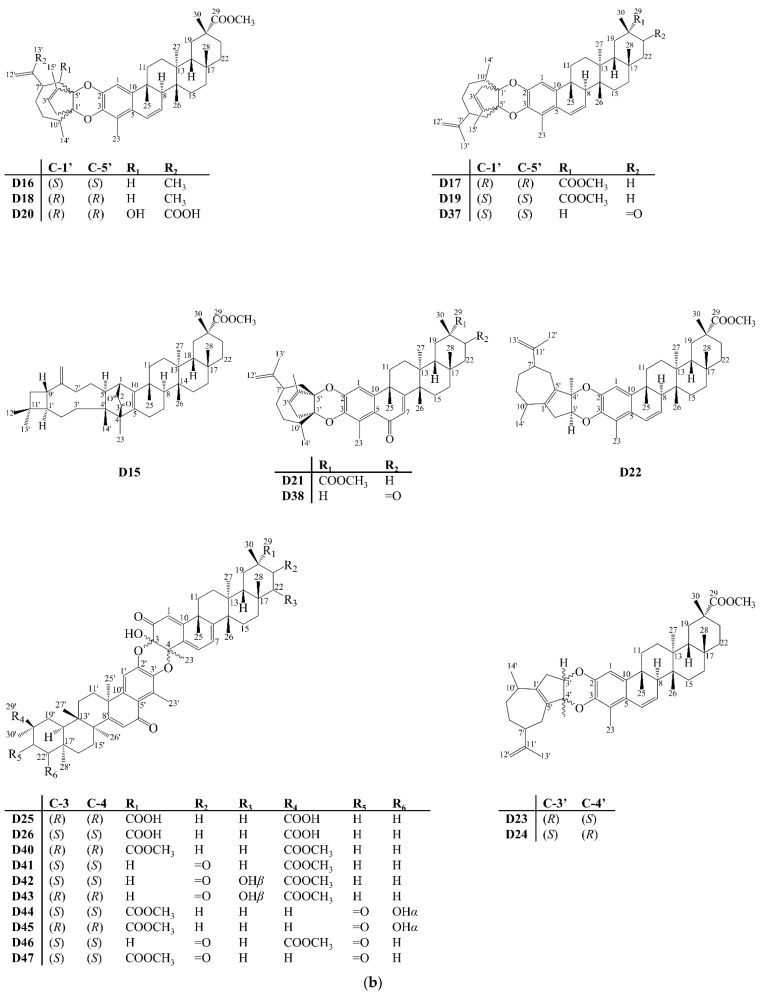
Structures of dimer-type pentacyclic triterpenoids isolated from Celastraceae species (2001–2021). (a) Compounds D1D14. (b) Compounds D15D26, D37, D38 and D40D47. (c) Compounds D27D30 and D32D36. (d) Compounds D31, D39 and D48D50.
Figure 7
Figure 7
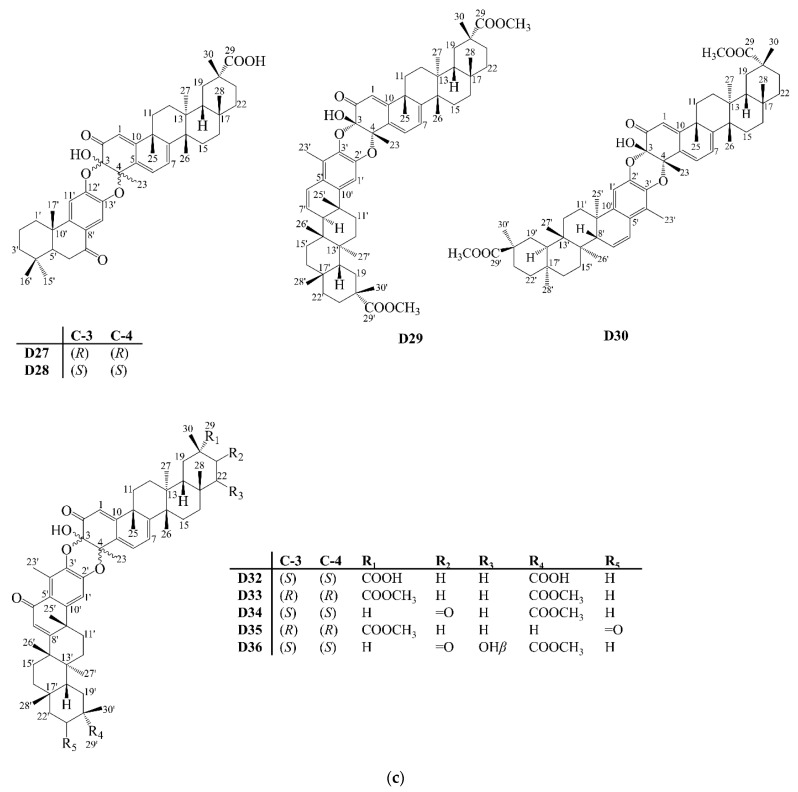
Structures of dimer-type pentacyclic triterpenoids isolated from Celastraceae species (2001–2021). (a) Compounds D1D14. (b) Compounds D15D26, D37, D38 and D40D47. (c) Compounds D27D30 and D32D36. (d) Compounds D31, D39 and D48D50.
Figure 7
Figure 7
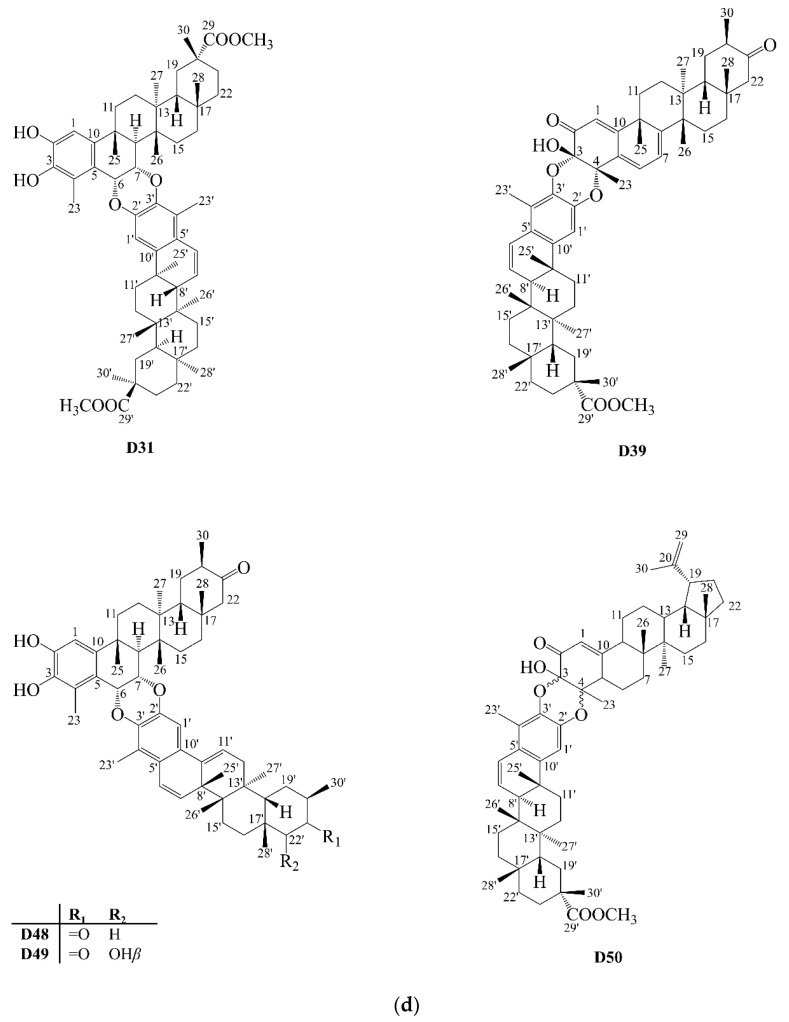
Structures of dimer-type pentacyclic triterpenoids isolated from Celastraceae species (2001–2021). (a) Compounds D1D14. (b) Compounds D15D26, D37, D38 and D40D47. (c) Compounds D27D30 and D32D36. (d) Compounds D31, D39 and D48D50.
Figure 8
Figure 8
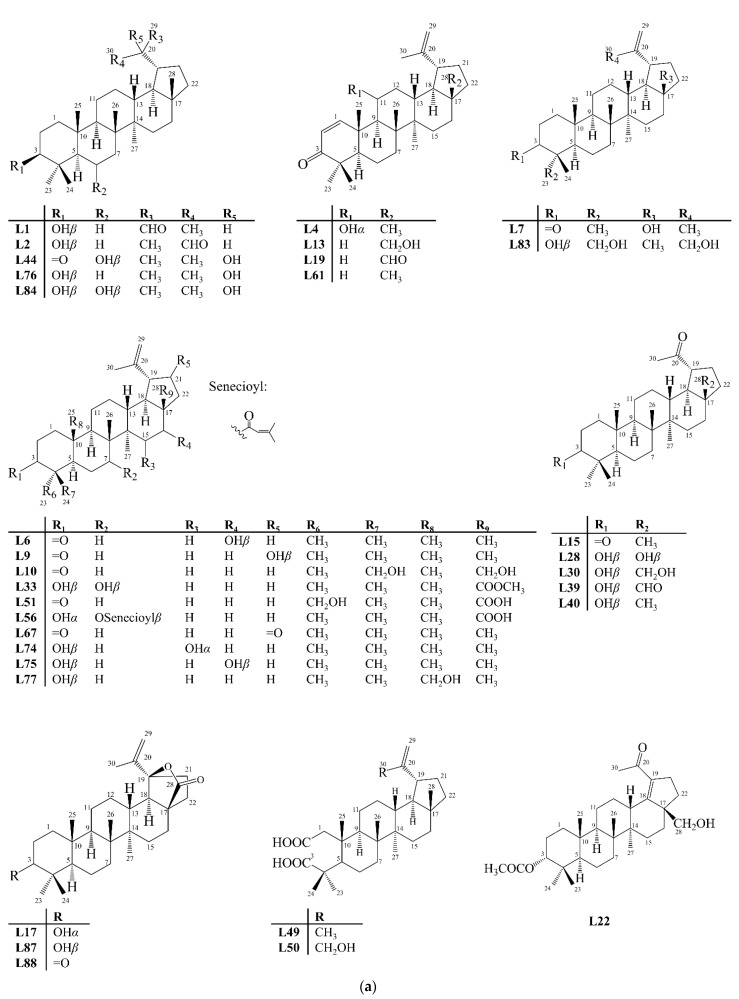
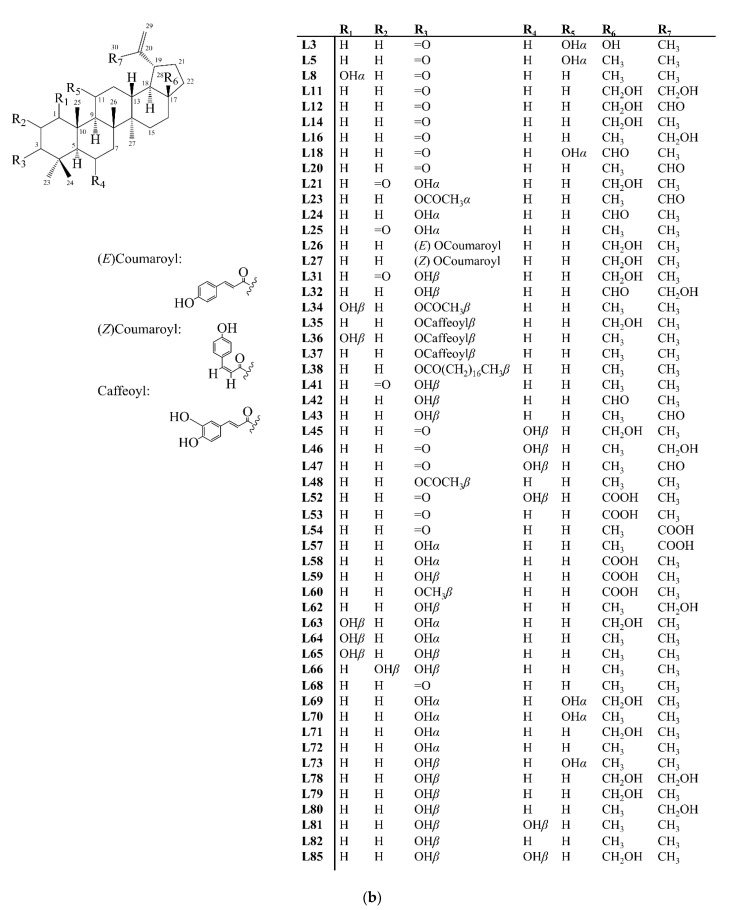
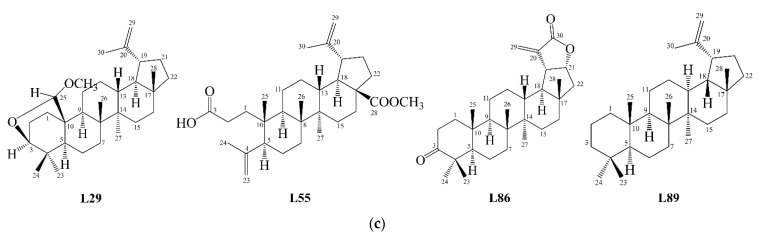
Structures of lupane-type pentacyclic triterpenoids isolated from Celastraceae species (2001–2021). (a) Compounds L1, L2, L4, L6, L7, L9, L10, L13, L15, L17, L19, L22, L28, L30, L33, L39, L40, L44, L49-L51, L56, L61, L67, L74L77, L83, L84, L87 and L88. (b) Compounds L3, L5, L8, L11, L12, L14, L16, L18, L20, L21, L2327, L31, L32, L34L38, L41L43, L45L48, L52L54, L57L60, L62L66, L68L73, L78L82 and L85. (c) Compounds L29, L55, L86 and L89.
Figure 8
Figure 8
Structures of lupane-type pentacyclic triterpenoids isolated from Celastraceae species (2001–2021). (a) Compounds L1, L2, L4, L6, L7, L9, L10, L13, L15, L17, L19, L22, L28, L30, L33, L39, L40, L44, L49-L51, L56, L61, L67, L74L77, L83, L84, L87 and L88. (b) Compounds L3, L5, L8, L11, L12, L14, L16, L18, L20, L21, L2327, L31, L32, L34L38, L41L43, L45L48, L52L54, L57L60, L62L66, L68L73, L78L82 and L85. (c) Compounds L29, L55, L86 and L89.
Figure 8
Figure 8
Structures of lupane-type pentacyclic triterpenoids isolated from Celastraceae species (2001–2021). (a) Compounds L1, L2, L4, L6, L7, L9, L10, L13, L15, L17, L19, L22, L28, L30, L33, L39, L40, L44, L49-L51, L56, L61, L67, L74L77, L83, L84, L87 and L88. (b) Compounds L3, L5, L8, L11, L12, L14, L16, L18, L20, L21, L2327, L31, L32, L34L38, L41L43, L45L48, L52L54, L57L60, L62L66, L68L73, L78L82 and L85. (c) Compounds L29, L55, L86 and L89.
Figure 9
Figure 9
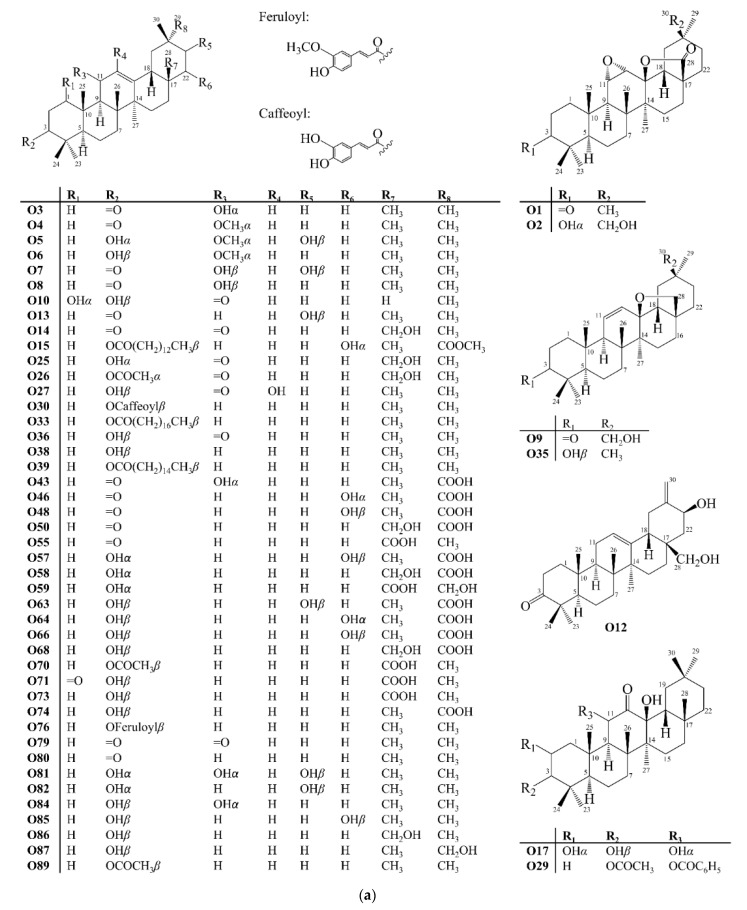
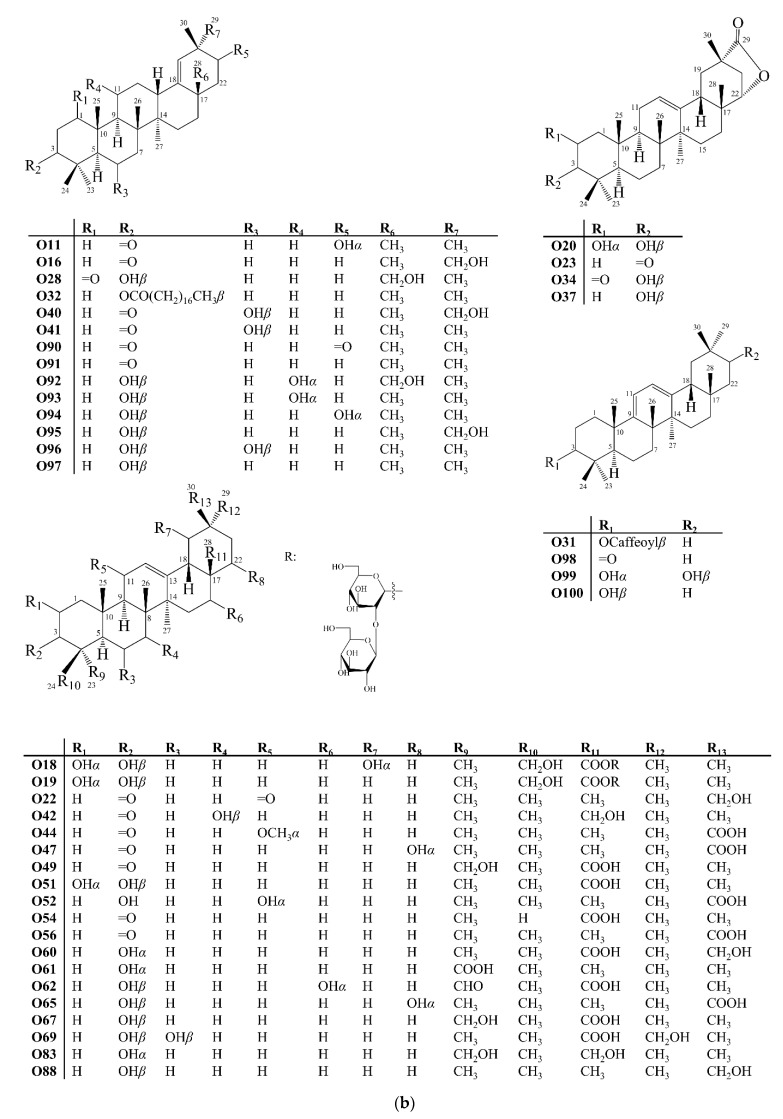
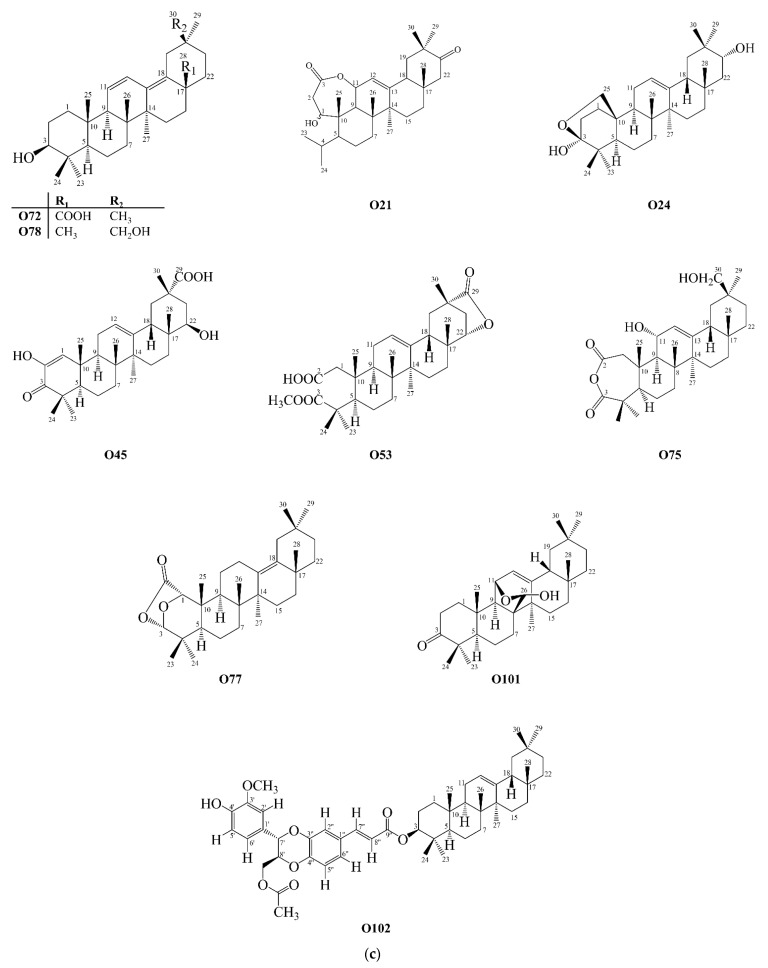
Structures of oleanane-type pentacyclic triterpenoids isolated from Celastraceae species (2001–2021). (a) Compounds O1O10, O12O15, O17, O25O27, O29, O30, O33, O35, O36, O38, O39, O43, O46, O48, O50, O55, O57O59, O63, O64, O66, O68, O70, O71, O73, O74, O76, O79O82, O84O87 and O89. (b) Compounds O11, O16, O18O20, O22, O23, O28, O31, O32, O34, O37, O40O42, O44, O47, O49, O51, O52, O54, O56, O60O62, O65, O67, O69, O83, O88 and O90O100. (c) Compounds O21, O24, O45, O53, O72, O75, O77, O78, O101, and O102.
Figure 9
Figure 9
Structures of oleanane-type pentacyclic triterpenoids isolated from Celastraceae species (2001–2021). (a) Compounds O1O10, O12O15, O17, O25O27, O29, O30, O33, O35, O36, O38, O39, O43, O46, O48, O50, O55, O57O59, O63, O64, O66, O68, O70, O71, O73, O74, O76, O79O82, O84O87 and O89. (b) Compounds O11, O16, O18O20, O22, O23, O28, O31, O32, O34, O37, O40O42, O44, O47, O49, O51, O52, O54, O56, O60O62, O65, O67, O69, O83, O88 and O90O100. (c) Compounds O21, O24, O45, O53, O72, O75, O77, O78, O101, and O102.
Figure 9
Figure 9
Structures of oleanane-type pentacyclic triterpenoids isolated from Celastraceae species (2001–2021). (a) Compounds O1O10, O12O15, O17, O25O27, O29, O30, O33, O35, O36, O38, O39, O43, O46, O48, O50, O55, O57O59, O63, O64, O66, O68, O70, O71, O73, O74, O76, O79O82, O84O87 and O89. (b) Compounds O11, O16, O18O20, O22, O23, O28, O31, O32, O34, O37, O40O42, O44, O47, O49, O51, O52, O54, O56, O60O62, O65, O67, O69, O83, O88 and O90O100. (c) Compounds O21, O24, O45, O53, O72, O75, O77, O78, O101, and O102.
Figure 10
Figure 10
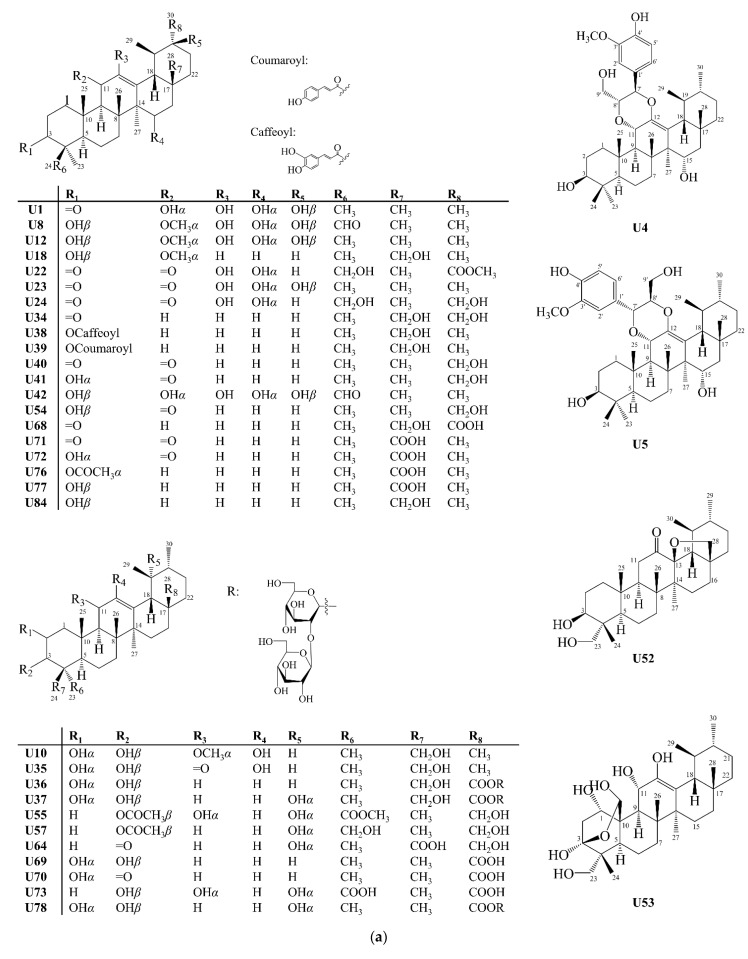
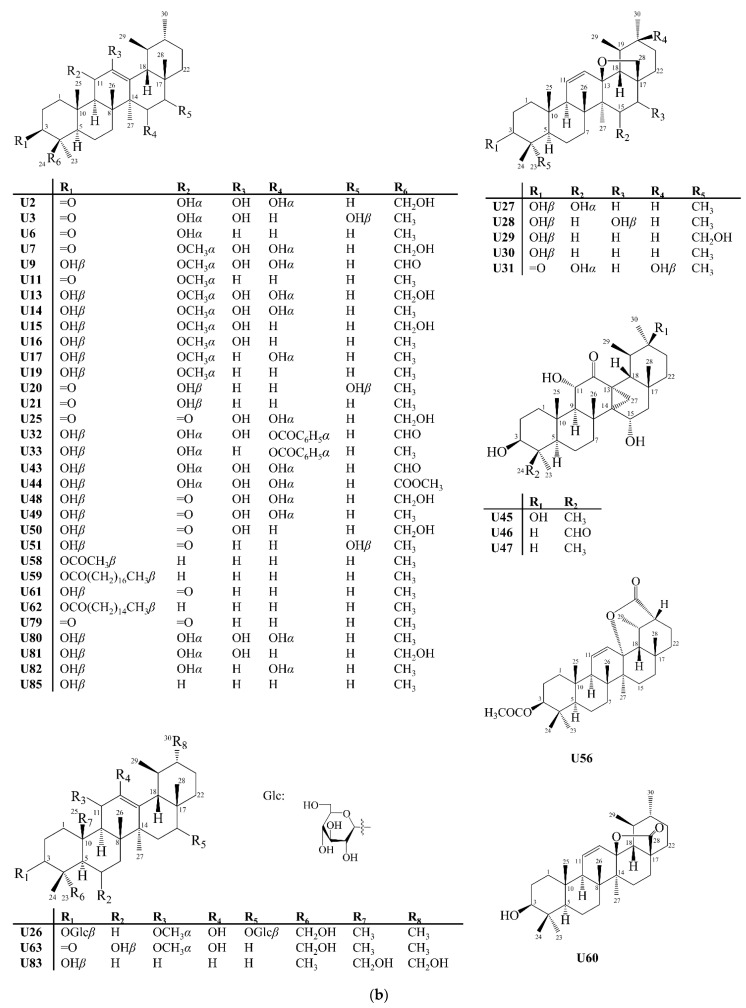
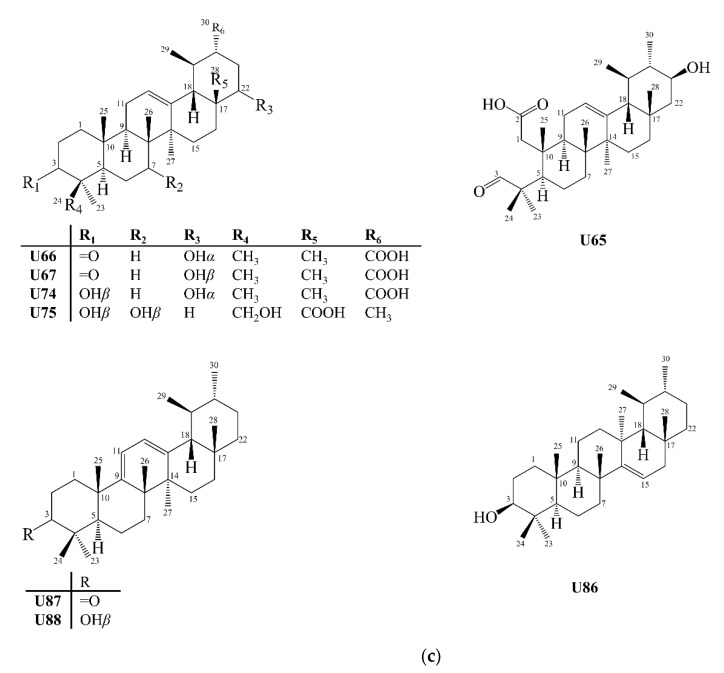
Structures of ursane-type pentacyclic triterpenoids isolated from Celastraceae species (2001–2021). (a) Compounds U1, U4, U5, U8, U10, U12, U18, U22U24, U3442, U52U55, U57, U64, U68U73, U76U78 and U84. (b) Compounds U2, U3, U6, U7, U9, U11, U13U17, U19U21, U25U33, U43U51, U56, U58U63, U79U83 and U85. (c) U65U67, U74, U75, U86U88.
Figure 10
Figure 10
Structures of ursane-type pentacyclic triterpenoids isolated from Celastraceae species (2001–2021). (a) Compounds U1, U4, U5, U8, U10, U12, U18, U22U24, U3442, U52U55, U57, U64, U68U73, U76U78 and U84. (b) Compounds U2, U3, U6, U7, U9, U11, U13U17, U19U21, U25U33, U43U51, U56, U58U63, U79U83 and U85. (c) U65U67, U74, U75, U86U88.
Figure 10
Figure 10
Structures of ursane-type pentacyclic triterpenoids isolated from Celastraceae species (2001–2021). (a) Compounds U1, U4, U5, U8, U10, U12, U18, U22U24, U3442, U52U55, U57, U64, U68U73, U76U78 and U84. (b) Compounds U2, U3, U6, U7, U9, U11, U13U17, U19U21, U25U33, U43U51, U56, U58U63, U79U83 and U85. (c) U65U67, U74, U75, U86U88.
Figure 11
Figure 11
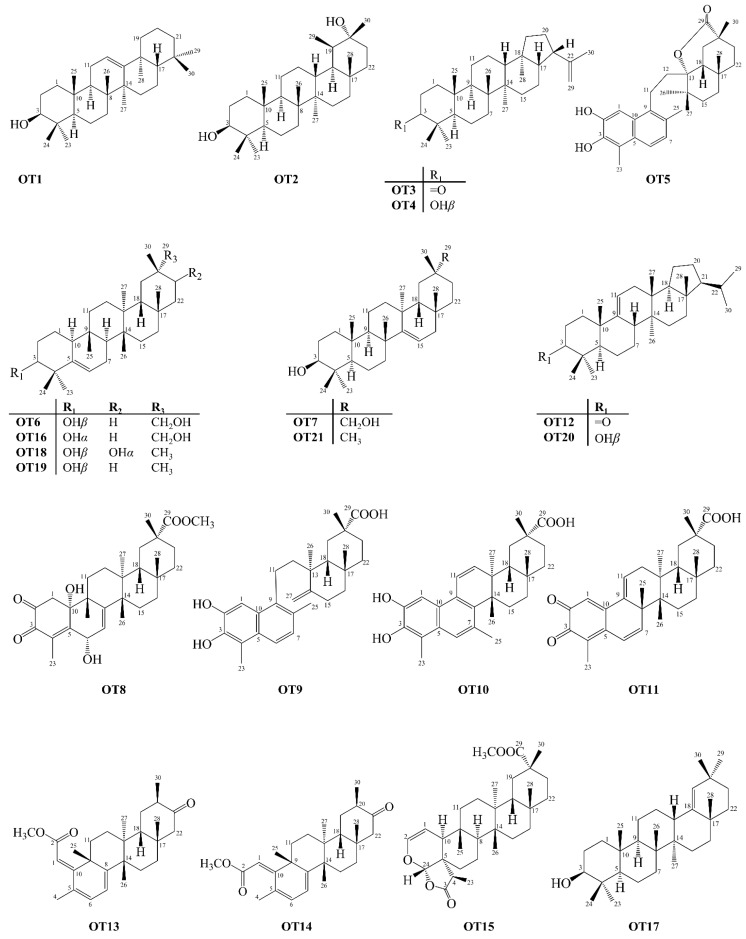
Structures of pentacyclic triterpenoids classified as others isolated from Celastraceae species (2001–2021).

References

    1. Bukhari S., Jantan I., Seyed M. Effects of plants and isolates of Celastraceae family on cancer pathways. Anticancer. Agents Med. Chem. 2015;15:681–693. doi: 10.2174/1871520615666150318101149. - DOI - PubMed
    1. Christenhusz M.J.M., Byng J.W. The number of known plants species in the world and its annual increase. Phytotaxa. 2016;216:201–217. doi: 10.11646/phytotaxa.261.3.1. - DOI
    1. Caneschi C., Muniyappa M., Duarte L., Silva G., Santos O., Spillane C., Filho S. Effect of constituents from samaras of Austroplenckia populnea (Celastraceae) on human cancer cells. J. Intercult. Ethnopharmacol. 2015;4:6–11. doi: 10.5455/jice.20141006105747. - DOI - PMC - PubMed
    1. Rodrigues A.C.B.C., Oliveira F.P., Dias R.B., Sales C.B.S., Rocha C.A.G., Soares M.B.P., Costa E.V., Silva F.M.A., Rocha W.C., Koolen H.H.F., et al. In vitro and in vivo anti-leukemia activity of the stem bark of Salacia impressifolia (Miers) A. C. Smith (Celastraceae) J. Ethnopharmacol. 2019;231:516–524. doi: 10.1016/j.jep.2018.11.008. - DOI - PubMed
    1. Menezes L.D., Gomes G.O., Antônio J., Da P., Neto S., Laundry M.M., Ferreira V.M., Valero S.M. Evaluation of anti-inflammatory and antinociceptive activities of the Austroplenckia populnea extract in topical formulations. Afr. J. Pharm. Pharmacol. 2014;8:1180–1185. doi: 10.5897/AJPP2014.4167. - DOI

MeSH terms

LinkOut - more resources