


Geographical variations and determinants of iron and folic acid supplementation during pregnancy in Ethiopia: analysis of 2019 mini demographic and health survey
- PMID: 35168542
- PMCID: PMC8848817
- DOI: 10.1186/s12884-022-04461-0
Geographical variations and determinants of iron and folic acid supplementation during pregnancy in Ethiopia: analysis of 2019 mini demographic and health survey
Abstract
Background: One of the packages of critical antenatal care treatments for pregnant women includes iron and folic acid (Fe/FA) supplementation. Using recently available and nationwide representative survey data, this study aimed to determine the spatial patterns and drivers of Fe/FA supplementation during pregnancy.
Method: The data for this study was obtained from Ethiopia's 2019 Mini Demographic and Health Survey (EMDHS). We used the Kid's Record (KR) dataset, and a total weighted sample of 3926 reproductive-age women who gave birth within the previous 5 years was used as the study's final sample size. To analyze the spatial distributions (geographic variation of Fe/FA supplementation) different statistical software like Excel, ArcGIS, and Stata 14 were used. A two-level multilevel binary logistic regression model was fitted to identify both individual and community-level factors associated with Fe/FA supplementation during pregnancy.
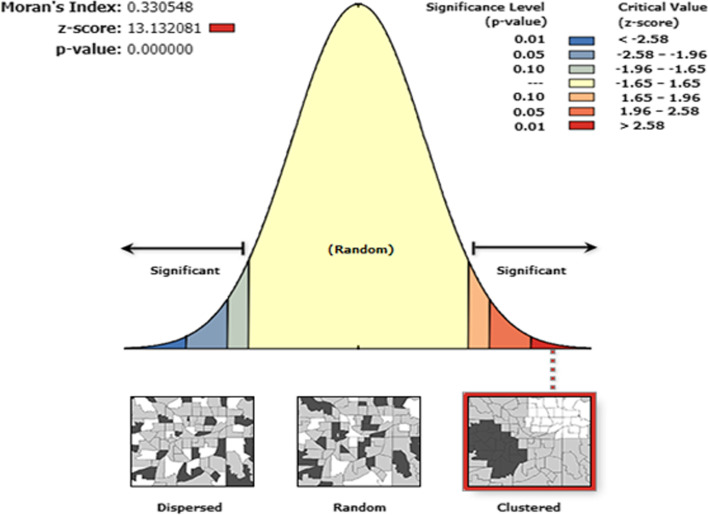
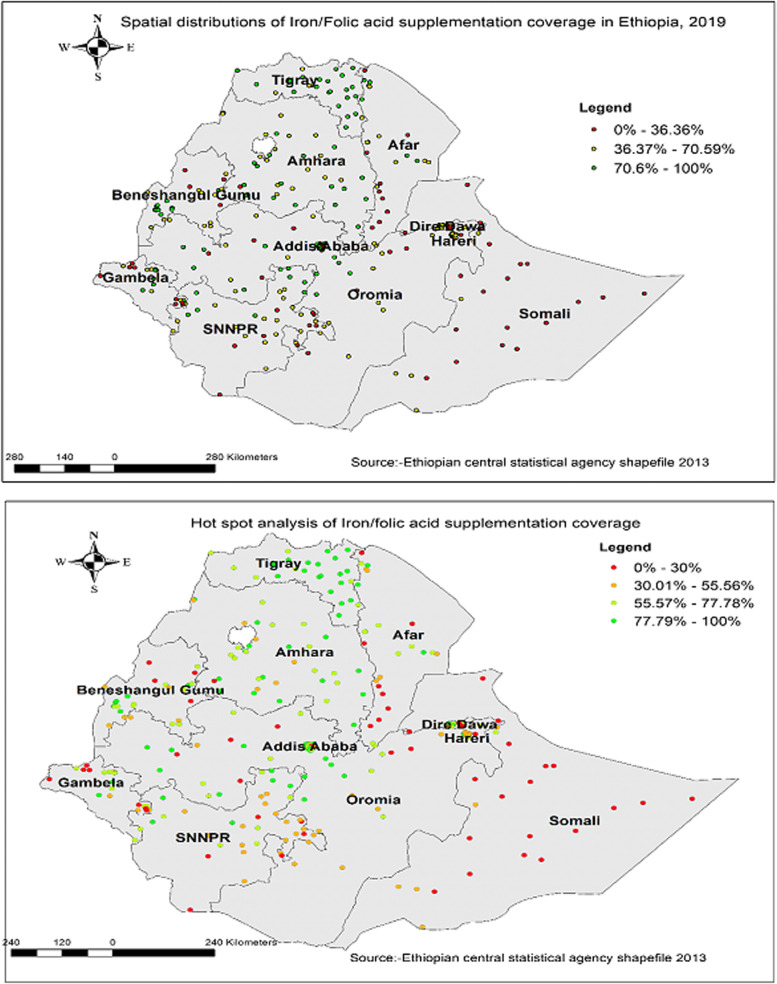
Result: This study found that there were significant geographical variations of iron and folic acid supplementation across Ethiopia, eastern and southern parts of the country were predicted to have low Fe/FA supplementation coverage. Advanced maternal age (AOR = 0.75: 95%CI: 0.59 0.96), resides in developing region (AOR = 0.57, 95%CI: 0.43 0.74), not attended formal education (AOR = 0.60, 95%CI: 0.39 0.92), middle (AOR = 1.51, 95%CI: 18 1.93) and rich wealth status (AOR = 1.48, 95%CI: 1.15 1.91), and four and above ANC visits (AOR = 4.35 95%CI: 3.64 5.21) were determinants of iron and folic acid supplementation among pregnant women.
Conclusion: Our research found that there were geographical variations across the country, with low coverage seen in Ethiopia's eastern and southern regions. Iron and folic acid supplementation coverage were inadequate among pregnant women with low education, advanced maternal age, and those from underdeveloped countries. Conversely, increasing iron and folic acid uptake was associated with higher socioeconomic class and four or more ANC visits. The findings of this study highlight the importance of increasing maternal health care, such as iron and folic acid supplements, for underserved populations.
Keywords: Ethiopia; Geographical variations; Iron and folic acid; Pregnant women.
© 2022. The Author(s).
Conflict of interest statement
The authors declared that they have no competing interests.
Figures



References
-
- Balarajan Y, et al. Anaemia in low-income and middle-income countries. Lancet. 2011;378(9809):2123–2135. - PubMed
-
- ICF., C.S.A.C.E.a . Ethiopia Demographic and Health Survey 2016. Addis Ababa and Rockville: CSA and ICF; 2016.
-
- Fikadu Nugusu Dessalegn, T.E.W.a.D.W Prevalence of Iron deficiency Anemia and associated factors among pregnant women attending antenatal care follow up at Dodola general hospital west Arsi zone Oromia region South East Ethiopia. Arch Med. 2021;13:40.
-
- Young MF. Maternal anaemia and risk of mortality: a call for action. Lancet Glob Health. 2018;6(5):e479–e480. - PubMed
MeSH terms
Substances
LinkOut - more resources
Full Text Sources
Medical
