


Hospital bed occupancy rate is an independent risk factor for COVID-19 inpatient mortality: a pandemic epicentre cohort study
- PMID: 35168984
- PMCID: PMC8852235
- DOI: 10.1136/bmjopen-2021-058171
Hospital bed occupancy rate is an independent risk factor for COVID-19 inpatient mortality: a pandemic epicentre cohort study
Abstract
Introduction: COVID-19 first struck New York City in the spring of 2020, resulting in an unprecedented strain on our healthcare system and triggering multiple changes in public health policy governing hospital operations as well as therapeutic approaches to COVID-19. We examined inpatient mortality at our centre throughout the course of the pandemic.
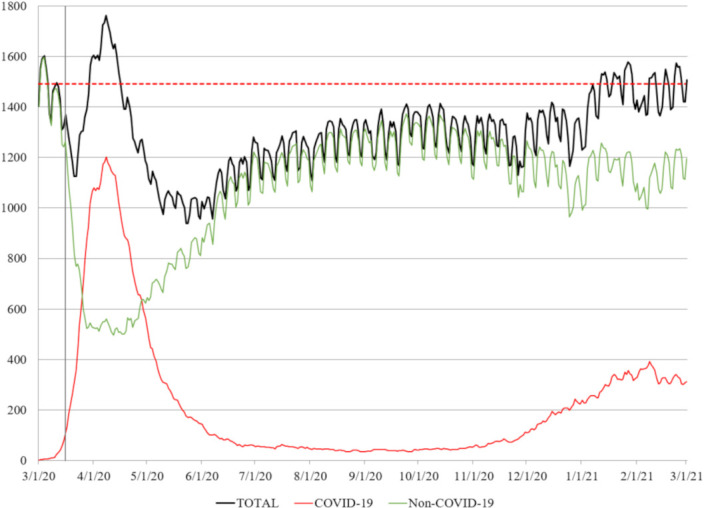
Methods: This is a retrospective chart review of clinical characteristics, treatments and outcome data of all patients admitted with COVID-19 from 1 March 2020 to 28 February 2021. Patients were grouped into 3-month quartiles. Hospital strain was assessed as per cent of occupied beds based on a normal bed capacity of 1491.
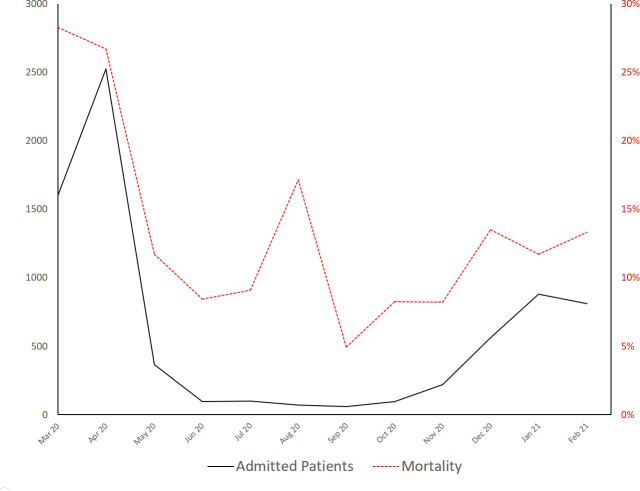
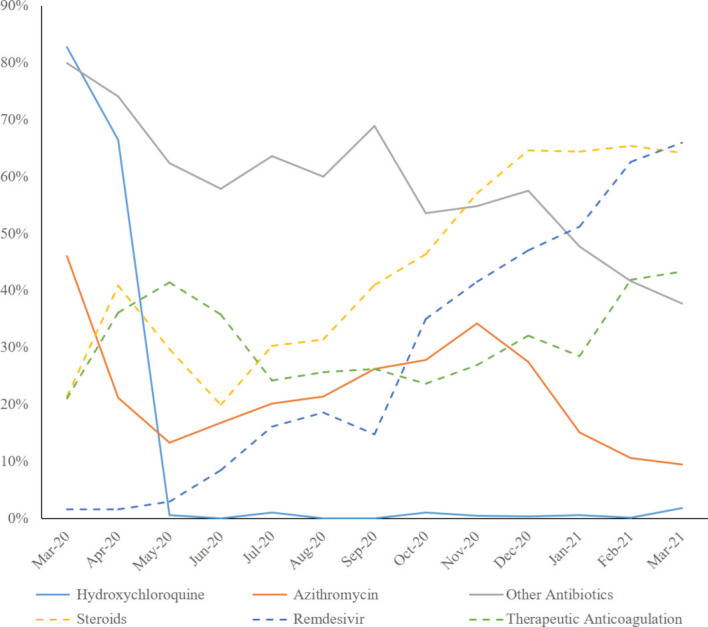
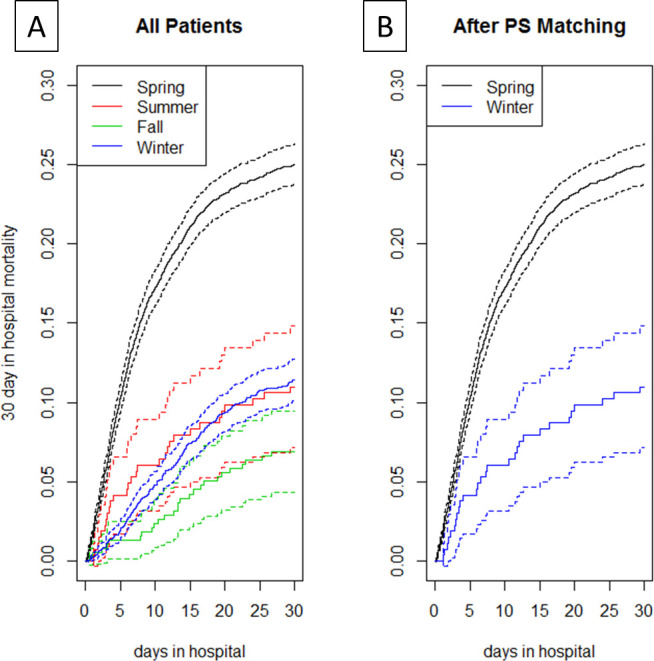
Results: Inpatient mortality decreased from 25.0% in spring to 10.8% over the course of the year. During this time, use of remdesivir, steroids and anticoagulants increased; use of hydroxychloroquine and other antibiotics decreased. Daily bed occupancy ranged from 62% to 118%. In a multivariate model with all year's data controlling for demographics, comorbidities and acuity of illness, percentage of bed occupancy was associated with increased 30-day in-hospital mortality of patients with COVID-19 (0.7% mortality increase for each 1% increase in bed occupancy; HR 1.007, CI 1.001 to 1.013, p=0.004) CONCLUSION: Inpatient mortality from COVID-19 was associated with bed occupancy. Early reduction in epicentre hospital bed occupancy to accommodate acutely ill and resource-intensive patients should be a critical component in the strategic planning for future pandemics.
Keywords: COVID-19; epidemiology; public health.
© Author(s) (or their employer(s)) 2022. Re-use permitted under CC BY-NC. No commercial re-use. See rights and permissions. Published by BMJ.
Conflict of interest statement
Competing interests: None declared.
Figures
References
-
- World Health Organization . WHO Director-General’s opening remarks at the media briefing on COVID-19-11 March 2020. Geneva, Switzerland, 2020.
-
- John Hopkins University . COVID-19 Dashboard by the center for systems science and engineering (CSSE) at Johns Hopkins University (JHU), 2020. Available: https://coronavirus.jhu.edu/map.html [Accessed 20 Jan 2021].
Publication types
MeSH terms
Grants and funding
LinkOut - more resources
Full Text Sources
Medical
