


Epistatic genetic interactions govern morphogenesis during sexual reproduction and infection in a global human fungal pathogen
- PMID: 35169080
- PMCID: PMC8872808
- DOI: 10.1073/pnas.2122293119
Epistatic genetic interactions govern morphogenesis during sexual reproduction and infection in a global human fungal pathogen
Erratum in
-
Correction for Sun et al., Epistatic genetic interactions govern morphogenesis during sexual reproduction and infection in a global human fungal pathogen.Proc Natl Acad Sci U S A. 2022 May 10;119(19):e2204816119. doi: 10.1073/pnas.2204816119. Epub 2022 May 3. Proc Natl Acad Sci U S A. 2022. PMID: 35503916 Free PMC article. No abstract available.
Abstract
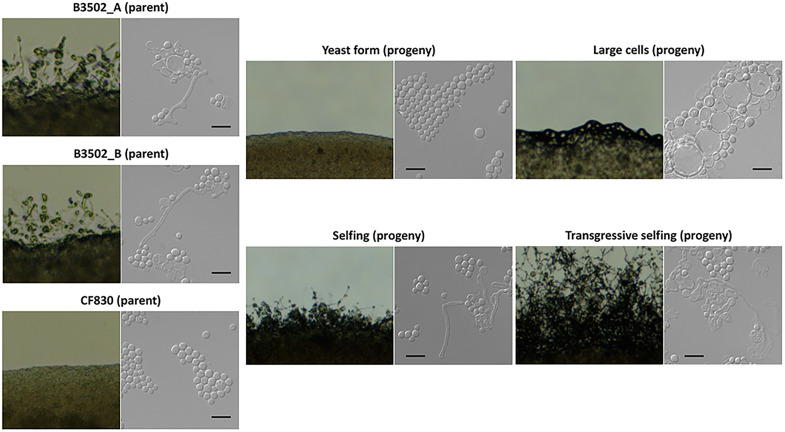
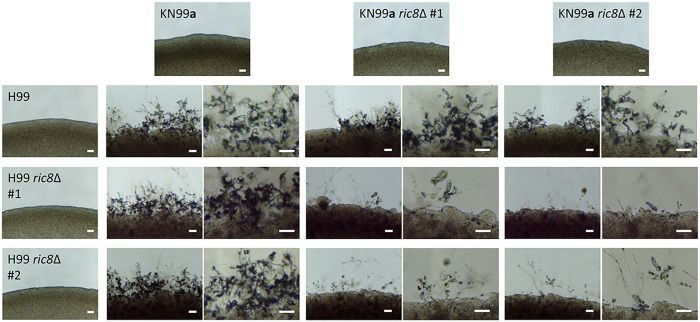
Cellular development is orchestrated by evolutionarily conserved signaling pathways, which are often pleiotropic and involve intra- and interpathway epistatic interactions that form intricate, complex regulatory networks. Cryptococcus species are a group of closely related human fungal pathogens that grow as yeasts yet transition to hyphae during sexual reproduction. Additionally, during infection they can form large, polyploid titan cells that evade immunity and develop drug resistance. Multiple known signaling pathways regulate cellular development, yet how these are coordinated and interact with genetic variation is less well understood. Here, we conducted quantitative trait locus (QTL) analyses of a mapping population generated by sexual reproduction of two parents, only one of which is unisexually fertile. We observed transgressive segregation of the unisexual phenotype among progeny, as well as a large-cell phenotype under mating-inducing conditions. These large-cell progeny were found to produce titan cells both in vitro and in infected animals. Two major QTLs and corresponding quantitative trait genes (QTGs) were identified: RIC8 (encoding a guanine-exchange factor) and CNC06490 (encoding a putative Rho-GTPase activator), both involved in G protein signaling. The two QTGs interact epistatically with each other and with the mating-type locus in phenotypic determination. These findings provide insights into the complex genetics of morphogenesis during unisexual reproduction and pathogenic titan cell formation and illustrate how QTL analysis can be applied to identify epistasis between genes. This study shows that phenotypic outcomes are influenced by the genetic background upon which mutations arise, implicating dynamic, complex genotype-to-phenotype landscapes in fungal pathogens and beyond.
Keywords: Cryptococcus; QTL; cell development; genetic variation; pathogenicity.
Copyright © 2022 the Author(s). Published by PNAS.
Conflict of interest statement
The authors declare no competing interest.
Figures



References
-
- Blomen V. A., et al. , Gene essentiality and synthetic lethality in haploid human cells. Science 350, 1092–1096 (2015). - PubMed
-
- Boutros M., et al. ; Heidelberg Fly Array Consortium, Genome-wide RNAi analysis of growth and viability in Drosophila cells. Science 303, 832–835 (2004). - PubMed
-
- Hart T., et al. , High-resolution CRISPR screens reveal fitness genes and genotype-specific cancer liabilities. Cell 163, 1515–1526 (2015). - PubMed
MeSH terms
Substances
Grants and funding
LinkOut - more resources
Full Text Sources
