. 2022 Jun;16(6):1570-1582.
doi: 10.1038/s41396-022-01209-8. Epub 2022 Feb 15.

Niche partitioning of the ubiquitous and ecologically relevant NS5 marine group

Affiliations

Niche partitioning of the ubiquitous and ecologically relevant NS5 marine group

Taylor Priest et al. ISME J. 2022 Jun.

Abstract

Niche concept is a core tenet of ecology that has recently been applied in marine microbial research to describe the partitioning of taxa based either on adaptations to specific conditions across environments or on adaptations to specialised substrates. In this study, we combine spatiotemporal dynamics and predicted substrate utilisation to describe species-level niche partitioning within the NS5 Marine Group. Despite NS5 representing one of the most abundant marine flavobacterial clades from across the world's oceans, our knowledge on their phylogenetic diversity and ecological functions is limited. Using novel and database-derived 16S rRNA gene and ribosomal protein sequences, we delineate the NS5 into 35 distinct species-level clusters, contained within four novel candidate genera. One candidate species, "Arcticimaribacter forsetii AHE01FL", includes a novel cultured isolate, for which we provide a complete genome sequence-the first of an NS5-along with morphological insights using transmission electron microscopy. Assessing species' spatial distribution dynamics across the Tara Oceans dataset, we identify depth as a key influencing factor, with 32 species preferring surface waters, as well as distinct patterns in relation to temperature, oxygen and salinity. Each species harbours a unique substrate-degradation potential along with predicted substrates conserved at the genus-level, e.g. alginate in NS5_F. Successional dynamics were observed for three species in a time-series dataset, likely driven by specialised substrate adaptations. We propose that the ecological niche partitioning of NS5 species is mainly based on specific abiotic factors, which define the niche space, and substrate availability that drive the species-specific temporal dynamics.


Conflict of interest statement

The authors declare no competing interests.

Figures
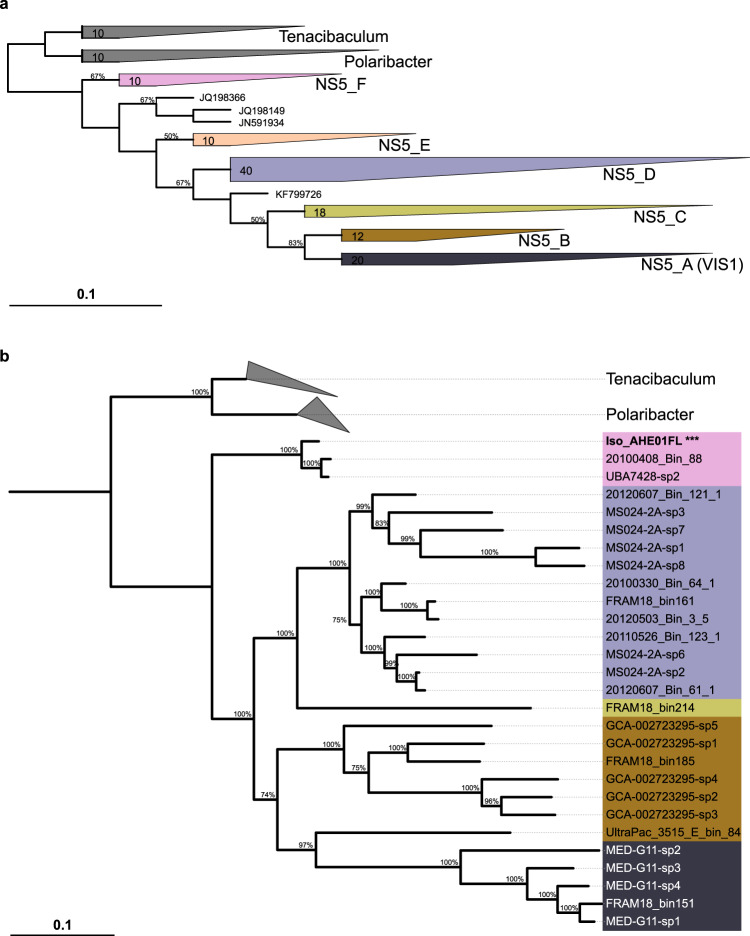
Fig. 1
Fig. 1. Phylogenetic tree reconstruction of the NS5 Marine Group.
a 16S rRNA gene tree constructed using MAG sequences, from this and previous studies and the GTDB database, and 100 sequences classified as NS5 Marine Group in the SILVA 138 database. The tree represents a consensus from six input trees, constructed using three different algorithms, RaxML, Neighbour-joining and parsimony, with two different positional variability filters. b Ribosomal protein tree generated from a concatenated alignment of 16 proteins identified within NS5 species-representatives MAGs and genomes of Polaribacter and Tenacibaculum retrieved from the NCBI RefSeq database. The cultured isolate, Iso_AHE01FL, is highlighted in bold and with ***.
Fig. 2
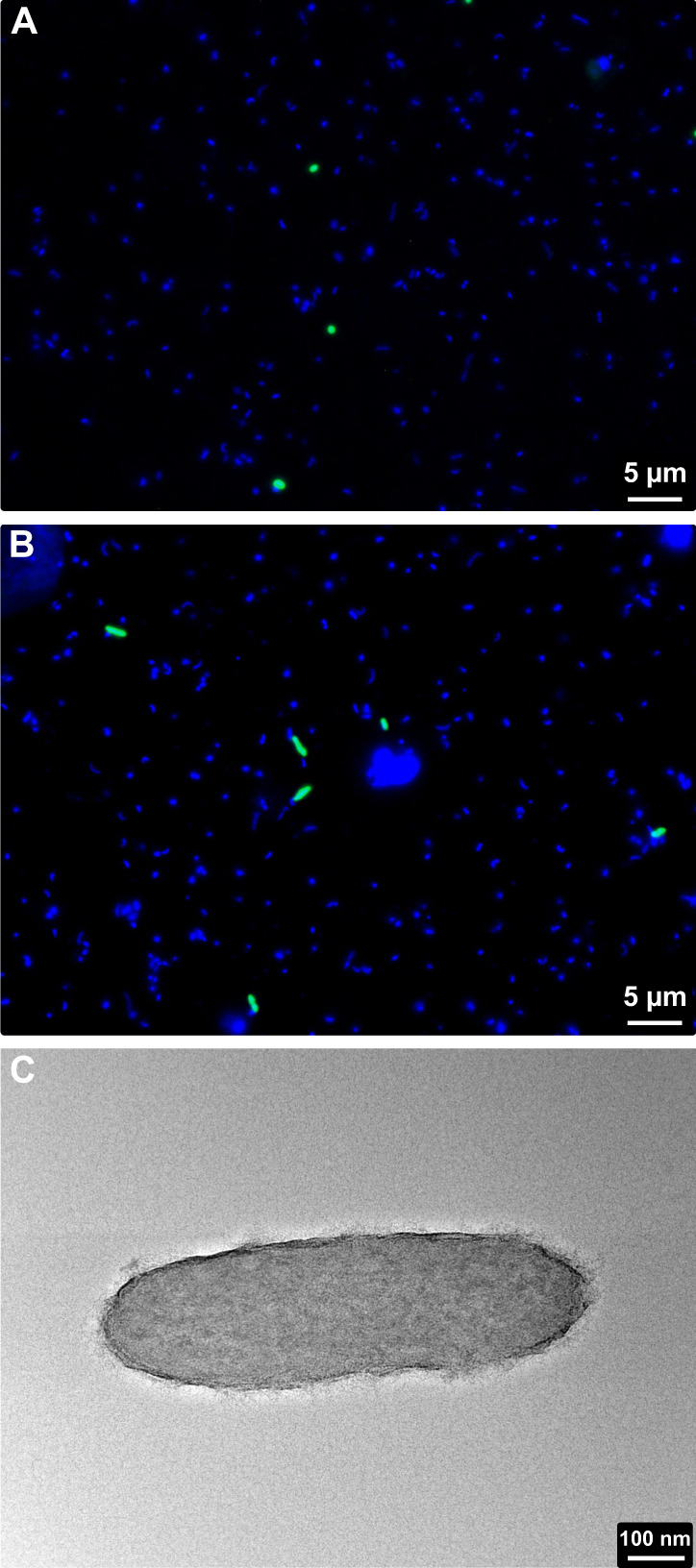
Fig. 2. Visualisation of cells from NS5_A and NS5_F.
Environmental cells hybridised using CARD-FISH probes targeting the NS5_A (A) and NS5_F (B). FISH probe signals are shown in green and DNA stain in blue. C Transmission electron microscopy image of the isolate, Iso_AHE01FL, in the NS5_F.
Fig. 3
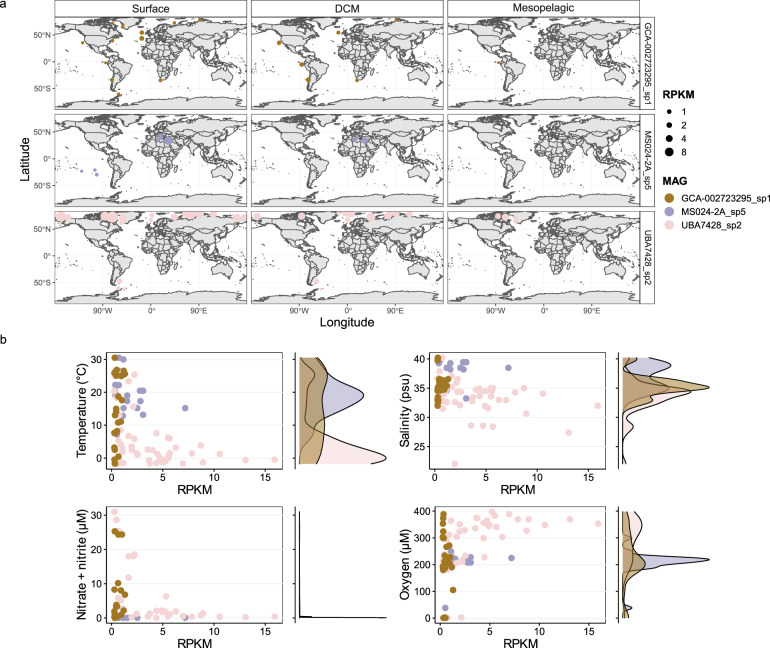
Fig. 3. Three select species that represent different distribution types observed across the NS5 and their dynamics in relation to abiotic conditions.
RPKM values were calculated based on read recruitment from Tara Oceans metagenomes to species-representative MAGs using BBMap with a 99% identity threshold. A minimum threshold of 0.25 RPKM was applied which ensured a minimum genome coverage of 40%. a Global distribution and b dynamics in species RPKM values across abiotic conditions. Within the scatter plots, each point represents a Tara Oceans sample where the species RPKM value was >0.25. Alongside each scatterplot is a density diagram showing the distribution of points.
Fig. 4
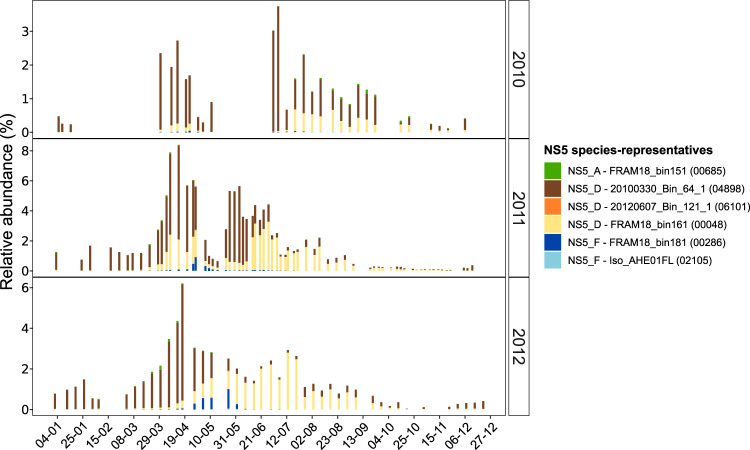
Fig. 4. Temporal dynamics of NS5 species-representatives in surface waters at Helgoland Roads, North Sea.
Distributions were obtained by recruiting oligotype representatives from a previously published dataset (62) to each species-representative MAG using BBMap with a 100% identity threshold. Next to each species-representative name, the original oligotype number is provided for direct comparison with previous dataset. Only recruitments successful with a 100% identity threshold are included. The relative abundances for each oligotype were taken from the original publication.
Fig. 5
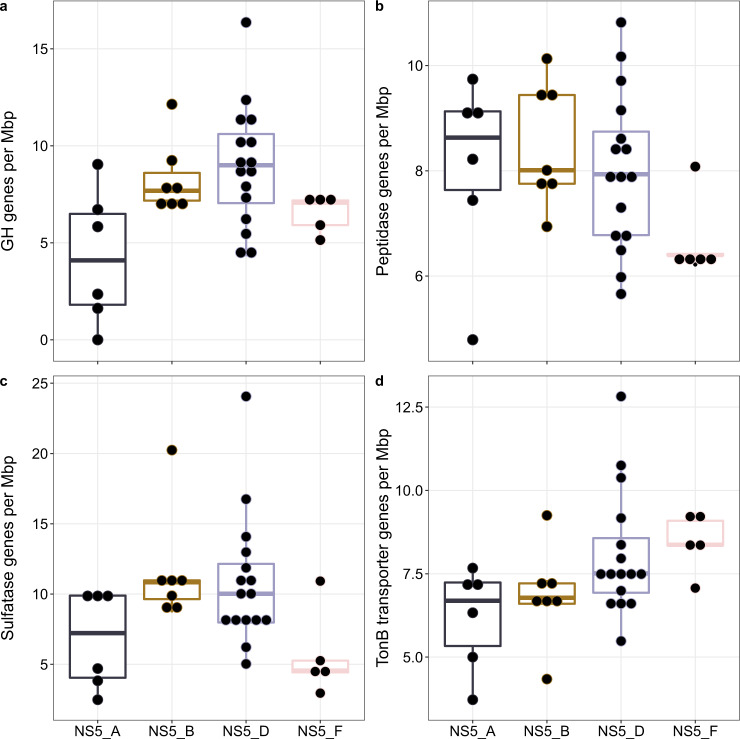
Fig. 5. Summary of substrate utilisation genes annotated in species-representative MAGs.
a Number of glycoside hydrolase genes based on agreeing annotations from HMMscan against dbCAN database and Diamond blastp search against the CAZy database. b Number of peptidases annotated using blastp search against the MEROPS database. c Number of sulfatase genes based on HMMscan against the Pfam sulfatase profile and blastp search against the SulfAtlas database. d Number of TonB-dependent transporters based on HMMscan against TIGRFAM TonB profiles.
Fig. 6
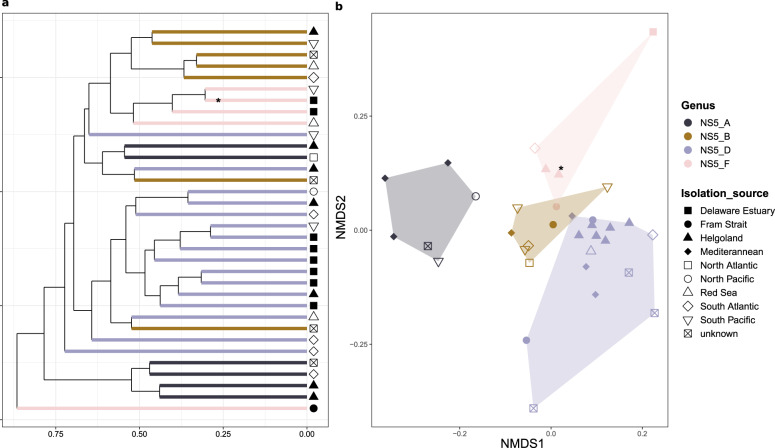
Fig. 6. Comparison of the substrate utilisation gene composition between species-representatives.
A dissimilarity matrix was generated from the CAZyme, peptidase, sulfatase and TonB-dependent transporter gene compositions and subsequently used for a hierarchical clustering analysis and b non-metric multi-dimensional scaling ordination. *indicates the isolate, Iso_AHE01FL.
Fig. 7
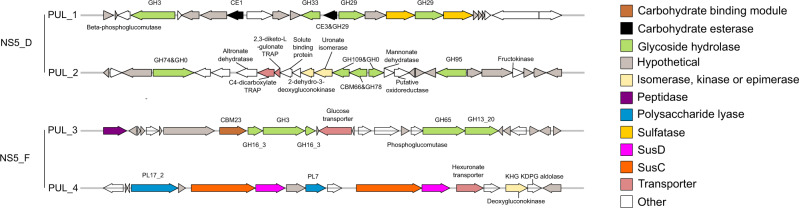
Fig. 7. Polysaccharide utilisation loci containing gene colocalisations that are conserved within candidate genera.
The structures presented include two each from the candidate species of NS5_D, 20100330_Bin_64_1, and NS5_F, Iso_AHE01FL. Although the exact PUL structures vary across species, the colocalisation of CAZymes are conserved within all species of the genus. The predicted substrate targets for NS5_D PULs are, PUL_1 = α-fucan and PUL_2 = unclear, and for NS5_F, PUL_3 = laminarin and PUL_4 = alginate.

References

    1. Hutchinson GE. Concluding remarks. Cold Spring Harb Symp Quant Biol. 1957;22:415–27.
    1. Hutchinson GE. An introduction to population biology. New Haven, CT: Yale University Press; 1978.
    1. Larkin AA, Martiny AC. Microdiversity shapes the traits, niche space, and biogeography of microbial taxa. Environ Microbiol Rep. 2017;9:55–70. - PubMed
    1. Mena C, Reglero P, Balbín R, Martín M, Santiago R, Sintes E. Seasonal niche partitioning of surface temperate open ocean prokaryotic communities. Front Microbiol. 2020;11:1749. - PMC - PubMed
    1. Sarmento H, Morana C, Gasol JM. Bacterioplankton niche partitioning in the use of phytoplankton-derived dissolved organic carbon: quantity is more important than quality. ISME J. 2016;10:2582–92. - PMC - PubMed

Publication types

Substances