The Association of COVID-19 and Reactive Oxygen Species Modulator 1 (ROMO1) with Oxidative Stress
- PMID: 35169552
- PMCID: PMC8813649
- DOI: 10.4068/cmj.2022.58.1.1
The Association of COVID-19 and Reactive Oxygen Species Modulator 1 (ROMO1) with Oxidative Stress
Abstract
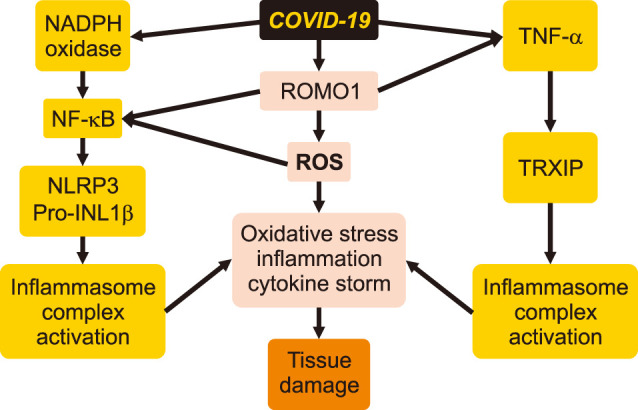
There is no denying that the massive spread of COVID-19 around the world has worried everyone. The virus can cause mild to severe symptoms in various organs, especially the lungs. The virus affects oxidative stress in the cells. Reactive Oxygen Species modulator 1 (ROMO1) is one of the most important mitochondrial proteins that plays a critical regulatory role in the production of Reactive Oxygen Species (ROS). According to the studies, COVID-19 can promote oxidative stress through some important pathways, for instance, TNF-α and NF-κB routes. Furthermore, ROMO1 is closely related to these pathways and its dysfunction may affect these routes, then promote oxidative stress, and ultimately cause tissue damage, especially in the lungs. Another factor to consider is that the TNF-α and NF-κB pathways are associated with ROMO1, COVID-19, and oxidative stress. To summarize, it is hypothesized that COVID-19 may increase oxidative stress by affecting ROMO1. Understanding the exact molecular mechanisms of ROMO1 in the pathogenesis of COVID-19 can pave the way to find better therapeutic strategies.
Keywords: COVID-19; Oxidative Stress; Reactive Oxygen Species; Reactive Oxygen Species Modulator 1.
© Chonnam Medical Journal, 2022.
Conflict of interest statement
CONFLICT OF INTEREST STATEMENT: None declared.
Figures
References
Publication types
LinkOut - more resources
Full Text Sources