Review
. 2022 Mar 23;122(6):6614-6633.
doi: 10.1021/acs.chemrev.1c00848. Epub 2022 Feb 16.

Intrinsically Disordered Proteins: Critical Components of the Wetware

Affiliations
Review

Intrinsically Disordered Proteins: Critical Components of the Wetware

Prakash Kulkarni et al. Chem Rev. .

Abstract

Despite the wealth of knowledge gained about intrinsically disordered proteins (IDPs) since their discovery, there are several aspects that remain unexplored and, hence, poorly understood. A living cell is a complex adaptive system that can be described as a wetware─a metaphor used to describe the cell as a computer comprising both hardware and software and attuned to logic gates─capable of "making" decisions. In this focused Review, we discuss how IDPs, as critical components of the wetware, influence cell-fate decisions by wiring protein interaction networks to keep them minimally frustrated. Because IDPs lie between order and chaos, we explore the possibility that they can be modeled as attractors. Further, we discuss how the conformational dynamics of IDPs manifests itself as conformational noise, which can potentially amplify transcriptional noise to stochastically switch cellular phenotypes. Finally, we explore the potential role of IDPs in prebiotic evolution, in forming proteinaceous membrane-less organelles, in the origin of multicellularity, and in protein conformation-based transgenerational inheritance of acquired characteristics. Together, these ideas provide a new conceptual framework to discern how IDPs may perform critical biological functions despite their lack of structure.


Conflict of interest statement

Conflicts of interests: Authors declare they have no conflict of interests.

Figures
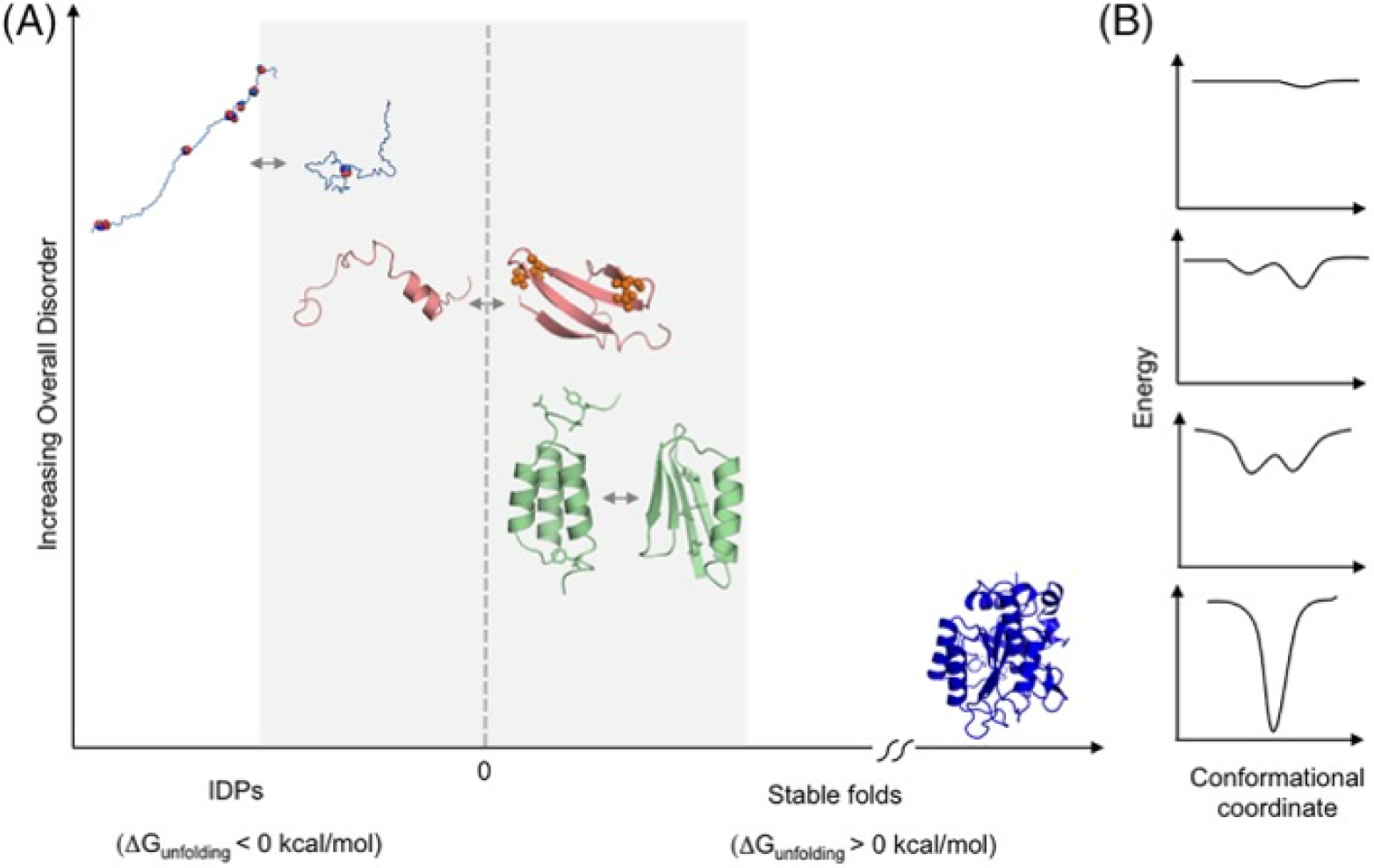
Fig. 1:
Fig. 1:
Proteins on the brink of stability can undergo a continuum of order/disorder transitions. (A) Examples of transitions from top left to bottom right: Transition between the extended and collapsed disordered states of prostate associated Gene 4 (PAGE4), modulated by phosphorylation; disorder-to-order transition of 4E-BP2 induced by phosphorylation; order-to-order fold switching between GA98 and GB98, triggered by single amino acid changes or ligand binding. In contrast, stable proteins such as subtilisin (shown in dark blue) do not undergo such changes. (B) Approximate energy well diagrams for each protein from PAGE4 (top) to subtilisin (bottom). Reproduced with permission from Kulkarni et al. Structural metamorphism and polymorphism in proteins on the brink of thermodynamic stability. Protein Sci. 2018 Sep;27(9):1557–1567. Published by Wiley © 2018 The Protein Society.
Fig. 2:
Fig. 2:
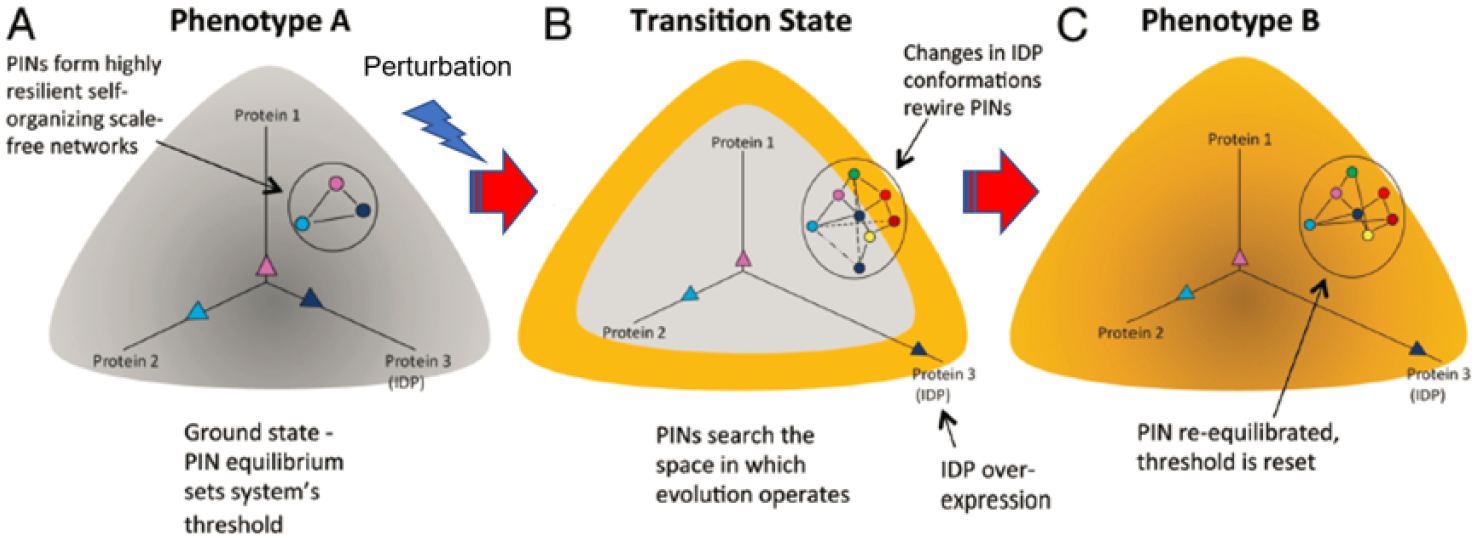
Rewiring of protein networks facilitates state-switching by activating latent pathways. (A) The state of a cell with phenotype A is depicted in grey and shows a simple protein network with three proteins (1–3), of which one is an IDP (indicated in dark blue) and expressed at different levels represented by the three vectors. This configuration represents the protein network’s ground state threshold. (B) Depicts a transition state. A perturbation causes increased IDP expression (protein 3). Overexpression of the IDP results in promiscuity and the protein network explores the network search space shown by the various dashed lines. This transition state is depicted state in yellow around the grey area. (C) The state of the cell after it has transitioned to phenotype B from phenotype A represented in yellow. A particular configuration of the protein network that increased its fitness is “selected,” which now represents the new ground state. Reproduced with permission from with permission from Mahmoudabadi et al. Intrinsically disordered proteins and conformational noise: Implications in cancer. Cell Cycle. 2013 12(1):26–3, Taylor & Francis Online.
Fig. 3:
Fig. 3:
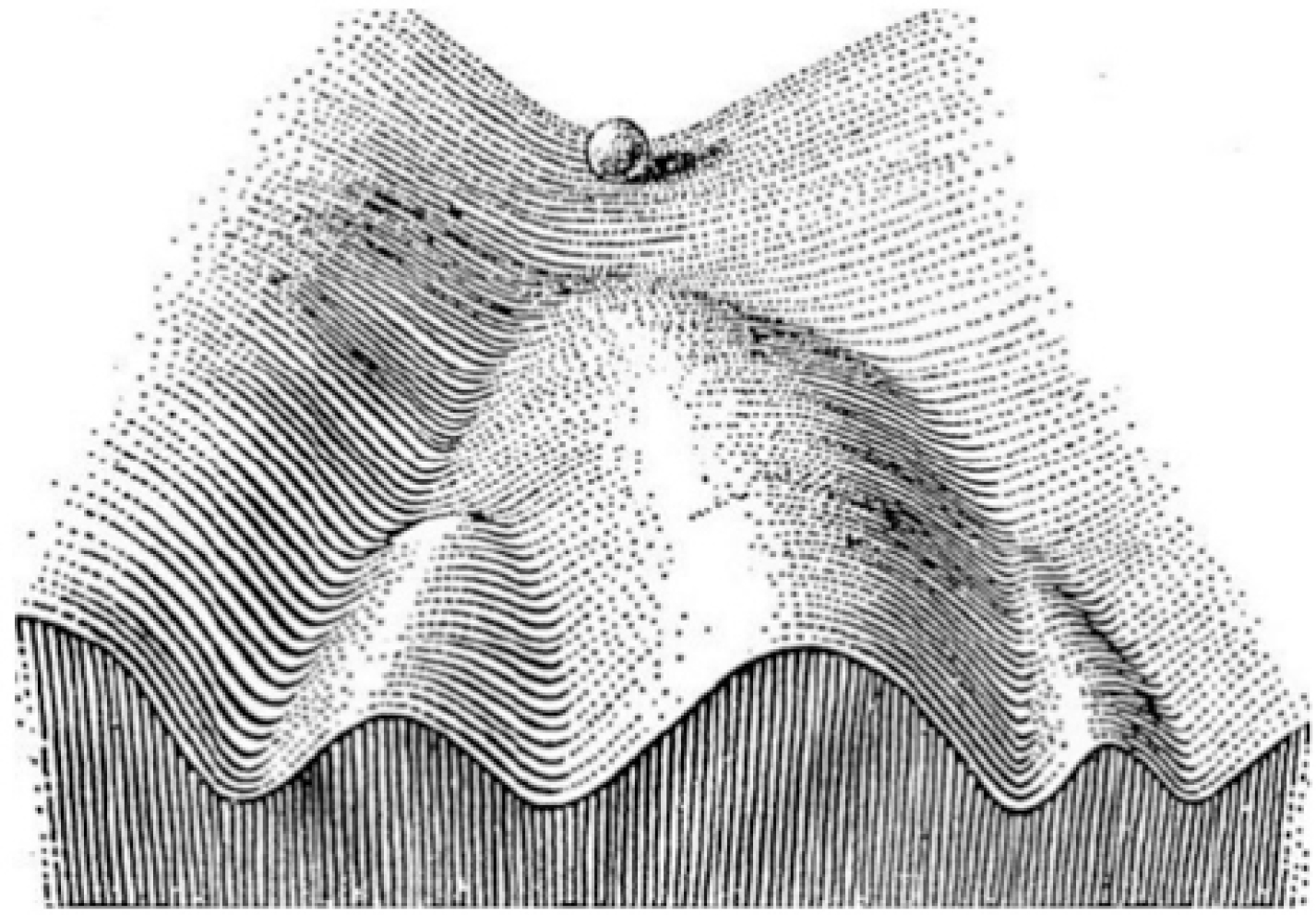
Schematic illustration of Waddington’s epigenetic landscape (adopted and from Schematic illustration of Waddington’s epigenetic landscape. Adopted from Waddington, 1957). Reproduced with permission from Kulkarni P. Intrinsically Disordered Proteins: Insights from Poincaré, Waddington, and Lamarck. Biomolecules. 2020. 10(11):1490. MDPI Publishers.
Fig. 4.
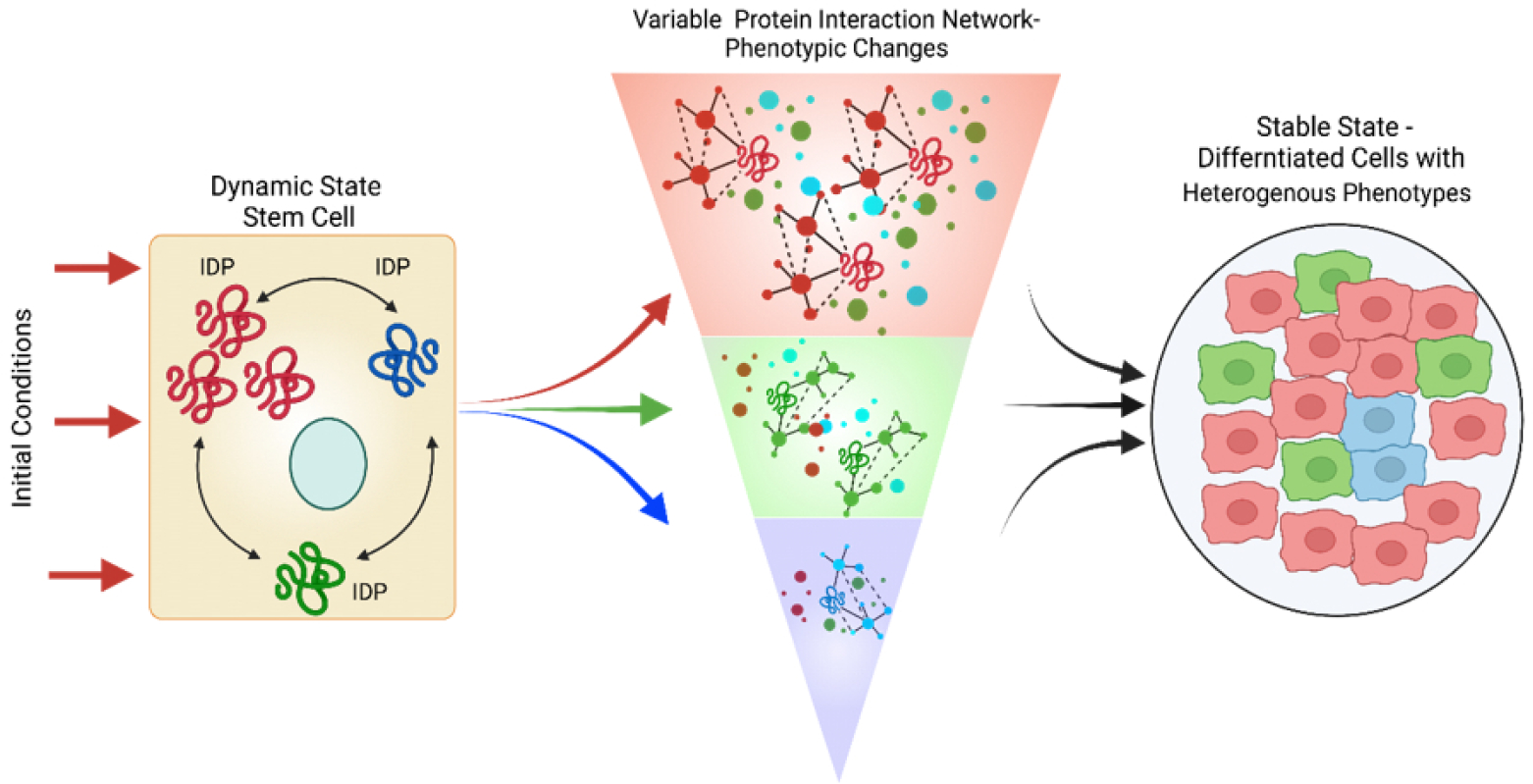
Fig. 4.. IDPs, attractors and stable states.
A key IDP is expressed in a stem cell that and exhibits a high degree of conformational dynamics. The various conformations are shown in red to blue to green. If the initial conditions favor the red conformation more than the green or blue, the red conformation induces specific protein interaction that leads to the differentiation of the stem cell (e.g., the red phenotype). In addition, the initial conditions favor green conformation partially followed by blue conformation. The green and blue conformations initiate distinct interaction and give rise to the green and blue phenotypic state. The net result is a heterogeneous population with a mixture of phenotypes.
Fig. 5:
Fig. 5:
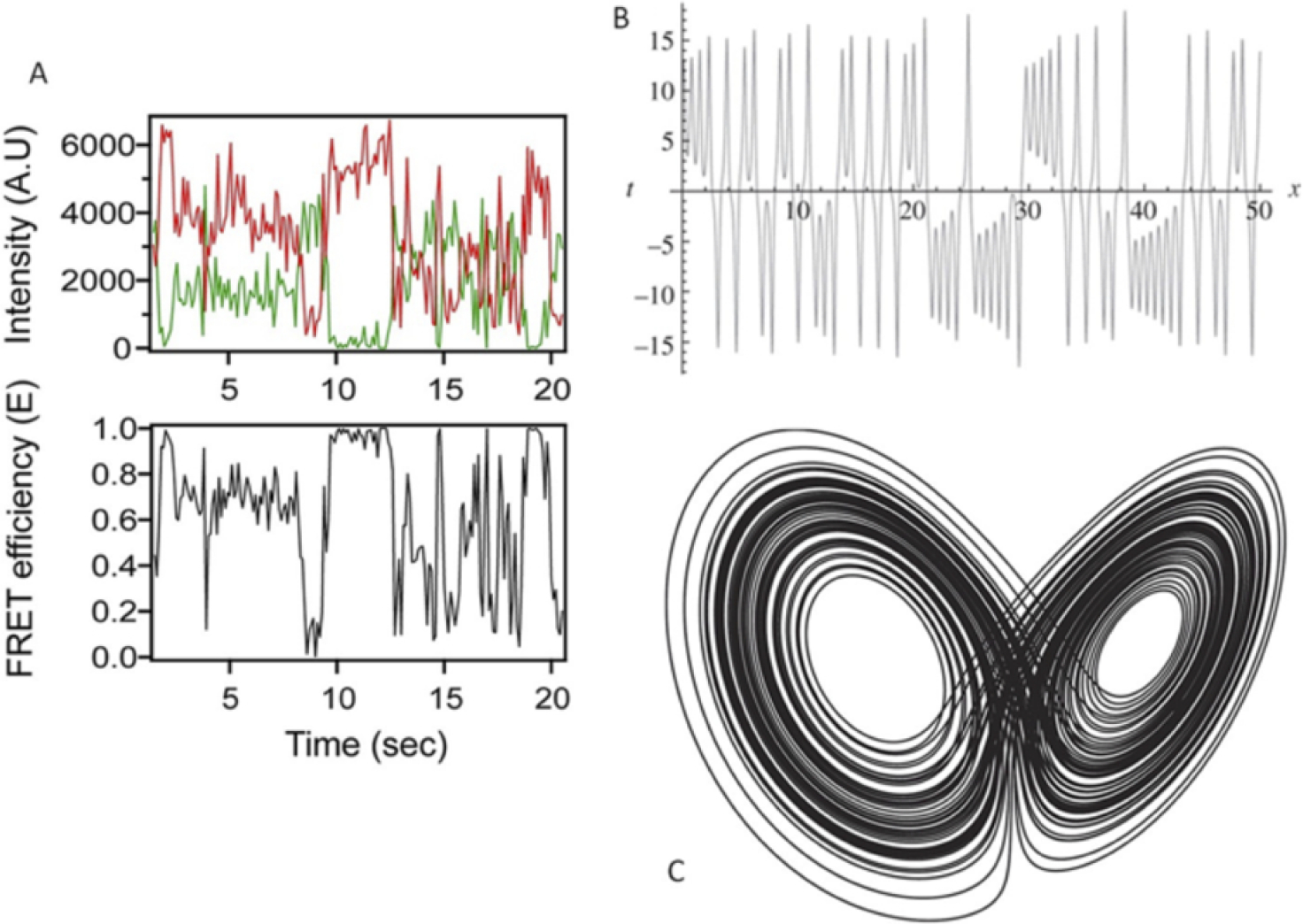
Similarity of the dynamic conformational behavior of an IDP with the behavior of a typical chaotic system (the Lorenz attractor). (A) Single molecule FRET trajectory of intrinsically disordered neuroligin cytoplasmic do-main as a representation of conformational dynamics. The top plot depicts the time evolution of donor (green) and acceptor (red) intensities. The bottom plot shows the FRET efficiency over time. A. U.: arbitrary unit. (B) The dynamics trajectory of a chaotic system; i.e., the Lorentz attractor, which shows qualitative resemblance with the conformational dynamics of an IDP. The Lorentz system is comprised of three independent variables and coupled differential equations to describe their dynamics. Here, the time evolution of one of the independent variable is depicted. (C) The phase-space representation of one of the variables of the Lorentz system. The variable is plot-ted against its rate of change. The overlapping loops represent the attractor basins of the strange attractor, where the system does not converge to a single state, neither diverges to an infinitely large space, but hovers within a defined domain of the attractor basin. Reproduced with permission from Uversky VN. Unusual biophysics of intrinsically disordered proteins. Biochim Biophys Acta. 2013. 1834(5):932–51. Elsevier Publisher.
Fig. 6.
Fig. 6.
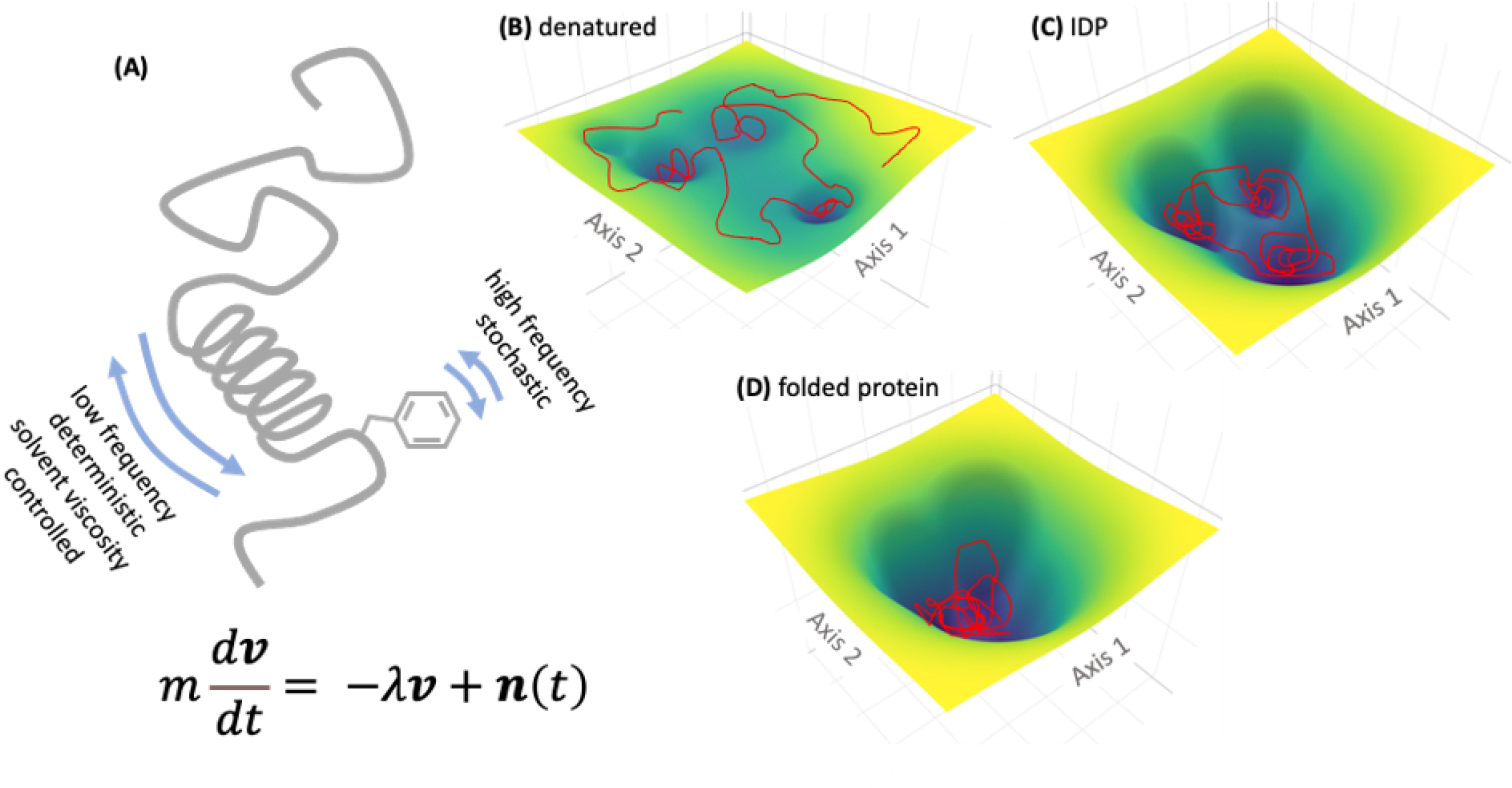
A) Schematic of IDP with random coil and transient secondary structures. The Langevin equation modeling the deterministic and stochastic components of protein dynamics is shown below. B-D) model attractor landscapes for denatured, disordered, and folded proteins. The protein conformational trajectories over time are shown as red scribbles.
Fig. 7.
Fig. 7.
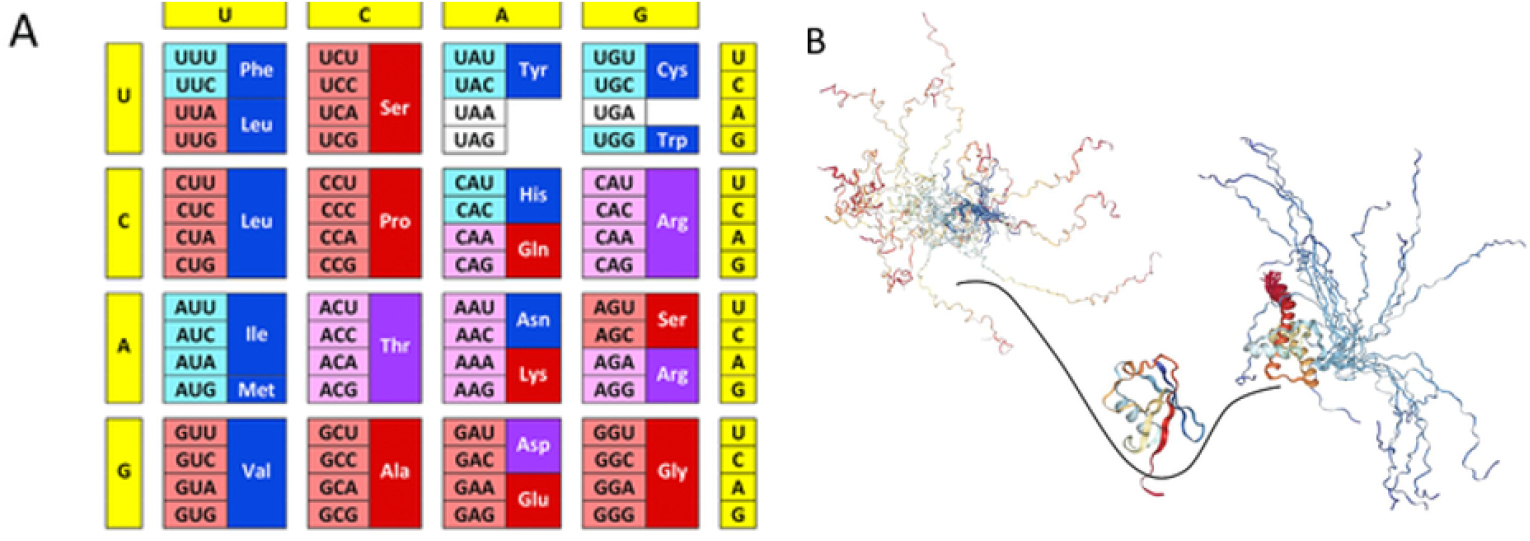
Intrinsic disorder and protein evolution. A) Modern genetic code with information on the early and late codons (shown by light pink and light cyan colors, respectively) and disorder- and order-promoting residues (shown by dark red and dark blue colors, respectively). Codons with intermediate ages are shown by light violet color. Disorder-neutral residues are shown by dark violet color. B) Evolution of intrinsic disorder in proteins has a characteristic wavy pattern. X-axis represents evolutionary time and Y-axis shows global disorder content in proteins at given evolutionary time point. Here, primordial proteins are expected to be mostly disordered (left-hand side of the plot), proteins in LUA likely are mostly structured (center of the plot), whereas many proteins in eukaryotes are either totally disordered or represent hybrids containing both ordered and disordered regions (right-hand side of the plot). Reproduced with permission from Kulkarni and Uversky. Intrinsically disordered proteins: The dark horse of the dark proteome. Proteomics 18(21–22):e1800061. ©2018 WILEY-VCH Verlag GmbH & Co. KGaA, Weinheim.
Fig. 8:
Fig. 8:
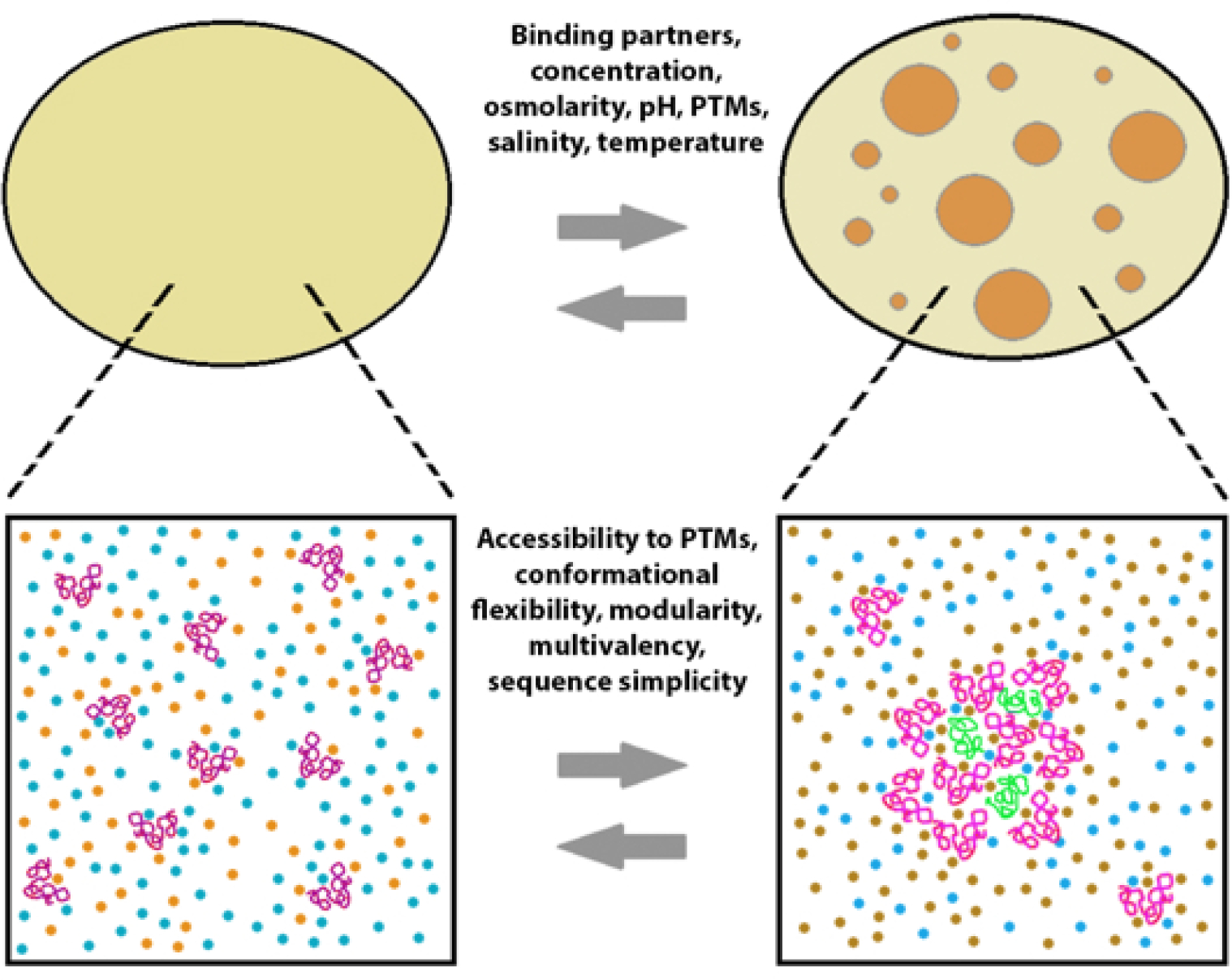
Thermodynamic factors (top) and disorder-related features controlling liquid-liquid phase transitions in protein solutions.
Fig. 9:
Fig. 9:
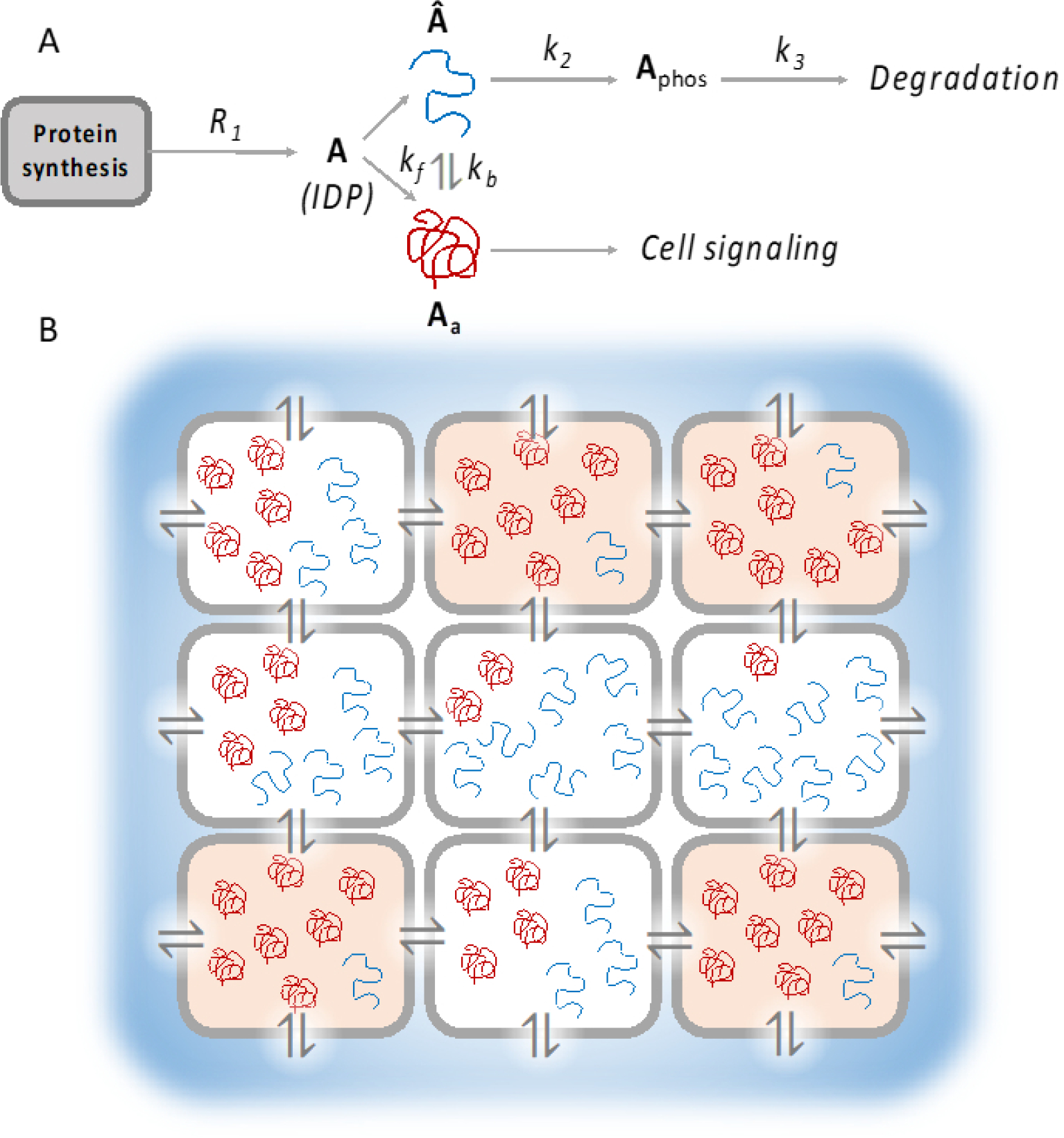
A model for IDP conformational noise contributing to multicellularity. A) A conceptual reaction network where conformational noise leads to fluctuating levels of IDP conformation. In this model, the IDP A (where A also denotes its concentration in the cell) can assume two alternative conformations Aa (denoted by the red string, which participates in cellular signaling) and  (blue string, which is phosphorylated and subsequently degraded). A stochastically switches between Aa and Â, leading to fluctuating levels of the two conformations over time. B) A schematic representing an array of cells with varying levels of the IDP A. High level of the functional conformation Aa allows the cells to switch to a different phenotype, represented in orange. The level of Aa is further modulated by exchange of diffusible factors with neighboring cells and the environment (indicated by the ⇌ symbol). Such a system can give rise to spatiotemporal patterns and cooperative development of cellular clusters, as a precursor to multicellularity.

References

    1. Ladunga I Phylogenetic Continuum Indicates “Galaxies” in the Protein Universe: Preliminary Results on the Natural Group Structures of Proteins. J. Mol. Evol. 1992, 34, 358–375. - PubMed
    1. Ross JL The Dark Matter of Biology. Biophys. J. 2016, 111, 909–916. - PMC - PubMed
    1. Perdigao N; Heinrich J; Stolte C; Sabir KS; Buckley MJ; Tabor B; Signal B; Gloss BS; Hammang CJ; Rost B; Schafferhans A; O’Donoghue SI Unexpected Features of the Dark Proteome. Proc. Natl. Acad. Sci. U. S. A. 2015, 112, 15898–15903. - PMC - PubMed
    1. Illuminating the Dark Proteome. Cell 2016, 166, 1074–1077. - PubMed
    1. Baboo S; Cook PR “Dark Matter” Worlds of Unstable Rna and Protein. Nucleus 2014, 5, 281–286. - PMC - PubMed

Publication types

MeSH terms

Substances