. 2022 Apr 1;79(4):333-340.
doi: 10.1001/jamapsychiatry.2021.4377.

Longitudinal Associations of Mental Disorders With Dementia: 30-Year Analysis of 1.7 Million New Zealand Citizens

Affiliations

Longitudinal Associations of Mental Disorders With Dementia: 30-Year Analysis of 1.7 Million New Zealand Citizens

Leah S Richmond-Rakerd et al. JAMA Psychiatry. .

Abstract

Importance: Mental disorders are an underappreciated category of modifiable risk factors for dementia. Developing an evidence base about the link between mental disorders and dementia risk requires studies that use large, representative samples, consider the full range of psychiatric conditions, ascertain mental disorders from early life, use long follow-ups, and distinguish between Alzheimer disease and related dementias.

Objective: To test whether mental disorders antedate dementia across 3 decades of observation.

Design, setting, and participants: This population-based administrative register study of mental disorders and Alzheimer disease and related dementias included all individuals born in New Zealand between 1928 and 1967 who resided in the country for any time during the 30-year observation period between July 1988 and June 2018. Data were from the New Zealand Integrated Data Infrastructure, a collection of whole-of-population administrative data sources linked at the individual level. Data were analyzed from October 2020 to November 2021.

Exposures: Diagnoses of mental disorders were ascertained from public-hospital records.

Main outcomes and measures: Diagnoses of dementia were ascertained from public-hospital records, mortality records, and pharmaceutical records.

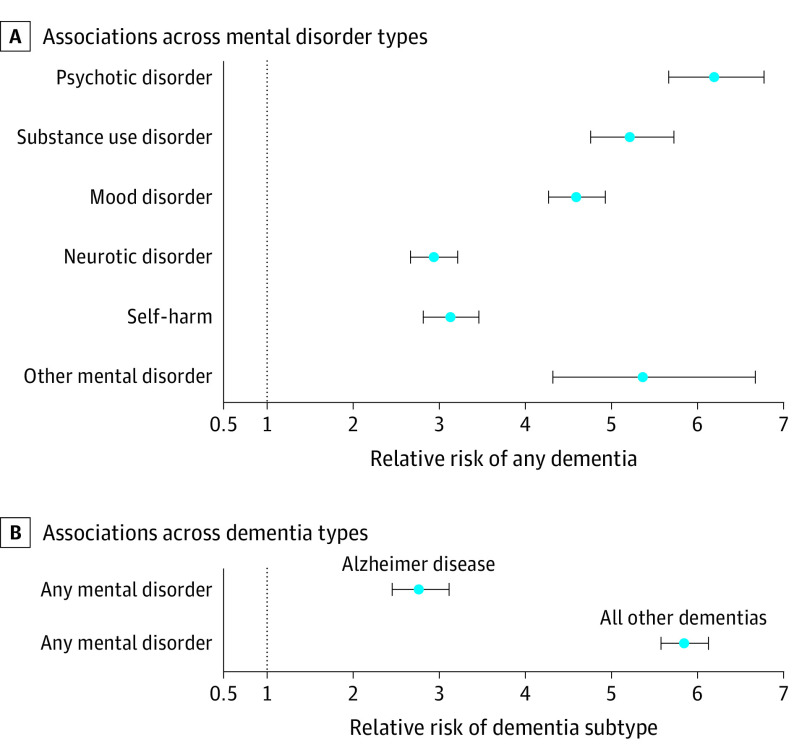
Results: Of 1 711 386 included individuals, 866 301 (50.6%) were male, and individuals were aged 21 to 60 years at baseline. Relative to individuals without a mental disorder, those with a mental disorder were at increased risk of developing subsequent dementia (relative risk [RR], 4.24; 95% CI, 4.07-4.42; hazard ratio, 6.49; 95% CI, 6.25-6.73). Among individuals with dementia, those with a mental disorder developed dementia a mean of 5.60 years (95% CI, 5.31-5.90) earlier than those without a mental disorder. Associations held across sex and age and after accounting for preexisting chronic physical diseases and socioeconomic deprivation. Associations were present across different types of mental disorders and self-harm behavior (RRs ranged from 2.93 [95% CI, 2.66-3.21] for neurotic disorders to 6.20 [95% CI, 5.67-6.78] for psychotic disorders), and were evident for Alzheimer disease (RR, 2.76; 95% CI, 2.45-3.11) and all other dementias (RR, 5.85; 95% CI, 5.58-6.13).

Conclusions and relevance: In this study, mental disorders were associated with the onset of dementia in the population. Ameliorating mental disorders in early life might also ameliorate neurodegenerative conditions and extend quality of life in old age.


Conflict of interest statement

Conflict of Interest Disclosures: Dr Milne has received grants from the New Zealand Ministry of Business, Innovation and Employment during the conduct of the study. No other disclosures were reported.

Figures

Figure 1.
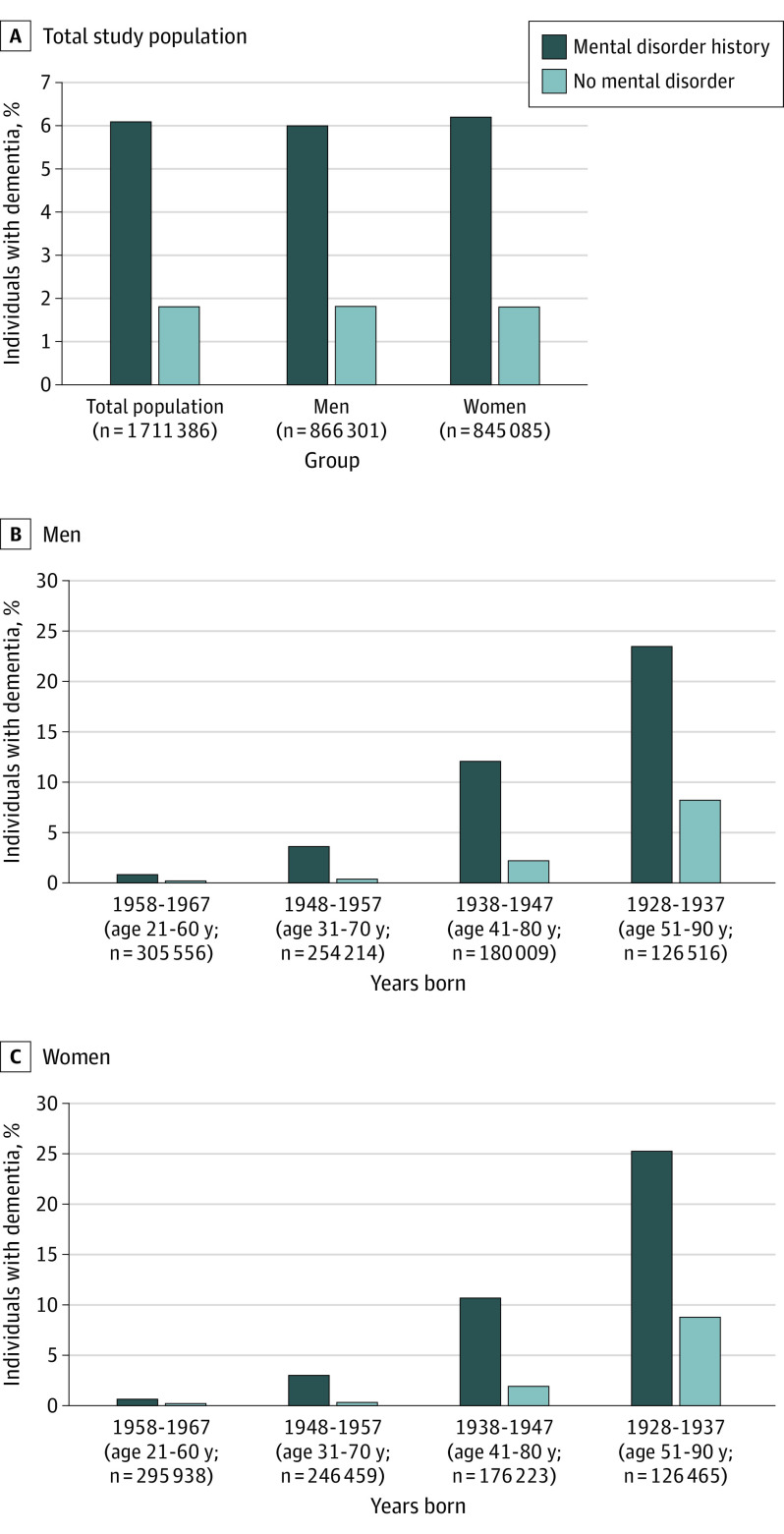
Figure 1.. Overrepresentation of Dementia Among Individuals With a Mental Disorder
The prevalence of dementia diagnoses was higher among individuals diagnosed with a mental disorder than among those without a mental disorder diagnosis. This was the case in the total population (A) and among men (B) and women (C) of all ages. Prevalence estimates were calculated over the 30-year observation period. Counts were randomly rounded to a base of 3 per the confidentiality rules of Statistics New Zealand. Therefore, counts do not always sum to totals. Age ranges indicate ages during the 30-year observation period.
Figure 2.
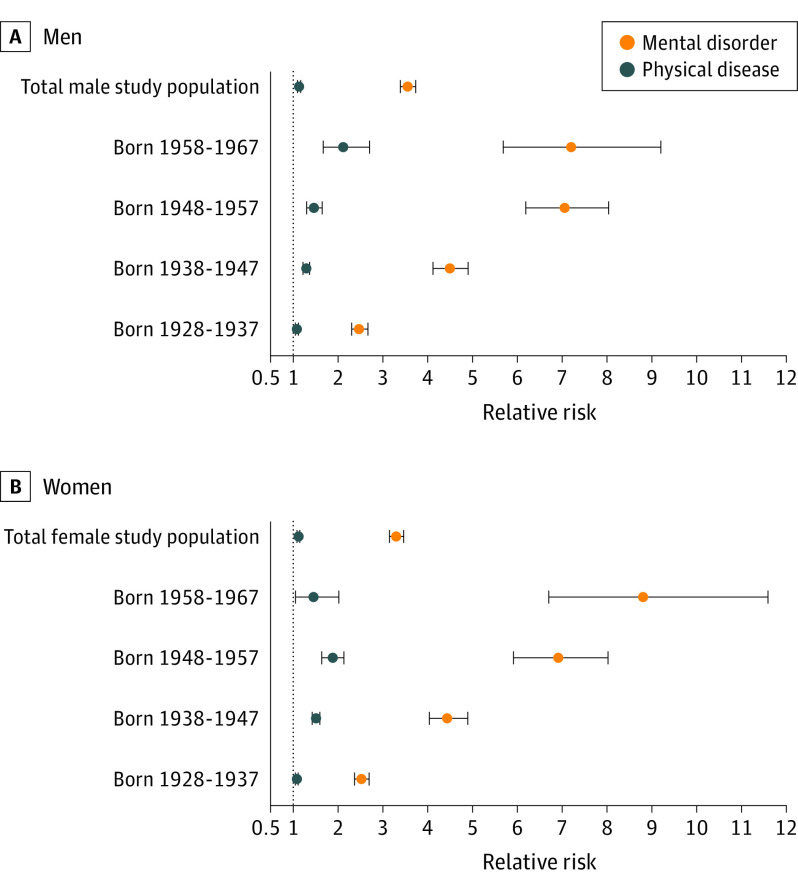
Figure 2.. Associations Between Mental Disorder Diagnoses and Subsequent Dementia and Chronic Physical Disease Diagnoses and Subsequent Dementia
Both mental disorders and chronic physical diseases were associated with subsequent dementia, but associations for mental disorders were larger than those for physical diseases. This was the case among men (A) and women (B) of all ages. Estimates are from multivariate models in which mental disorders and physical diseases were entered together as predictors. We ascertained mental disorder and physical disease diagnoses during the 30-year observation period. To be included in analyses, dementia diagnoses had to occur subsequent to the mental disorder or physical disease diagnosis. Models in which data were combined across cohorts (within sex) controlled for birth year. Error bars indicate 95% CIs.
Figure 3.
Figure 3.. Specificity of Associations
A, Mental disorders of many types were associated with subsequent onset of any dementia. The other mental disorder category includes physiological disturbance, personality, developmental, behavioral, and unspecified disorders. B, Mental disorders were associated with both Alzheimer disease and all other dementias. Dementia subtypes were ascertained using International Statistical Classification of Diseases and Related Health Problems, Tenth Revision (ICD-10) and corresponding ICD-9 codes from public hospital and mortality records; pharmaceutical prescriptions were excluded from this ascertainment scheme because they did not specify dementia subtype. Mental disorder cases and controls were matched on observation time. Analyses excluded individuals who had dementia prior to their mental health diagnosis or prior to the start of their matched observation period. Estimates were adjusted for sex, birth year, and preexisting chronic physical disease diagnoses. Error bars indicate 95% CIs. Associations by age and sex are shown in eAppendix 10 in the Supplement.

References

    1. Global action plan on the public health response to dementia, 2017-2025. World Health Organization. Published 2017. Accessed January 11, 2022. https://apps.who.int/iris/bitstream/handle/10665/259615/9789241513487-en...
    1. Liang JH, Lu L, Li JY, et al. Contributions of modifiable risk factors to dementia incidence: a bayesian network analysis. J Am Med Dir Assoc. 2020;21(11):1592-1599.e13. doi: 10.1016/j.jamda.2020.04.006 - DOI - PubMed
    1. Livingston G, Huntley J, Sommerlad A, et al. Dementia prevention, intervention, and care: 2020 report of the Lancet Commission. Lancet. 2020;396(10248):413-446. doi: 10.1016/S0140-6736(20)30367-6 - DOI - PMC - PubMed
    1. National Academies of Sciences, Engineering, and Medicine; Health and Medicine Division; Board on Health Sciences Policy; Committee on Preventing Dementia and Cognitive Impairment . Preventing Cognitive Decline and Dementia: a Way Forward. Downey A, Stroud C, Landis S, Leshner AI, eds. National Academies Press; 2017. - PubMed

    1. Vos SJB, van Boxtel MPJ, Schiepers OJG, et al. Modifiable risk factors for prevention of dementia in midlife, late life and the oldest-old: validation of the LIBRA index. J Alzheimers Dis. 2017;58(2):537-547. doi: 10.3233/JAD-161208 - DOI - PubMed

Publication types