


Whole-exome sequencing improves the diagnosis and care of men with non-obstructive azoospermia
- PMID: 35172124
- PMCID: PMC8948161
- DOI: 10.1016/j.ajhg.2022.01.011
Whole-exome sequencing improves the diagnosis and care of men with non-obstructive azoospermia
Abstract
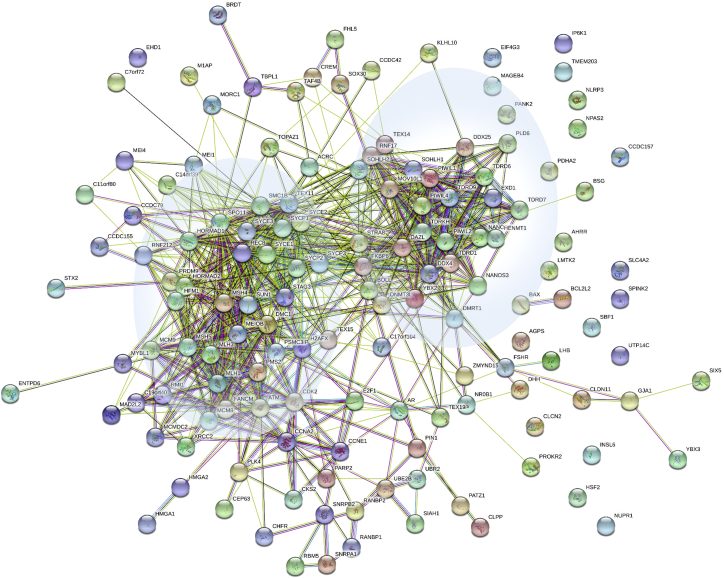
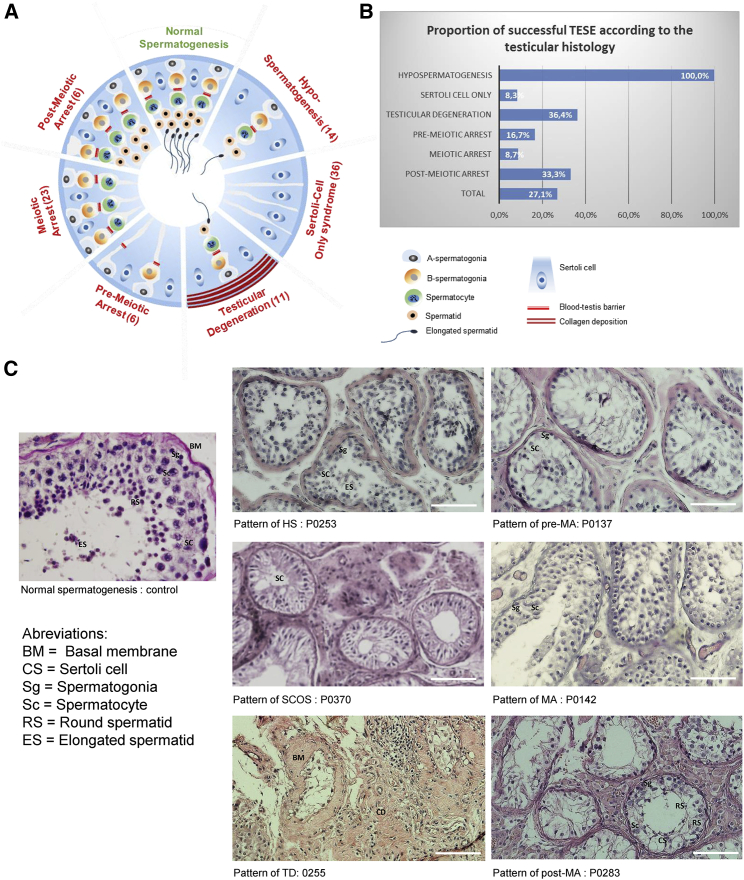
Non-obstructive azoospermia (NOA) is a severe and frequent cause of male infertility, often treated by testicular sperm extraction followed by intracytoplasmic sperm injection. The aim of this study is to improve the genetic diagnosis of NOA, by identifying new genes involved in human NOA and to better assess the chances of successful sperm extraction according to the individual's genotype. Exome sequencing was performed on 96 NOA-affected individuals negative for routine genetic tests. Bioinformatics analysis was limited to a panel of 151 genes selected as known causal or candidate genes for NOA. Only highly deleterious homozygous or hemizygous variants were retained as candidates. A likely causal defect was identified in 16 genes in a total of 22 individuals (23%). Six genes had not been described in man (DDX25, HENMT1, MCMDC2, MSH5, REC8, TDRKH) and 10 were previously reported (C14orf39, DMC1, FANCM, GCNA, HFM1, MCM8, MEIOB, PDHA2, TDRD9, TERB1). Seven individuals had defects in genes from piwi or DNA repair pathways, three in genes involved in post-meiotic maturation, and 12 in meiotic processes. Interestingly, all individuals with defects in meiotic genes had an unsuccessful sperm retrieval, indicating that genetic diagnosis prior to TESE could help identify individuals with low or null chances of successful sperm retrieval and thus avoid unsuccessful surgeries.
Keywords: genetic diagnosis; genetics of male infertility; non-obstructive azoospermia; whole-exome sequencing.
Copyright © 2022 American Society of Human Genetics. Published by Elsevier Inc. All rights reserved.
Conflict of interest statement
Declaration of interests The authors declare no competing interests.
Figures
References
-
- Tournaye H., Krausz C., Oates R.D. Novel concepts in the aetiology of male reproductive impairment. Lancet Diabetes Endocrinol. 2017;5:544–553. - PubMed
-
- Uhlén M., Fagerberg L., Hallström B.M., Lindskog C., Oksvold P., Mardinoglu A., Sivertsson Å., Kampf C., Sjöstedt E., Asplund A., et al. Proteomics. Tissue-based map of the human proteome. Science. 2015;347:1260419. - PubMed
-
- Tüttelmann F., Werny F., Cooper T.G., Kliesch S., Simoni M., Nieschlag E. Clinical experience with azoospermia: aetiology and chances for spermatozoa detection upon biopsy. Int. J. Androl. 2011;34:291–298. - PubMed
Publication types
MeSH terms
Substances
Supplementary concepts
LinkOut - more resources
Full Text Sources
Other Literature Sources
Molecular Biology Databases
