


The Childhood Cancer Diagnosis (CCD) Study: a UK observational study to describe referral pathways and quantify diagnostic intervals in children and young people with cancer
- PMID: 35173012
- PMCID: PMC8852751
- DOI: 10.1136/bmjopen-2021-058744
The Childhood Cancer Diagnosis (CCD) Study: a UK observational study to describe referral pathways and quantify diagnostic intervals in children and young people with cancer
Abstract
Introduction: Childhood cancer is diagnosed in 400 000 children and young people (CYP) aged 0-19 years worldwide annually. In the UK, a child's cumulative cancer risk increases from 1 in 4690 from birth to aged 1, to 1 in 470 by age 15. Once diagnosed, access to treatments offers survival to adulthood for over 80%. Tumour diagnoses are at a later stage and mortality is higher when compared with those in other parts of Europe. This means higher risk, more intensive therapies for a cure. Some CYPs are known to experience delays to diagnosis which may further contribute to poor outcomes. This study aims to understand the current pathway of childhood cancer referrals and diagnosis and quantify diagnostic intervals in the UK.
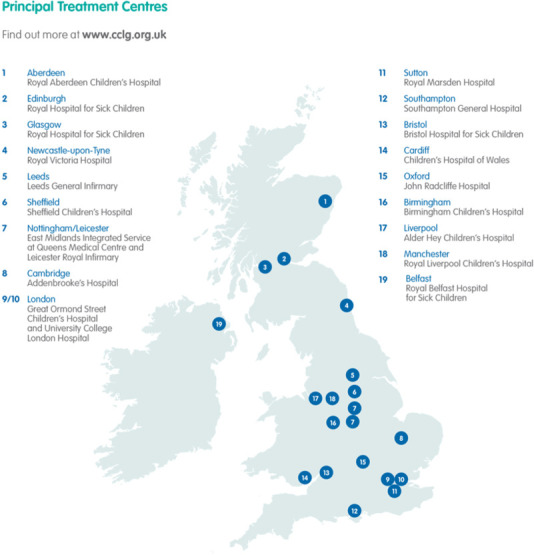
Methods and analysis: This is a prospective multicentre observational study including all tertiary childhood cancer treatment centres in the UK. CYP (0-18 years) with a new diagnosis of cancer over the study period will be invited to participate. Data will be collected at initial diagnosis and 5 years after diagnosis. Data will include demographic details, clinical symptoms, tumour location, stage and clinical risk group. In addition, key diagnostic dates and referral routes will be collected to calculate the diagnostic intervals. At 5 years' follow-up, data will be collected on refractory disease, relapse and 1-year and 5-year survival. Population characteristics will be presented with descriptive analyses with further analyses stratified by age, geographical region and cancer type. Associations between diagnostic intervals/delay and risk factors will be explored using multiple regression and logistic regression.
Ethics: The study has favourable opinion from the York and Humber, Leeds West REC (19/YH/0416).
Dissemination: Results will be presented at academic conferences, published in peer-reviewed journals and disseminated through public messaging in collaboration with our charity partners through a national awareness campaign (ChildCancerSmart).
Study registration: researchregistry.com (researchregistry5313).
Keywords: epidemiology; paediatric oncology; public health.
© Author(s) (or their employer(s)) 2022. Re-use permitted under CC BY. Published by BMJ.
Conflict of interest statement
Competing interests: None declared.
Figures
References
-
- Public Health England . UK CTYA cancer statistics report 2021.
-
- Little J. Epidemiology of childhood cancer (International agency for research in cancer (IARC) 1999.
-
- World Health Organization . WHO global initiative for childhood cancer: an overview 2020.
Publication types
MeSH terms
LinkOut - more resources
Full Text Sources
Medical
