. 2022 Jun;16(6):1583-1593.
doi: 10.1038/s41396-022-01207-w. Epub 2022 Feb 16.

Active anaerobic methane oxidation and sulfur disproportionation in the deep terrestrial subsurface

Affiliations

Active anaerobic methane oxidation and sulfur disproportionation in the deep terrestrial subsurface

Emma Bell et al. ISME J. 2022 Jun.

Abstract

Microbial life is widespread in the terrestrial subsurface and present down to several kilometers depth, but the energy sources that fuel metabolism in deep oligotrophic and anoxic environments remain unclear. In the deep crystalline bedrock of the Fennoscandian Shield at Olkiluoto, Finland, opposing gradients of abiotic methane and ancient seawater-derived sulfate create a terrestrial sulfate-methane transition zone (SMTZ). We used chemical and isotopic data coupled to genome-resolved metaproteogenomics to demonstrate active life and, for the first time, provide direct evidence of active anaerobic oxidation of methane (AOM) in a deep terrestrial bedrock. Proteins from Methanoperedens (formerly ANME-2d) are readily identifiable despite the low abundance (≤1%) of this genus and confirm the occurrence of AOM. This finding is supported by 13C-depleted dissolved inorganic carbon. Proteins from Desulfocapsaceae and Desulfurivibrionaceae, in addition to 34S-enriched sulfate, suggest that these organisms use inorganic sulfur compounds as both electron donor and acceptor. Zerovalent sulfur in the groundwater may derive from abiotic rock interactions, or from a non-obligate syntrophy with Methanoperedens, potentially linking methane and sulfur cycles in Olkiluoto groundwater. Finally, putative episymbionts from the candidate phyla radiation (CPR) and DPANN archaea represented a significant diversity in the groundwater (26/84 genomes) with roles in sulfur and carbon cycling. Our results highlight AOM and sulfur disproportionation as active metabolisms and show that methane and sulfur fuel microbial activity in the deep terrestrial subsurface.


Conflict of interest statement

The authors declare no competing interests.

Figures
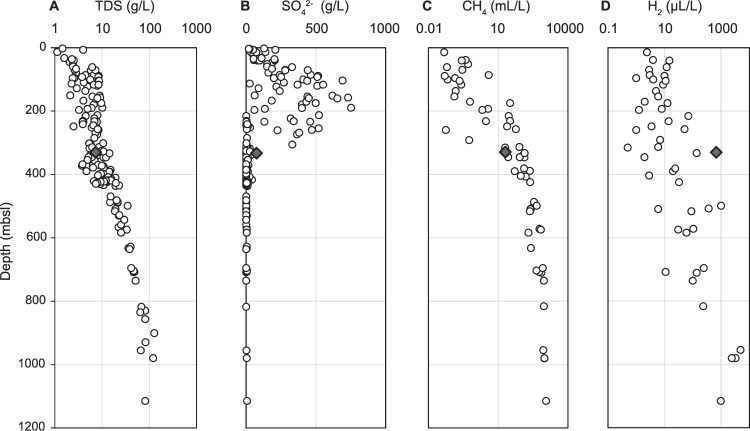
Fig. 1
Fig. 1. Depth profile of groundwater at Olkiluoto.
Concentration of (A) total dissolved solids (TDS), B Sulfate. C Methane. D Hydrogen. Opposing trends in sulfate and methane concentrations with depth create an SMTZ at ~250–350 meters below sea level (mbsl). Filled diamonds indicate data from drill hole OL-KR13 (fracture at 330.52–337.94 mbsl) and open circles show baseline values from characterization and monitoring of the Olkiluoto site (1994–2018). Hydrogen concentrations below the detection limit are not shown. Data was provided by Posiva Oy.
Fig. 2
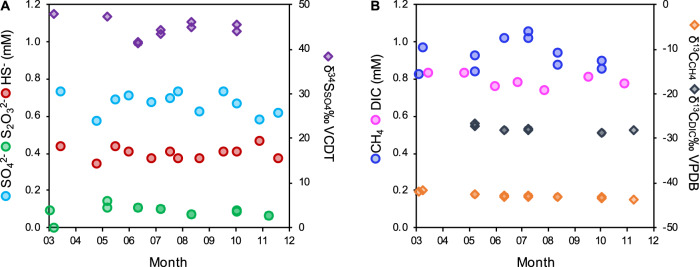
Fig. 2. Groundwater chemistry (drillhole OL-KR13).
A Sulfur species and sulfur isotope values (34S/32S expressed as δ34SSO4). B Dissolved inorganic carbon (DIC), total organic carbon (DOC), and methane. Carbon isotope values (13C/12C) are expressed as δ13CDIC and δ13CCH4. Data used in this figure is provided in Dataset S2.
Fig. 3
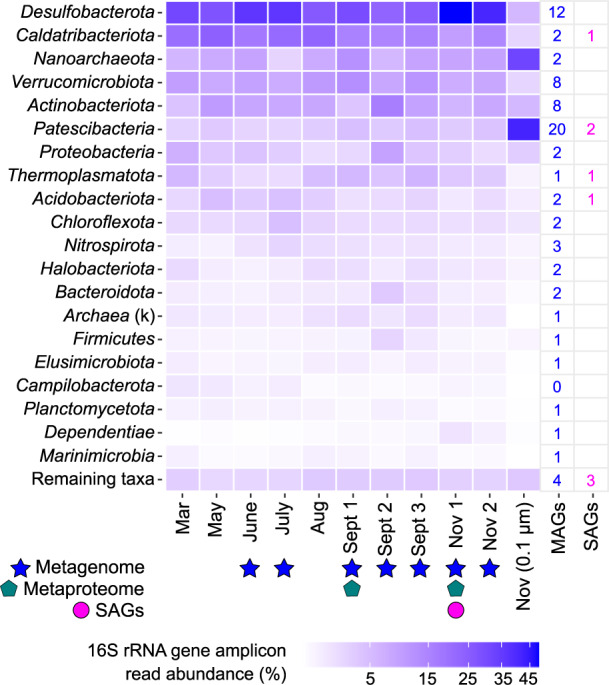
Fig. 3. Phyla detected by 16 S rRNA gene amplicon sequencing of groundwater from drillhole OL-KR13.
DNA was extracted from biomass collected on an 0.2 µm filter for all samples except one (Nov (0.1 µm)). If the phylum could not be assigned, the kingdom is given, denoted by a ‘k’ in parentheses. Sampling months (March–November) with a corresponding metagenome (filled star), metaproteome (filled pentagon) and SAGs (filled circle) are indicated. The number of MAGs and SAGs is given for each phylum following dereplication. Verrucomicrobiota includes MAGs from the class Omnitrophia in the Silva 138 release that are included as a separate phylum (Omnitrophota) in the GTDB release 95. Genomes assigned to remaining taxa are: Altiarchaeota (MAG + SAG); Bacteria UPB18 (2 × MAGs); Delongbacteria (MAG); Bipolaricaulota (SAG); Cloacimonadota (SAG).
Fig. 4
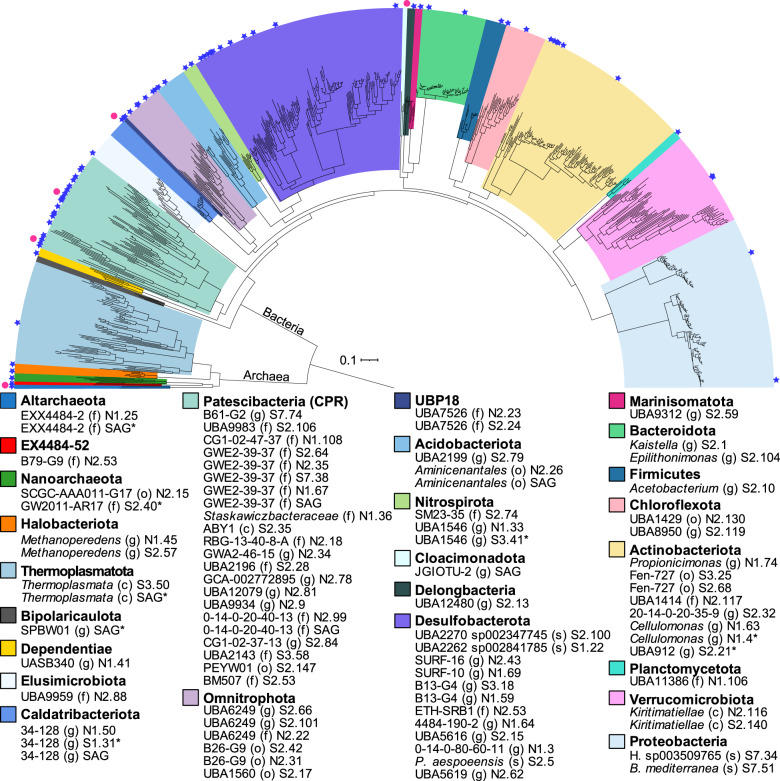
Fig. 4. Diversity of recovered genomes (dereplicated MAGs and SAGs) based on 16 single copy genes.
MAGs are indicated by a blue star and SAGs are indicated by a pink circle. The colors represent different phylum-level lineages. Letters in parentheses indicate the taxonomic rank assignment: o, order; c, class; f, family; g, genus; s, species. Full taxonomic assignments are provided in Dataset S3. MAGs/SAGs marked with an asterisk (*) were excluded from the tree as they contained too few of the single copy genes used for alignment. The scale bar corresponds to per cent average amino acid substitution over the alignment.
Fig. 5
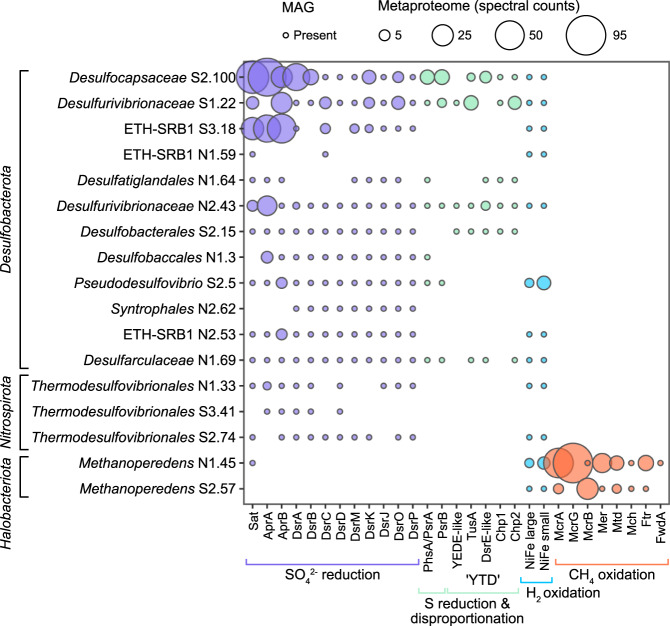
Fig. 5. Abundance of proteins involved in sulfur, hydrogen, and methane metabolism in Desulfobacterota, Nitrospirota and Halobacteriota.
Filled circles indicate gene presence in the MAG. The size of the circle shows the abundance of the protein (spectral counts) in the metaproteome.
Fig. 6
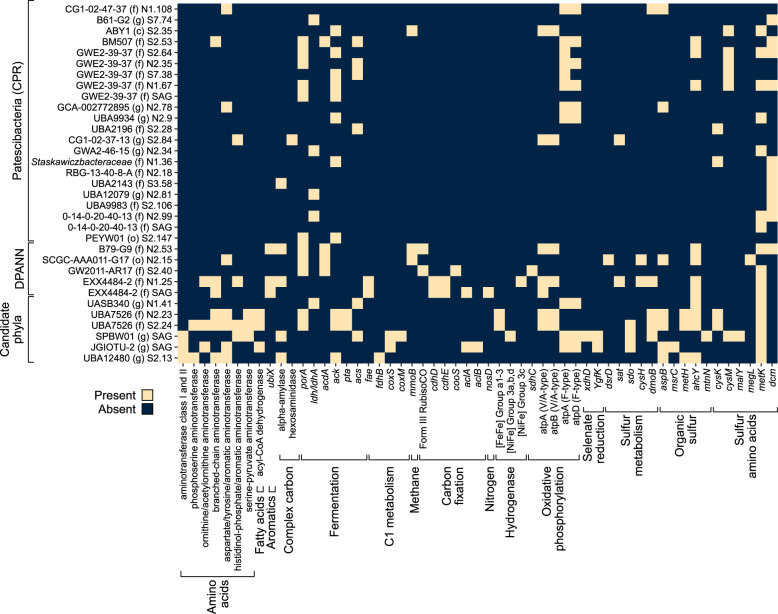
Fig. 6. Metabolic profile of ultra-small CPR bacteria, DPANN archaea, and other candidate phyla bacteria.
Heatmap (presence/absence) of metabolic genes in MAGs and SAGs in Olkiluoto groundwater. Full gene names and enzyme reactions are provided in Dataset S4.
Fig. 7
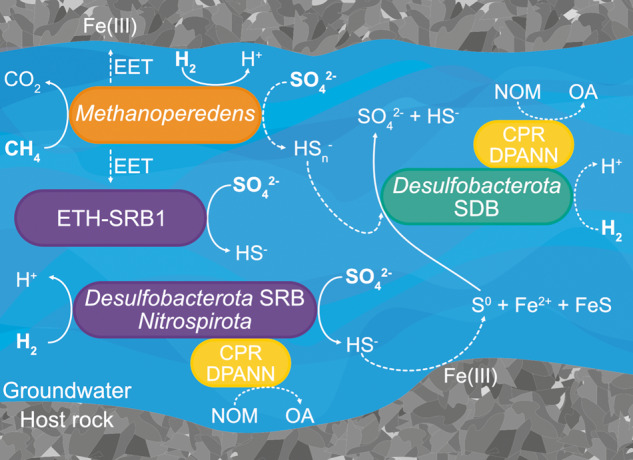
Fig. 7. Proposed sulfur and methane cycling in Olkiluoto groundwater.
Solid lines indicate metaproteomic evidence for the processes depicted while dashed lines indicate putative processes consistent with the data. Bold text indicates substrates present in the groundwater. Abbreviations shown in the figure are as follows: SRB Sulfate-reducing bacteria, SDB Sulfur-disproportionating bacteria, EET Extracellular electron transfer, NOM Natural organic matter, OA Organic acids.

References

    1. Magnabosco C, Lin L-H, Dong H, Bomberg M, Ghiorse W, Stan-Lotter H, et al. The biomass and biodiversity of the continental subsurface. Nat Geosci. 2018;11:707–17.
    1. Hoehler TM, Jørgensen BB. Microbial life under extreme energy limitation. Nat Rev Microbiol. 2013;11:83–94. - PubMed

    1. Braun S, Mhatre SS, Jaussi M, Røy H, Kjeldsen KU, Pearce C, et al. Microbial turnover times in the deep seabed studied by amino acid racemization modelling. Sci Rep. 2017;7:5680. - PMC - PubMed
    1. Jørgensen BB. Deep subseafloor microbial cells on physiological standby. Proc Natl Acad Sci USA. 2011;108:18193 LP–18194. - PMC - PubMed
    1. Trembath-Reichert E, Morono Y, Ijiri A, Hoshino T, Dawson KS, Inagaki F, et al. Methyl-compound use and slow growth characterize microbial life in 2-km-deep subseafloor coal and shale beds. Proc Natl Acad Sci USA. 2017;114:E9206 LP–E9215. - PMC - PubMed

Publication types